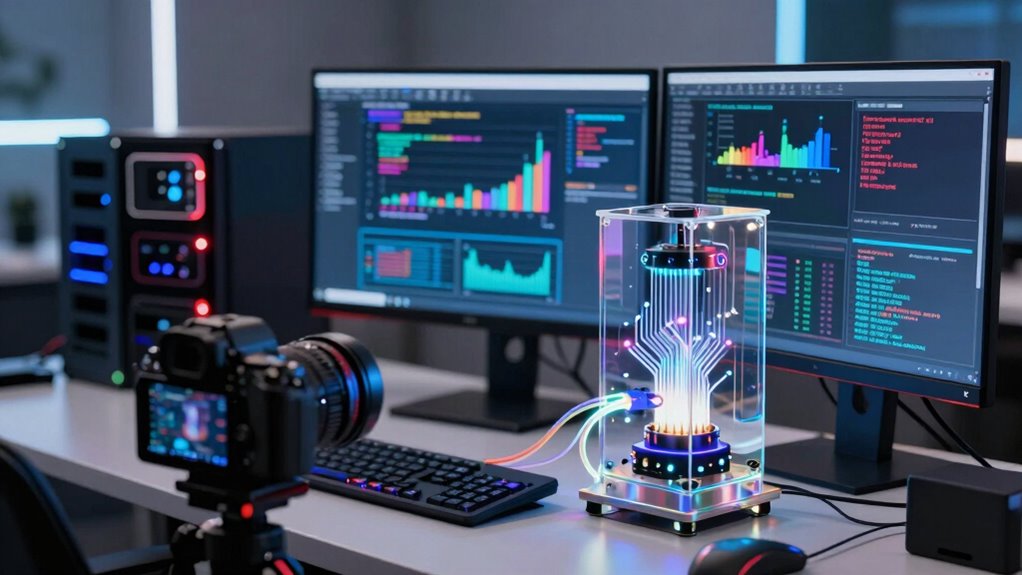

Oracles connect blockchain apps to real data by acting as bridges that bring external information into smart contracts. They gather data from multiple sources, use consensus mechanisms for validation, and employ cryptographic proofs to guarantee accuracy and security. Whether centralized for simplicity or decentralized for added trust, oracles enable your blockchain applications to respond dynamically to real-world events like prices or weather. Keep exploring to discover how this technology can enhance your blockchain projects even further.
Listen free for 30 days with Audible
Thousands of audiobooks and originals — cancel anytime.
As an affiliate, we earn on qualifying purchases.
Key Takeaways
- Oracles fetch external data from multiple sources to provide accurate information to blockchain applications.
- They use consensus mechanisms and cryptographic proofs to verify and ensure data integrity.
- Decentralized oracles aggregate data from various sources, reducing the risk of manipulation.
- They securely transmit real-world data to smart contracts, enabling automation based on external events.
- Proper verification and trust protocols ensure data feeds are reliable for blockchain app decision-making.
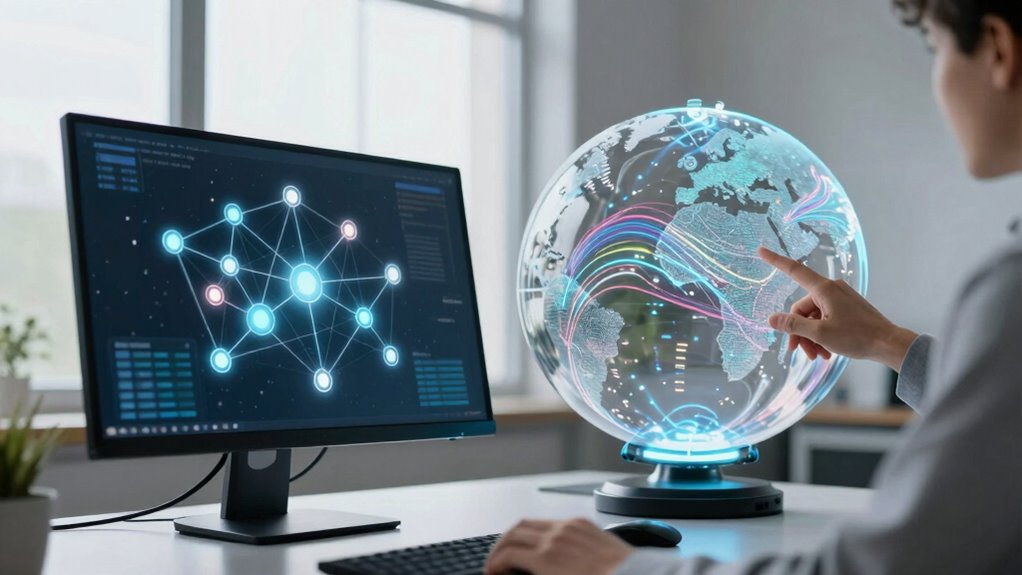
In the world of blockchain applications, data is king, but accessing reliable external information can be a challenge. That’s where oracles come into play, bridging the gap between on-chain processes and real-world data. Without oracles, smart contracts would be limited to the data stored within the blockchain itself, severely restricting their usefulness. By connecting blockchain apps to external data sources, oracles enable smart contract automation—allowing contracts to execute based on real-time information like prices, weather conditions, or election results. This capability unlocks a wide range of decentralized applications, from finance to supply chain management, making them more dynamic and responsive.
Oracles connect blockchain to real-world data, enabling smart contract automation and expanding decentralized application possibilities.
However, integrating external data isn’t as simple as just pulling information from the internet. You need robust data verification methods to ensure the data’s accuracy and prevent manipulation. Oracles employ various techniques, such as multiple data sources, consensus mechanisms, or cryptographic proofs, to verify and validate the information before it’s fed into the blockchain. These methods help maintain the integrity of the data, which is essential for trustless smart contracts to operate effectively. Without proper verification, you risk executing contracts based on false or tampered data, which could lead to financial loss or system failure.
You’ll find that oracles can be centralized or decentralized. Centralized oracles are managed by a single entity, which can be faster and more straightforward but introduces a single point of failure. Decentralized oracles, on the other hand, aggregate data from multiple sources, reducing the risk of bias or manipulation. They often utilize consensus algorithms to agree on the most accurate data before passing it on to the blockchain. This approach significantly enhances security and reliability, making your smart contracts more resilient against attacks or inaccuracies. Decentralized oracles leverage multiple sources and consensus to improve trustworthiness, which is a key aspect of blockchain security. Additionally, data verification methods are crucial in ensuring the accuracy and trustworthiness of the data fed into smart contracts. Employing these techniques can also help mitigate potential data manipulation risks.
Furthermore, understanding the horsepower of electric dirt bikes can inspire innovative ways to power or optimize blockchain-related devices, such as data centers or IoT devices used in verification processes. This insight into energy and power efficiency can be applied to blockchain infrastructure to improve sustainability and performance. When setting up an oracle, you’ll want to carefully consider the data sources and verification methods used. The goal is to create a trustworthy pipeline that ensures your smart contracts act on precise, tamper-proof information. Whether you’re automating payments based on fluctuating market prices or triggering actions when specific conditions are met, oracles are the critical link that enables your blockchain app to interact seamlessly with the outside world. By leveraging smart contract automation and rigorous data verification methods, oracles empower you to build more intelligent, responsive decentralized applications that truly reflect real-world events.
As an affiliate, we earn on qualifying purchases.
Frequently Asked Questions
How Do Oracles Ensure Data Privacy and Security?
Oracles guarantee data privacy and security by using data encryption, which protects information during transmission and storage. They also implement strict access controls, limiting who can access or modify the data. You can trust that these measures keep sensitive data safe from unauthorized parties, maintaining integrity and confidentiality. By combining encryption and access controls, oracles effectively safeguard your data while connecting blockchain applications to real-world information.
Can Oracles Handle Multiple Data Sources Simultaneously?
Yes, oracles can handle multiple data sources simultaneously. They achieve this through data source diversity, gathering information from various inputs, and multi-source validation, ensuring data accuracy and reliability. By aggregating data from different sources, oracles reduce the risk of manipulation or errors. This approach provides blockchain apps with all-encompassing, validated information, enabling more robust and trustworthy smart contract execution across diverse scenarios.
What Are the Costs Associated With Implementing Oracles?
Implementing oracles costs vary, with data pricing typically ranging from a few cents to several dollars per data fetch, depending on complexity. Notably, integration complexity can add to costs, as more sophisticated oracles require advanced security and reliability features. You might find that higher-quality, secure oracles demand larger investments, but these costs ensure accurate, tamper-proof data for your blockchain app, making the expense worthwhile for trustworthy results.
How Do Oracles Prevent Data Manipulation or Fraud?
You can trust oracles to prevent data manipulation or fraud through robust data validation and trust models. They verify data from multiple sources to guarantee accuracy before passing it to the blockchain. Many use cryptographic proofs or decentralized consensus mechanisms, which reduce reliance on a single source. This layered approach helps maintain integrity, making it difficult for malicious actors to introduce false data and ensuring your blockchain applications stay secure and reliable.
Are There Industry Standards for Oracle Integrations?
Yes, industry standards for oracle integrations exist, creating a reliable tapestry of decentralized networks and data validation processes. These standards help guarantee data accuracy, security, and transparency, much like a well-orchestrated symphony. While no single global protocol dominates, best practices emphasize decentralization, rigorous validation, and security measures. By adhering to these guidelines, you can confidently connect blockchain apps to real-world data, fostering trust and consistency across the ecosystem.
As an affiliate, we earn on qualifying purchases.
Conclusion
By now, you see how oracles are the backbone that bridges blockchain apps with real-world data, turning dreams into reality. Without them, your decentralized applications would be as lost as a needle in a haystack—completely useless. Embracing oracles empowers you to create smarter, more responsive blockchain solutions that can handle any challenge. So, explore this tech marvel and open the true potential of your blockchain projects—because with oracles, the sky’s the limit!
As an affiliate, we earn on qualifying purchases.
cryptographic proof data verification
As an affiliate, we earn on qualifying purchases.
As an affiliate, we earn on qualifying purchases.
NFL season / tailgating Picks
team gear
As an affiliate, we earn on qualifying purchases.