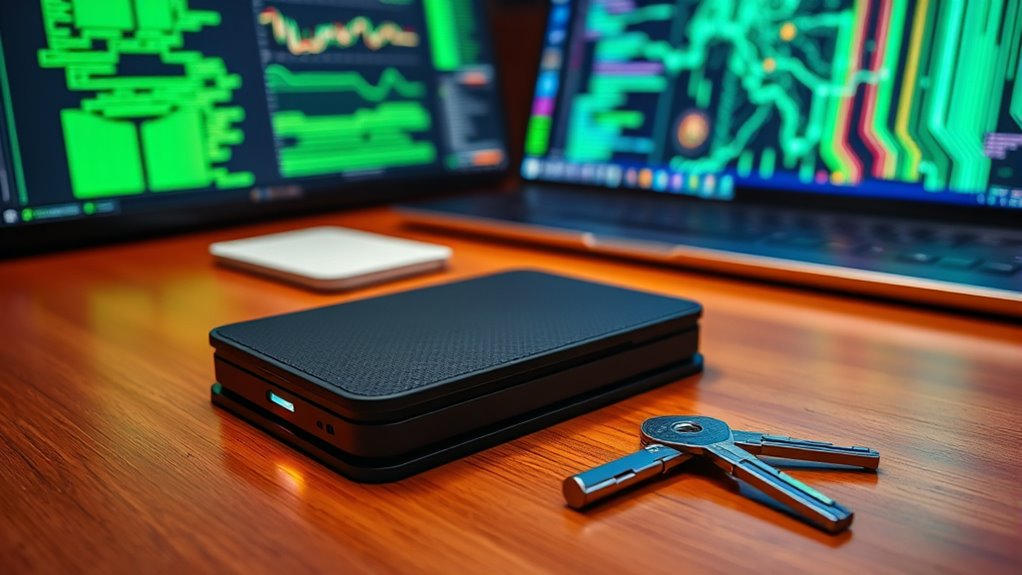

To store your Bitcoin securely, use a layered approach combining multi-signature wallets with hardware wallet backups. Multi-signature wallets require multiple approvals for transactions, reducing the risk of theft if one key is compromised. Pair them with offline hardware wallets and keep your backup phrases in secure, separate locations. Regularly review your security setup and stay vigilant. Keep exploring to discover more proven strategies that safeguard your digital assets effectively.
Key Takeaways
- Use multi signature wallets requiring multiple approvals to enhance security and reduce single point of failure.
- Store private keys offline on hardware wallets and keep backups in secure, separate locations.
- Never store seed phrases or backup phrases digitally or online to prevent potential breaches.
- Regularly review and update security measures, including backup procedures and wallet configurations.
- Combine hardware wallet backups with multi signature setups for layered, robust protection of your Bitcoin holdings.

Are you confident your Bitcoin is secure? If you’re serious about protecting your digital assets, understanding the different ways to store your coins is essential. One of the most effective methods involves using multi signature wallets. Unlike traditional wallets that rely on a single private key, multi signature wallets require multiple signatures to authorize a transaction. This layered approach markedly enhances security because even if one key gets compromised, your funds remain safe. For example, you might set up a wallet that requires three out of five keys to approve any transfer. This setup makes it incredibly difficult for hackers to access your Bitcoin, as they’d need to compromise multiple private keys, which are typically stored in different secure locations. Studies indicate that combining multi signature wallets with hardware wallet backups significantly reduces the risk of theft or loss. But even with multi signature wallets, you shouldn’t rely solely on digital security. Hardware wallet backups are indispensable to guarantee your coins stay safe if your primary device encounters issues or gets lost. Hardware wallets are physical devices that store your private keys offline, shielding them from online threats like hacking or malware. Creating backups of these devices means you can recover your funds if the hardware fails or is damaged. It’s essential to keep these backups in a secure, separate location—think safety deposit boxes or other protected spaces—so you can access your Bitcoin even in emergency situations. When setting up hardware wallet backups, be meticulous about the process, confirming your backup phrase or seed words are written down carefully and stored securely. Never store these backup phrases digitally or online, as that could expose them to potential breaches. Regularly review your security setup, including your secure storage options, to ensure your assets remain protected. Combining multi signature wallets with robust hardware wallet backups offers a layered defense that markedly reduces your risk of losing Bitcoin due to theft, hardware failure, or accidental loss. You’re creating a system where no single point of failure exists, making it much harder for malicious actors to compromise your holdings. Remember, security isn’t just about possessing the right tools; it’s also about implementing best practices consistently. Regularly reviewing your security setup, updating your backup procedures, and staying informed about new threats will keep your Bitcoin protected. In the end, taking these steps empowers you with peace of mind, knowing your coins are safeguarded by multiple defenses designed to withstand various risks. Your Bitcoin’s security depends on your proactive choices—so invest in multi signature wallets and hardware wallet backups, and stay vigilant.

Bitkey Bitcoin Hardware Wallet – The Most Secure Way to Buy, Store and Manage Bitcoin
BITCOIN EXCLUSIVE: Bitkey is designed from the ground up exclusively for Bitcoin, offering a dedicated hardware wallet solution…
As an affiliate, we earn on qualifying purchases.
As an affiliate, we earn on qualifying purchases.
Frequently Asked Questions
How Often Should I Update My Wallet Software?
You should update your wallet software as soon as updates are available, ideally immediately, to protect your assets. Regular wallet backups are vital before updating, and make sure to manage your seed phrase securely during these updates. Keeping your software current ensures you benefit from security patches and new features, reducing risks. Frequent updates and proper seed phrase management help you maintain control and safeguard your bitcoins effectively.
What Are the Risks of Leaving Coins on Exchanges?
Ever wonder if leaving your coins on exchanges is safe? The risks include exchange hacks, where your funds could be stolen, and withdrawal limits, which might prevent you from accessing your coins quickly. Keeping coins on an exchange exposes you to potential security breaches and loss of control. To stay safe, consider transferring your coins to a personal wallet. Isn’t it better to hold your assets securely rather than risking losing them?
Can Hardware Wallets Be Physically Stolen?
Yes, hardware wallets can be physically stolen. To prevent theft, you should store your wallet in a secure location, like a safe or lockbox, and avoid sharing your recovery phrase. Implement theft prevention measures such as discreet storage and using a decoy wallet if necessary. Always stay vigilant and monitor your belongings to minimize the risk of physical theft, ensuring your Bitcoin remains safe even if your hardware wallet is stolen.
How Do I Recognize Phishing Attempts?
You can recognize phishing attempts by being wary of email scams and fake websites. Always check sender addresses for suspicious or misspelled names, and avoid clicking links in unsolicited messages. Verify website URLs carefully—look for HTTPS and authentic domain names. Be cautious of urgent or threatening language, and never share your private keys or passwords. Staying alert helps you spot these scams early and protect your coins from theft.
Are Paper Wallets Still a Secure Option?
Paper wallets can still be secure if you handle them carefully, but they have vulnerabilities. They are vulnerable to physical damage, theft, or loss, and are susceptible to offline storage risks like fire or water damage. To maximize security, store your paper wallet in a safe, waterproof, and fireproof location, and consider creating multiple copies. Always keep your private keys private and avoid sharing them to prevent potential theft.

ELLIPAL X Card – Air Gapped Crypto Cold Wallet with Starter Accessory Kit,Secure Offline Storage for Bitcoin, Ethereum,NFTs & 10,000+ tokens
ELLIPAL X-Card:The ELLIPAL X-Card is a cold wallet utilizing air-gapped technology to generate your seed phrase. Featuring a…
As an affiliate, we earn on qualifying purchases.
As an affiliate, we earn on qualifying purchases.
Conclusion
To keep your Bitcoin safe, always use strong, unique passwords and enable two-factor authentication. Consider storing your coins in a hardware wallet instead of an online exchange. Imagine losing access to your funds because of a hacked account—it’s a costly mistake. By taking these steps, you protect your investment and enjoy peace of mind. Stay vigilant, stay secure, and your Bitcoin will serve you well for years to come.

KEYSTONE Crypto Seed Storage, Crypto Steel Capsule Metal Wallet, Cold Storage Backup, 24 Words Bitcoin Key Phrase Storage, Steel Plate, Compatible with Ledger, Trezor, KeepKey (Keystone Tablet)
【 DURABLE AND INDESTRUCTIBLE 】: Made with grade 304 Steel, the Keystone Tablet is the long term solution…
As an affiliate, we earn on qualifying purchases.
As an affiliate, we earn on qualifying purchases.
ELLIPAL X Card – Air Gapped Crypto Cold Wallet with Starter Accessory Kit,Secure Offline Storage for Bitcoin, Ethereum,NFTs & 10,000+ tokens
ELLIPAL X-Card:The ELLIPAL X-Card is a cold wallet utilizing air-gapped technology to generate your seed phrase. Featuring a…
As an affiliate, we earn on qualifying purchases.
As an affiliate, we earn on qualifying purchases.