
Bitcoin mining’s environmental impact depends heavily on its energy sources and corporate sustainability efforts. Many companies are now integrating renewable energy like wind, solar, and hydro to lower their carbon footprints and appeal to ESG-focused investors. Technologies like smart grids and energy-efficient hardware also help reduce overall consumption. By adopting these practices, miners can balance profitability with environmental responsibility. Continuing to explore this topic will reveal how industry shifts are shaping a greener future for Bitcoin mining.
Key Takeaways
- Corporate Bitcoin mining is increasingly adopting renewable energy sources to improve ESG profiles.
- Utilizing renewables reduces carbon footprints and aligns with global sustainability goals.
- Technologies like smart grids and energy storage optimize energy efficiency and sustainability in mining.
- Transparent ESG reporting on energy use attracts environmentally conscious investors and enhances reputation.
- Transitioning to green energy ensures long-term competitiveness and mitigates criticism over environmental impact.
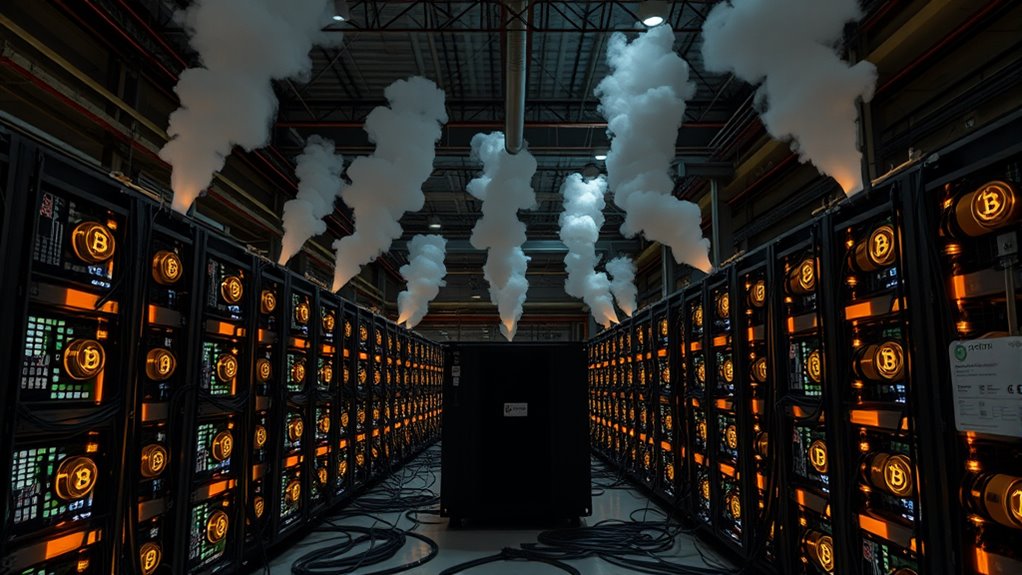
Bitcoin’s energy consumption has become a hotly debated topic as the cryptocurrency’s popularity grows. As more people invest in Bitcoin, concerns about its environmental impact intensify. One key aspect of this discussion centers around how Bitcoin mining operations can better incorporate renewable energy sources, leading to more sustainable practices. You might wonder how mining facilities can shift from traditional fossil fuels to cleaner energy sources, and the answer lies in renewable integration. By strategically locating mining farms near abundant wind, solar, or hydroelectric power, operators can considerably cut their carbon footprint. This move not only reduces overall energy consumption from non-renewable sources but also aligns with broader environmental, social, and governance (ESG) goals that many companies now prioritize.
Strategically locating mining farms near renewable energy sources reduces carbon footprints and aligns with ESG goals.
The challenge, however, is that Bitcoin’s energy consumption remains high regardless of the energy source. Cryptocurrency mining is energy-intensive by design, requiring powerful hardware to solve complex algorithms. But the focus is shifting toward making this energy use more sustainable. When mining operations integrate renewable energy, they lessen the environmental impact while maintaining profitability. You need to understand that renewables can sometimes be more cost-effective in the long run, especially in regions where excess renewable energy is available and cheap. This integration also helps address criticisms that Bitcoin’s energy consumption is largely driven by coal or other dirty fuels, therefore improving the industry’s ESG standing.
Moreover, renewable integration isn’t just about choosing greener energy sources; it involves smart grid management and innovative energy storage techniques. By leveraging energy storage solutions, mining operations can store excess renewable energy generated during peak times and use it when demand is high. This approach optimizes energy consumption and reduces waste, making the entire process more efficient. Additionally, implementing energy-efficient hardware can significantly reduce overall energy requirements. As you consider the future of Bitcoin mining, it’s clear that adopting these sustainable practices isn’t just good for the planet — it’s becoming essential for companies wanting to stay competitive and meet evolving ESG standards.
The push toward renewable integration also influences corporate decisions. Companies are increasingly scrutinized for their environmental impact, leading many to adopt greener mining strategies to attract ESG-focused investors. You’ll find that transparent reporting on energy consumption and renewable use is now a key part of corporate sustainability disclosures. These efforts demonstrate a commitment to reducing carbon footprints and aligning with global climate goals. Ultimately, integrating renewable energy into Bitcoin mining is a crucial step toward balancing energy consumption with environmental responsibility, ensuring that the growth of cryptocurrency doesn’t come at the expense of the planet.
Top picks for "bitcoin energy corporate"
Open Amazon search results for this keyword.
As an affiliate, we earn on qualifying purchases.
Frequently Asked Questions
How Does Bitcoin Mining Impact Local Water Resources?
Bitcoin mining can be substantially impact your local water resources through high water usage for cooling systems, which may strain ecological balance. This excessive water consumption can reduce water availability for nearby communities and wildlife, leading to ecological impact. You might notice decreased water levels, affecting local ecosystems and agriculture. It’s important to contemplate these effects when evaluating the environmental footprint of Bitcoin mining operations.
What Are the Best Practices for Sustainable Bitcoin Mining?
You should prioritize sustainable practices like integrating renewable energy sources, such as solar or wind, into your mining operations. For example, a mining farm in Texas uses excess wind power, reducing carbon emissions. Additionally, implement carbon offsetting programs to neutralize your environmental impact. Regularly monitor energy efficiency, optimize hardware, and partner with local communities to make certain your mining activities are environmentally responsible and support long-term sustainability.
How Do Corporate Miners Address Community Concerns?
You address community concerns by prioritizing community engagement, actively listening to local opinions, and transparently sharing your mining practices. You guarantee ethical sourcing of resources and energy, demonstrating your commitment to sustainability. By collaborating with local stakeholders, you build trust and show that your operations consider environmental and social impacts. This approach helps foster positive relationships, alleviating concerns and showcasing your dedication to responsible, community-focused mining practices.
What Innovations Are Reducing Energy Consumption in Mining?
Imagine mining operations as a racecar, now turbocharged with tech innovations that cut energy use. You see, by integrating renewable energy sources like solar and wind, corporate miners are driving down their carbon footprint. These innovations include more efficient hardware and smarter energy management systems, which optimize power consumption. Together, these advancements make mining greener and more sustainable, helping you reduce environmental impact while maintaining profitability.
How Is Government Regulation Shaping Bitcoin’s Energy Use?
Government regulation shapes Bitcoin’s energy use by enforcing cryptocurrency policies that promote sustainable practices. You’ll find that stricter rules encourage miners to adopt more efficient technologies and prioritize renewable energy sources. Regulatory compliance becomes essential, pushing the industry toward transparency and accountability. Overall, government oversight influences mining operations to reduce environmental impact, fostering a greener future for Bitcoin while balancing innovation and sustainability.
Conclusion
As you consider Bitcoin’s energy use, remember that its annual consumption is roughly equivalent to countries like Argentina. While corporate mining can boost local economies, it also raises environmental concerns. Striking a balance is vital—your choices can influence the future of sustainable crypto. Stay informed and advocate for greener solutions, because the energy decisions we make today will shape Bitcoin’s role in a sustainable tomorrow.