
Integrating Bitcoin payments into your business can greatly improve transaction speed, security, and global reach. By accepting Bitcoin, you enable quicker payments, reducing delays and enhancing customer satisfaction. It also offers a secure, tamper-proof way to handle transactions that builds trust. Plus, you can expand your customer base internationally without currency worries. With the right payment gateways and setup, you’ll streamline operations and stay competitive—discover how to make this progression smoothly and effectively.
Key Takeaways
- Choose reliable payment gateways that support cryptocurrency transactions for seamless integration into your existing systems.
- Educate staff on secure handling of Bitcoin wallets, private keys, and multi-signature security measures.
- Highlight the benefits of faster transaction speeds and enhanced customer experience to encourage adoption.
- Leverage Bitcoin’s borderless nature to expand your global customer base and reduce international transfer costs.
- Ensure strong security protocols to protect assets and build customer trust in your cryptocurrency payment process.
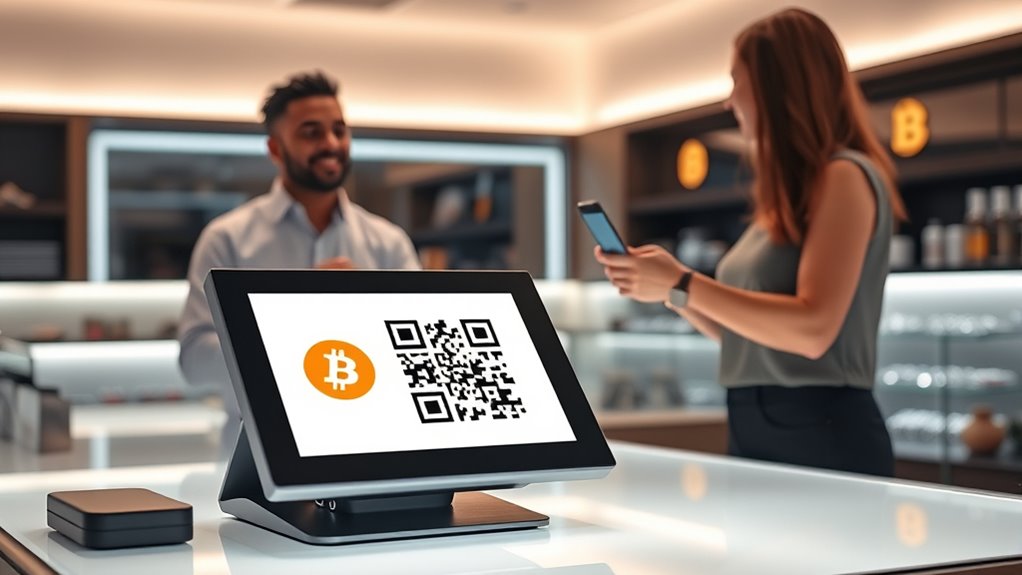
Have you contemplated how integrating Bitcoin payments can transform your business? Embracing cryptocurrency payments isn’t just about keeping up with the latest trends; it’s about enhancing your operations in meaningful ways. One major advantage is the improved transaction speed. Unlike traditional banking systems that can take days to process payments, Bitcoin transactions are often confirmed within minutes. This rapid turnaround means you get paid faster, reducing cash flow delays and increasing your ability to reinvest or manage expenses promptly. Customers appreciate quick, seamless checkout experiences, and by offering Bitcoin, you cater to a growing demographic that values speed and efficiency.
Integrate Bitcoin for faster payments, quick checkouts, and satisfied, tech-savvy customers worldwide.
However, alongside these benefits, you need to prioritize cryptocurrency security. Bitcoin’s blockchain technology provides a high level of security due to its decentralized nature, making it resistant to fraud and hacking. When integrated properly, it ensures that each transaction is securely recorded and tamper-proof. As a business owner, you’ll want to implement best practices, such as using trusted wallets and secure payment processors, to safeguard your funds and customer information. Educating yourself about private keys, multi-signature wallets, and secure storage options can further protect your assets from potential threats. This focus on security reassures your customers that their payments are safe, building trust and loyalty.
Switching to Bitcoin payments also means you need to contemplate the infrastructure involved. Setting up a reliable payment gateway that supports cryptocurrency transactions is straightforward with many available services designed for small and large businesses alike. These gateways typically handle conversion rates, so you don’t have to worry about fluctuating Bitcoin prices impacting your revenue directly. Additionally, integrating Bitcoin payments into your existing point-of-sale systems is becoming more seamless as technology advances, allowing you to accept digital currency alongside traditional modes without much hassle. Moreover, understanding how blockchain technology works can help you better evaluate and choose the most secure and efficient payment solutions for your business.
Furthermore, accepting Bitcoin can expand your customer base, especially among tech-savvy and international clients. Cryptocurrency transactions are borderless, enabling you to reach customers worldwide without the complications of currency conversion or high international transfer fees. This global reach can open new markets and increase your sales potential.
Frequently Asked Questions
How Secure Is Bitcoin Payment Processing for Businesses?
Bitcoin payment processing is quite secure for businesses because of blockchain security and transaction encryption. Blockchain’s decentralized nature makes it resistant to hacking, while transaction encryption protects sensitive data. However, you should still practice good security habits, like using secure wallets and monitoring transactions. Overall, when properly managed, Bitcoin payments offer a safe option that leverages strong cryptographic measures to keep your business protected.
What Are the Tax Implications of Accepting Bitcoin?
Picture your business ledger, with Bitcoin transactions shining like stars. When you accept Bitcoin, you must report it for tax purposes, treating it as property. This means tracking your cost basis and sale price to calculate capital gains or losses. You’ll need to include these details in your tax reporting, ensuring you comply with regulations and pay any taxes owed on profits. Staying organized helps you navigate these digital asset tax implications smoothly.
Can Bitcoin Payments Be Reversed or Refunded?
Bitcoin payments are generally irreversible, meaning transactions can’t be reversed like traditional refunds. Once you accept a payment, it’s considered final, so you need clear refund policies upfront. Reversible transactions don’t typically exist in Bitcoin, so make sure your customers understand this. To handle refunds, you might need to process a new transaction or establish a separate process for refunds outside the blockchain, ensuring transparency and trust.
Which Countries Have the Best Regulatory Environment for Bitcoin?
You’ll find that countries like Switzerland, Singapore, and Japan offer the best cryptocurrency regulations, making them ideal for handling cross border transactions. These nations provide clear legal frameworks, fostering innovation and security. Their supportive policies ensure your Bitcoin dealings remain compliant and straightforward. By operating in these environments, you minimize legal risks and streamline international payments, giving you confidence to expand your business globally with cryptocurrency.
How Do I Handle Bitcoin Wallet Management?
Did you know over 80% of cryptocurrency wallets are vulnerable due to poor private key management? To handle your Bitcoin wallet effectively, always store your private keys securely offline, like in a hardware wallet or a secure paper wallet. Use strong, unique passwords and enable two-factor authentication. Regularly back up your wallet data in multiple safe locations, and never share your private keys to protect your funds from theft or loss.
Conclusion
Think of integrating Bitcoin payments like planting a seed in a bustling garden. At first, it might seem small and uncertain, but with patience and care, it can grow into a strong, resilient tree offering fruit in many seasons. Embracing this new form of payment prepares your business for future storms and sunny days alike. By taking this step, you’re nurturing a future-proof orchard, where innovation and opportunity flourish side by side.