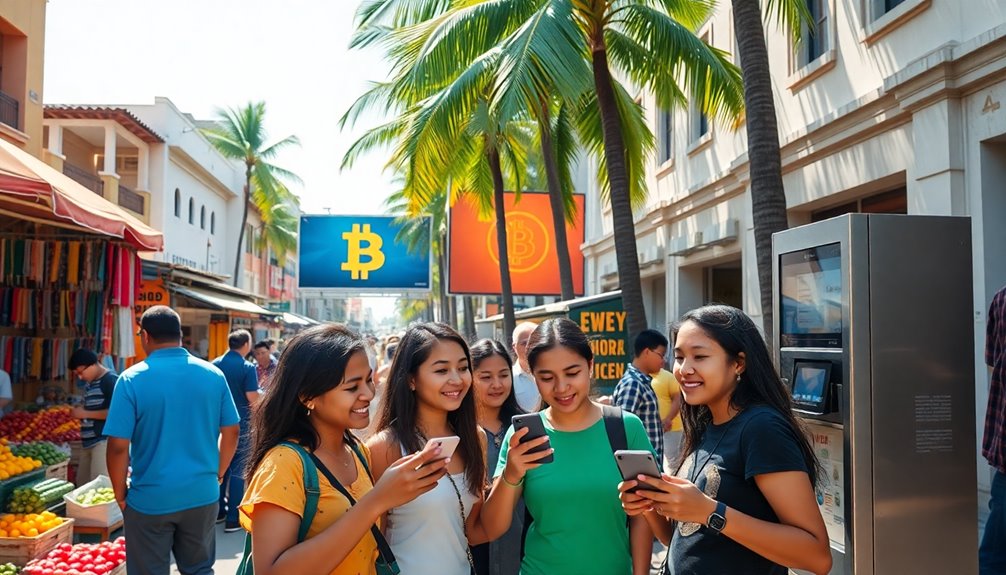

After the IMF deal, you might wonder about Bitcoin's evolving role in El Salvador. While it remains legal tender, the government's approach has become more cautious. Businesses now have the option to accept it, and initiatives like the Chivo Wallet are less emphasized. The focus has shifted to managing financial risks tied to Bitcoin's volatility. So, how does this shift impact the future of cryptocurrency in the country?

Get hardware and tech essentials delivered free with Prime
- Fast, free delivery on millions of items
- Prime Video, Amazon Music and more included
- Member-only deals all year

As El Salvador navigates its unique position in the cryptocurrency landscape, it finds itself adapting its approach to Bitcoin. While Bitcoin retains its status as legal tender, it's no longer treated as a currency. This shift means that businesses aren't obligated to accept Bitcoin anymore; instead, it's now up to them whether they want to use it.
Recent legislative changes reflect this new reality, with six articles of the Bitcoin Law modified and three outright repealed. These adjustments were essential for complying with the International Monetary Fund's conditions tied to a $1.4 billion loan that El Salvador sought for economic stability. The IMF criticized the use of Bitcoin as legal tender due to volatility risks, influencing the government's decision-making process.
The IMF's influence has significantly shaped the nation's handling of Bitcoin, emphasizing the need to reduce risks associated with its volatility. With this in mind, you'll now pay taxes in U.S. dollars instead of Bitcoin. The government has also decided to step back from its involvement in the Chivo Wallet, which was initially a major push to promote Bitcoin usage.
These reforms aim to stabilize the economy and secure further funding, reflecting a cautious approach to cryptocurrency regulation. Despite the regulatory changes, the government remains committed to Bitcoin.
El Salvador continues to purchase Bitcoin, adding to its strategic reserves, which now hold approximately 6,055 Bitcoins valued at around $612 million. Historically, the country has bought one Bitcoin per day, maintaining its reserve size even amid changing legal status. However, the value of these reserves fluctuates with the market, posing potential financial risks.
Internationally, El Salvador set a global precedent by being the first country to adopt Bitcoin as legal tender in 2021. This groundbreaking move has drawn both interest and criticism, especially from the IMF, which has consistently warned about the financial risks tied to using Bitcoin in such a capacity.
The recent changes in El Salvador's approach suggest a more cautious strategy moving forward, which might influence other countries considering similar crypto policies.
As an affiliate, we earn on qualifying purchases.
As an affiliate, we earn on qualifying purchases.
As an affiliate, we earn on qualifying purchases.
As an affiliate, we earn on qualifying purchases.
Halloween Picks
halloween
As an affiliate, we earn on qualifying purchases.