
Self‑Sovereign Identity (SSI) on the blockchain puts you in control of your digital credentials, replacing centralized authorities like banks or social media platforms. It uses decentralized networks and cryptographic proofs to verify your identity securely without exposing unnecessary details. This system enhances your privacy, reduces risks of identity theft, and allows you to manage and share verified credentials only when needed. If you keep exploring, you’ll discover how SSI can transform your digital interactions and security.
Key Takeaways
- SSI enables individuals to control and manage their digital identities securely on the blockchain.
- It replaces centralized authorities by using decentralized verification and cryptographic proofs for credential validation.
- Blockchain ensures tamper-proof, transparent records, enhancing security and trustworthiness in identity verification.
- Users can selectively disclose credentials, preserving privacy and reducing data exposure risks.
- SSI on blockchain promotes user empowerment, security, and resilience in digital identity management.
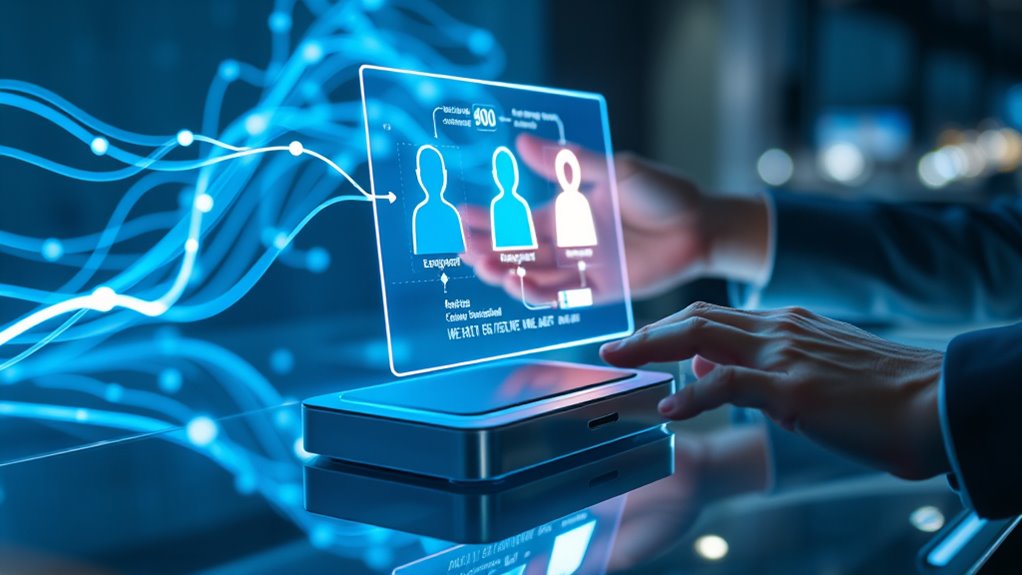
Have you ever wondered how you can take full control of your digital identity? With Self‑Sovereign Identity (SSI) on the blockchain, you become the master of your personal data, deciding what information to share and with whom. Unlike traditional systems that rely on centralized authorities—like banks or social media platforms—SSI leverages decentralized verification methods to authenticate your identity. This means that instead of trusting a third party to verify your credentials, you hold cryptographic proofs that can be independently validated without revealing unnecessary details. This approach not only enhances security but also empowers you to manage your identity on your terms.
One of the key strengths of SSI on the blockchain is its focus on privacy preservation. When you use traditional identity systems, your personal information often gets stored in multiple databases, increasing the risk of data breaches and misuse. With decentralized verification, your data remains under your control, stored securely on a blockchain or as encrypted credentials you hold. Verification occurs through cryptographic proofs that confirm your credentials without exposing sensitive data. For example, you can prove you’re over 18 without revealing your exact birth date or full identity. This selective disclosure ensures your privacy stays intact while still allowing trusted parties to verify your credentials efficiently.
Decentralized verification also means that no single entity controls your identity data. Instead, multiple nodes or validators on the blockchain participate in confirming your credentials, making the system more resilient against tampering and fraud. When you present your credentials, the verifier checks the cryptographic proof against the blockchain’s records, which are tamper-proof and transparent. This process is fast, reliable, and doesn’t require you to surrender control of your personal information to a third party. You’re the one who manages your digital identity, issuing and sharing verified credentials only when necessary. Blockchain-based verification further strengthens the security and integrity of your digital identity by leveraging the decentralized nature of blockchain technology.
Moreover, this system reduces the risk of identity theft because your sensitive data isn’t stored in vulnerable centralized databases. Instead, your credentials are stored securely, and only the cryptographic proof is shared during verification. You can also revoke or update credentials easily, giving you ongoing control over your identity information. As you navigate digital spaces—whether applying for a job, accessing healthcare, or verifying your age—SSI on the blockchain ensures your privacy is preserved and verification is trustworthy. It’s a future where you’re not just a data point for corporations but an active participant in protecting your digital self.
Frequently Asked Questions
How Does SSI Impact Existing Digital Identity Frameworks?
SSI transforms existing digital identity frameworks by enabling decentralized verification, so you can control and share your credentials securely without relying on central authorities. It enhances credential portability, making it easier for you to access and transfer your digital identities across platforms. This shift empowers you with greater privacy, security, and ownership over your personal data, reducing reliance on traditional identity systems and streamlining your digital interactions.
What Are the Costs Associated With Implementing SSI Solutions?
Implementing SSI solutions involves costs mainly from a thorough cost analysis and infrastructure investment. You’ll need to budget for blockchain technology, secure digital wallets, and robust cybersecurity measures. Additionally, training staff and integrating new systems can add expenses. While initial costs may be high, long-term benefits like enhanced security and user control can justify the investment, making SSI a cost-effective choice over traditional identity management methods.
How Is User Privacy Maintained With Blockchain-Based SSI?
You keep your privacy under wraps by leveraging cryptographic privacy techniques, ensuring your data stays secure. Blockchain-based SSI uses decentralized verification, so only you control your credentials, not a third party. You’re the gatekeeper, sharing only what’s necessary, which keeps your identity safe from prying eyes. This way, your personal info remains private while still proving who you are — a win-win that’s built into the system.
What Are the Legal Considerations for SSI Adoption?
You should consider regulatory compliance and liability issues when adopting SSI. Make certain your system aligns with data privacy laws like GDPR and CCPA to avoid penalties. Clarify liability responsibilities for data breaches or misuse to protect your organization. Staying updated on evolving regulations helps you mitigate legal risks, and working with legal experts ensures your SSI implementation is compliant and responsibly managed.
How Scalable Are Current SSI Blockchain Platforms?
Imagine a vast digital highway where your credentials travel smoothly. Current SSI blockchain platforms are improving in scalability, but they face hurdles like blockchain interoperability and credential standards that can slow traffic. As these systems evolve, they become more capable of handling increased users and data. You’ll find that with ongoing innovations, these platforms are becoming more scalable, ensuring your digital identity remains fast, reliable, and ready for the future.
Conclusion
By embracing self‑sovereign identity on the blockchain, you gain control, gain privacy, and gain trust. You own your data, decide who accesses it, and protect your identity. You empower yourself with security, transparency, and autonomy. You shift the power from centralized authorities to yourself. You take charge of your digital life. With self‑sovereign identity on the blockchain, you don’t just participate—you lead, you innovate, and you redefine what identity means in the digital age.