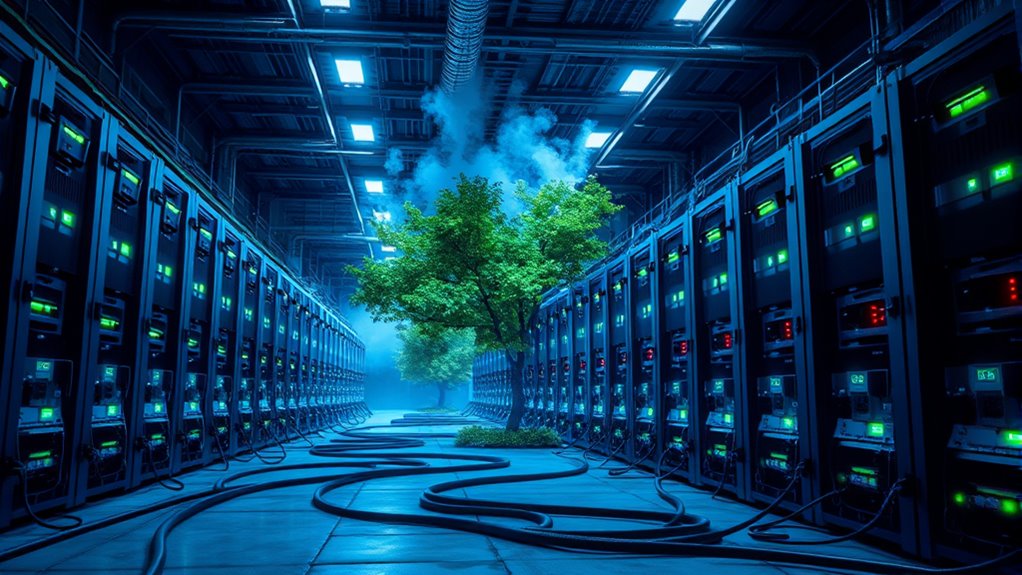

Bitcoin mining uses a huge amount of energy, often comparable to small countries, which raises serious environmental concerns. The process relies on power-hungry computers that mainly run on non-renewable resources like coal and natural gas, increasing greenhouse gases. To address this, many in the industry are shifting toward renewable energy sources like wind, solar, and hydro. They’re also developing more efficient hardware and supporting eco-friendly practices—if you keep exploring, you’ll discover innovative efforts to make mining more sustainable.
Key Takeaways
- Bitcoin mining consumes vast energy, leading to significant greenhouse gas emissions and environmental concerns.
- Industry efforts focus on shifting to renewable energy sources like wind, solar, and hydroelectric power.
- Innovations improve mining hardware efficiency, reducing electricity consumption while maintaining performance.
- Use of sustainable practices and carbon offset programs helps mitigate mining’s ecological impact.
- Scaling renewable energy and supporting policies are essential for achieving long-term environmental sustainability in mining.
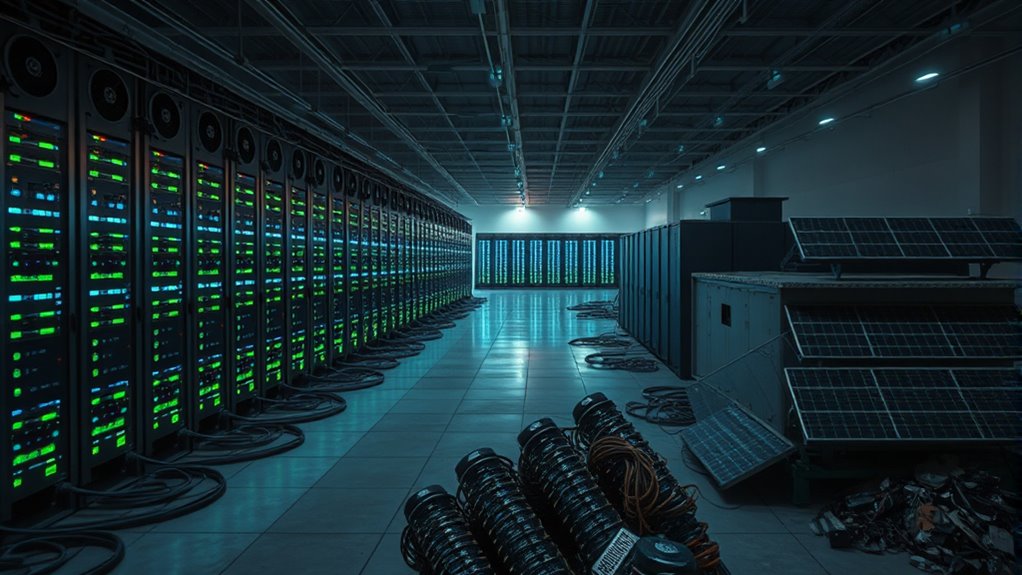
Have you ever wondered how new bitcoins are created and transactions are verified? The process, known as Bitcoin mining, involves powerful computers solving complex mathematical puzzles to confirm transactions on the blockchain. However, this process consumes a significant amount of energy, raising concerns about its environmental impact. The energy used in mining often comes from non-renewable sources like coal and natural gas, which contributes to a larger carbon footprint. As a result, the sustainability of Bitcoin mining has become a hot topic among environmentalists and industry leaders alike.
Bitcoin mining consumes vast energy, raising environmental concerns due to its reliance on non-renewable sources.
You might be surprised to learn that the carbon footprint associated with Bitcoin mining is comparable to that of some small countries. The reason lies in the enormous computational power required to solve cryptographic problems, which demands vast energy resources. This high energy consumption not only releases greenhouse gases into the atmosphere but also strains local power grids, especially in regions where electricity is primarily generated from fossil fuels. Consequently, Bitcoin’s environmental impact is increasingly scrutinized, highlighting the need for more sustainable solutions.
Thankfully, many in the industry recognize these issues and are actively pursuing initiatives to reduce Bitcoin’s environmental footprint. One promising approach involves shifting to renewable energy sources, such as wind, solar, and hydroelectric power. Some mining operations are now situated near renewable energy farms, taking advantage of abundant, clean power that substantially lowers their carbon emissions. These efforts demonstrate that it’s possible to balance technological innovation with environmental responsibility.
Additionally, innovations in mining hardware aim to improve energy efficiency, reducing the amount of power needed to perform the same amount of work. Developers are designing more efficient chips that consume less electricity while maintaining high performance. This progress helps decrease the overall carbon footprint of mining activities, making the process more sustainable over time. Moreover, some companies are investing in carbon offset programs to neutralize their emissions, further demonstrating a commitment to environmentally conscious practices.
Despite these positive developments, the challenge remains to scale these solutions globally. Moving to renewable energy and more efficient hardware requires significant investment and infrastructure changes. As a user or investor, you can support sustainable practices by advocating for policies that promote green energy adoption within the crypto industry. The future of Bitcoin mining depends on balancing technological advancements with the planet’s health, ensuring that innovation doesn’t come at the expense of environmental integrity. By understanding these issues and supporting sustainable initiatives, you contribute to a more eco-friendly approach to digital currency. Recognizing the importance of renewable energy adoption can help drive meaningful change in this industry.
Top picks for "bitcoin environmental impact"
Open Amazon search results for this keyword.
As an affiliate, we earn on qualifying purchases.
Frequently Asked Questions
How Does Bitcoin Mining Affect Local Water Resources?
You might not realize it, but Bitcoin mining can critically impact your local water resources. The process demands high water consumption for cooling equipment, which puts stress on local water supplies. Additionally, if not properly managed, it can lead to aquatic pollution from contaminated runoff or chemical leaks. These issues can threaten aquatic ecosystems, disrupt water availability, and harm nearby communities, making responsible practices vital for sustainability.
What Are the Social Impacts of Large-Scale Mining Operations?
You might notice that large-scale mining operations cause community disruption, as they can lead to noise, pollution, and increased traffic, affecting residents’ daily lives. Additionally, they can worsen economic inequality, as benefits often go to corporations or external investors, leaving local communities behind. This disparity can create social tensions and diminish trust, making it harder for communities to thrive alongside these powerful mining sites.
Are There Renewable Energy Sources Suitable for Mining?
Imagine vast fields of shimmering solar panels stretching to the horizon or wind turbines spinning gracefully against a clear sky. You can harness these renewable sources for mining by integrating solar, wind, hydro, and geothermal energy, ensuring energy diversification. Renewable integration makes mining more sustainable, reducing reliance on fossil fuels. You’re turning to nature’s abundant power, creating a cleaner, greener future where your mining operations thrive without harming the environment.
How Is E-Waste Managed in Bitcoin Mining?
You manage e-waste from bitcoin mining by practicing responsible hardware disposal and e-waste recycling. You can donate or sell outdated mining equipment if it’s still functional, or guarantee proper disposal through certified e-waste recycling centers. This helps prevent harmful environmental impacts, reduces electronic waste, and promotes sustainability. Always follow local regulations for hardware disposal, and consider recycling programs that recover valuable materials from obsolete mining hardware.
What Policies Regulate Mining’s Environmental Footprint Globally?
You might think global policies are as strict as your grandma’s cookie recipe, but they’re more like guidelines for a game of “hide and seek.” Countries pursue regulations on mining’s environmental footprint through carbon offsetting and regulatory compliance. Yet, enforcement varies wildly, making it a wild west of green promises. So, if you’re wondering whether your favorite miner is playing by the rules, don’t hold your breath—it’s complicated and often voluntary.
Conclusion
As you navigate the world of Bitcoin mining, remember it’s a double-edged sword cutting through innovation and environmental concern. While the sparks of progress ignite new possibilities, the smoke of sustainability issues lingers. By embracing greener initiatives, you can help steer this digital revolution toward a brighter, more sustainable horizon. Keep your eyes open and your efforts focused—because, in this game, every action is a crucial beat in the pulse of our planet’s future.