

To use Tether (USDT) for cross-border payments, start by creating a secure crypto wallet that supports USDT. Purchase USDT on a trusted exchange and transfer it to your recipient’s wallet address. Use blockchain networks like Ethereum or Tron for quick and transparent transactions. Always double-check addresses and transaction details before confirming, as blockchain transfers are irreversible. Staying aware of local regulations can help make your transfers smooth—continue to explore for more tips.
Key Takeaways
- Set up a secure crypto wallet supporting USDT and purchase USDT on reputable exchanges.
- Transfer USDT to the recipient’s wallet address using blockchain networks like Ethereum or Tron.
- Verify wallet addresses and transaction details before confirming, as blockchain transfers are irreversible.
- Ensure compliance with local regulations and stay informed about legal requirements for stablecoin use.
- Leverage USDT’s stability and quick transfer capabilities to facilitate efficient cross-border payments.
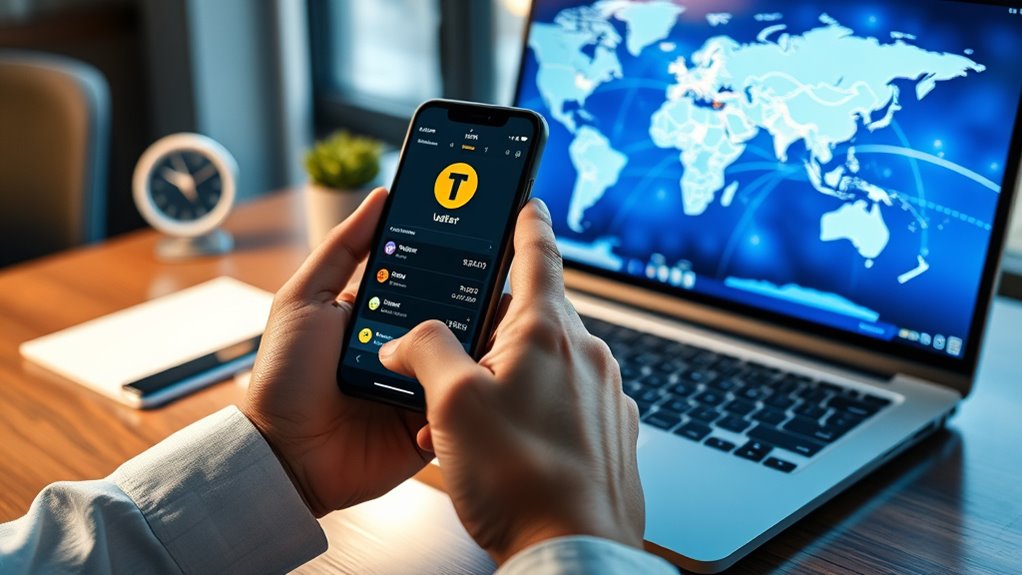
When it comes to cross-border payments, Tether (USDT) offers a practical solution by providing a stable and efficient way to transfer funds internationally. Unlike traditional cryptocurrencies like Bitcoin or Ethereum, USDT is a stablecoin pegged to the US dollar, which helps minimize the impacts of cryptocurrency volatility. This stability makes it easier for you to send and receive money across borders without worrying about sudden price swings eroding the value of your funds. As you consider using Tether, it’s crucial to understand how cryptocurrency volatility can affect your transactions, especially during periods of market turbulence. By opting for USDT, you fundamentally hedge against the unpredictable fluctuations common in other digital assets, ensuring your transfer retains its intended value.
Tether (USDT) provides a stable, efficient way to send cross-border payments while minimizing cryptocurrency volatility risks.
However, while USDT offers stability, you still need to navigate the complex landscape of regulatory challenges that come with digital assets. Different countries have varying rules regarding stablecoins and cryptocurrency use, which can affect how smoothly your cross-border transactions go. Some jurisdictions impose strict licensing requirements, while others may have outright bans on certain crypto activities. These regulations can delay your transfers, increase costs, or even restrict the type of platforms you can use. To avoid surprises, it’s wise to stay informed about the legal environment in both your home country and the recipient’s country. Using reputable exchanges and wallets that comply with local laws can help you stay within regulatory boundaries and reduce the risk of losing access to your funds.
To get started, you’ll need a reliable crypto wallet that supports USDT. Once you’ve set up your wallet, you can purchase USDT on a trusted exchange, ensuring it’s stored securely. When you want to send money abroad, simply transfer USDT to the recipient’s wallet address. Because Tether operates on blockchain networks like Ethereum or Tron, the process is quick and transparent—your funds move almost instantly, and you can track the transaction in real time. Just be sure to double-check wallet addresses and transaction details before confirming, as blockchain transactions are irreversible. Additionally, verifying the supported blockchain networks can help you choose the most cost-effective transfer options.
Despite its advantages, always consider the regulatory landscape and potential volatility in your planning. Keep your private keys secure, choose compliant platforms, and stay updated on local laws that may impact your use of stablecoins. By doing so, you can leverage Tether’s stability and efficiency to facilitate smooth, cost-effective cross-border payments without falling prey to the unpredictable swings of unanchored cryptocurrencies.
Frequently Asked Questions
Is Tether Regulated in Different Countries?
You should know that Tether’s regulation varies by country. Some places have strict regulatory compliance, making it harder to use or hold Tether legally. Other countries impose country restrictions or outright bans, so it’s important to verify local laws before using Tether. Always stay informed about the legal landscape in your jurisdiction to avoid issues and ensure your cross-border payments are compliant and secure.
What Are the Fees Associated With Tether Transactions?
You might think Tether transaction fees are tiny, but they’re actually quite manageable! For most transfers, the transaction fees are minimal—usually a flat fee or a small percentage, making it super cost-effective. Transfer costs are typically lower than traditional banking or remittance services, saving you a fortune. So, whether you’re sending large sums or small amounts, Tether keeps your costs low and your cross-border payments smooth as silk.
How Secure Is Tether for International Transfers?
Tether is generally secure for international transfers, thanks to blockchain technology that guarantees transparency and fast settlement. However, you should stay aware of cryptocurrency volatility, which can affect value during transactions. Additionally, Tether complies with regulatory standards, reducing risks of legal issues. By understanding these factors, you can confidently use Tether for cross-border payments, knowing it offers a reliable and compliant option amidst the evolving crypto landscape.
Can Tether Be Used Without a Cryptocurrency Wallet?
You can’t use Tether without a cryptocurrency wallet because it’s a digital asset that needs secure storage. Remarkably, over 60% of crypto users store their assets in digital wallets, highlighting their importance. Without a wallet, you can’t access or transfer Tether. Cryptocurrency wallets provide a safe way to manage your digital assets, ensuring your Tether stays secure and easily accessible for cross-border payments or other transactions.
What Are the Risks of Holding Tether Long-Term?
Holding Tether long-term carries risks like stability issues, as stablecoins can sometimes experience de-pegging, affecting your assets. Regulatory challenges also pose a threat, since governments may impose restrictions or bans on stablecoins, impacting their value and usability. You should stay informed about legal developments and understand that while Tether aims for stability, market fluctuations and evolving regulations could influence your investment’s safety over time.
Conclusion
Now that you understand how to use Tether for cross-border payments, imagine the possibilities it enables—faster, cheaper transactions across borders. But there’s more to uncover. Will this technology revolutionize global finance as we recognize it? Stay tuned, because the future of international payments might just depend on how you leverage Tether today. The next big breakthrough could be closer than you think—are you ready to be part of it?