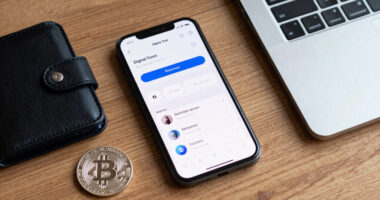

Ledger Nano X and Trezor Safe 5 are both hardware wallets: they keep private keys on a dedicated device and require the owner to approve transactions. The real choice is how you want to manage that security. The Nano X adds Bluetooth for phone-based use and supports a broad range of assets through Ledger’s software and compatible wallets. The Safe 5 offers a larger color touch screen, a secure element, and an open-source-oriented platform, but connects by USB rather than Bluetooth.

Get hardware and tech essentials delivered free with Prime
- Fast, free delivery on millions of items
- Prime Video, Amazon Music and more included
- Member-only deals all year

Ledger Nano X Bluetooth Crypto Wallet
- ✔ Model: Nano X
- ✔ Display: 1.1-inch OLED
- ✔ Connectivity: Bluetooth, NFC, USB

Tangem Crypto Wallet, 2-Card Pack
- ✔ Model: TG128X2-B
- ✔ Pack quantity: 2 cards
- ✔ Key storage: Generated and stored in EAL6+ chip

Tangem Wallet 2.0 Crypto Hardware Wallet, Pack of 3
- ✔ Model: Tangem Wallet 2.0, model 001
- ✔ Pack quantity: 3 cards
- ✔ Connectivity: NFC
Choose the Nano X if you want to approve transactions from a phone or need broad asset coverage in one device. Choose the Safe 5 if a clear on-device interface and greater access to published hardware and software information matter more. Neither is a universal answer: supported coins, wallet compatibility, backup habits, and whether you trust each maker’s design are decisive parts of the purchase.
At a Glance
| Criteria | Ledger Nano X | Trezor Safe 5 | Winner |
|---|---|---|---|
| Mobile connectivity | Bluetooth and USB-C; supports phone use with Ledger Live | USB-C connection; no Bluetooth | A |
| On-device controls | Small screen with buttons; device navigation is more compact | Color touch screen makes address and transaction review more direct | B |
| Security design and transparency | Uses a secure element and Ledger’s proprietary device components; closed-source elements limit independent inspection | Secure element alongside a more open-source-oriented platform; some hardware components remain proprietary | B |
| Asset and wallet compatibility | Broad asset support; some assets use third-party wallets or apps rather than Ledger Live | Supports many major assets, though exact coverage and wallet integrations differ from Ledger | Depends |
| Backup and recovery | Recovery phrase backup; optional Ledger Recover service is available in supported regions | Recovery seed backup with optional Shamir backup support on compatible setup flows | B |
| Price and value | Often positioned as a midrange device; added convenience can justify the cost for mobile users | Typically costs more than entry models; screen and interface are the main value gains | Depends |
Ledger Nano X Bluetooth Crypto Wallet
The Ledger Nano X is our most versatile pick for buyers who want a dedicated signer with a screen and the option to manage crypto while away from a computer. Its Bluetooth connection, rechargeable battery, and iOS support make it more suited to phone-based use than either Tangem card set, which must be tapped against a compatible NFC phone. Ledger’s app supports more than 15,000 coins and tokens, giving this model a broad stated range for people who hold assets across different networks.The tradeoff is that the Nano X is still a small device: its 1.1-inch OLED display limits how much transaction information we can inspect at once. It also brings a battery and Bluetooth into the setup, while Tangem’s card wallets are simpler to carry and need neither. For buyers who prefer a screenless tap-to-access routine, the Tangem two-card pack is a better match. We rank Ledger first because it offers the clearest combination here of mobile access, a local display, and broad app support—not because every crypto holder needs those features.
Pros:
- Bluetooth and iOS support enable mobile use.
- Rechargeable battery supports portable operation.
- OLED display provides an on-device view during use.
- Ledger Wallet app lists support for more than 15,000 coins and tokens.
Cons:
- The 1.1-inch display is small for reviewing information.
- Not compatible with Chromebooks.
- Battery and Bluetooth make it less minimal than Tangem’s card approach.
Best for: Crypto holders who want a compact hardware signer with Bluetooth, a rechargeable battery, an OLED screen, and support for desktop or mobile workflows.
Not ideal for: Buyers who use Chromebooks, want a screenless card, or prefer a wallet that does not require charging.
Bottom line: Choose the Nano X when a display and flexible mobile connectivity matter more to us than a battery-free card design.
“Choose the Nano X when a display and flexible mobile connectivity matter more to us than a battery-free card design.”
Tangem Crypto Wallet, 2-Card Pack
Tangem’s two-card pack is the straightforward choice for people who want a hardware wallet that behaves more like a phone accessory than a small electronic device. We tap a card using NFC, and the private key is generated and stored inside an EAL6+ chip. Setup does not require a seed phrase by default, which can suit buyers who would rather avoid writing down and securing a recovery phrase. The included second card provides a backup path within the card system.Compared with Ledger, Tangem removes the display, charging, and Bluetooth, simplifying what we carry but making a compatible NFC phone essential for access. Compared with the three-card Tangem Wallet 2.0, this set has one fewer backup card. That may be enough for someone who wants a primary card and one separately stored backup, but it gives us fewer placement options if we want multiple recovery cards in different secure locations. The model lists support across 90+ blockchains and 16,100+ assets, along with IP69K water resistance. Buyers should understand its phone dependence and recovery choices before settling on a seedless setup.
Pros:
- Private key is generated and stored in an EAL6+ chip.
- Second card provides a backup without requiring a paper seed phrase by default.
- NFC operation needs no cable, Bluetooth, or battery.
- Lists support for 90+ blockchains and 16,100+ assets.
Cons:
- Requires a compatible phone with NFC access.
- No display for on-device transaction review.
- Only one backup card is included, unlike the three-card Tangem set.
Best for: Phone users who want a compact, battery-free wallet with chip-based key storage and one backup card, without a required seed phrase at setup.
Not ideal for: People without a compatible NFC phone, buyers who want an on-device screen, or those who want more than one backup card.
Bottom line: Pick the two-card Tangem when we want a minimal phone-tapped wallet and one backup card is sufficient for our recovery plan.
“Pick the two-card Tangem when we want a minimal phone-tapped wallet and one backup card is sufficient for our recovery plan.”
Tangem Wallet 2.0 Crypto Hardware Wallet, Pack of 3
Tangem Wallet 2.0 keeps the same phone-tap approach as the two-card pack but includes three cards total: a primary card and two encrypted backups. That additional card is its defining advantage. We can keep the backups separately, which may make recovery planning more flexible for buyers who want multiple secure storage locations. Keys are generated and kept inside an EAL6+ chip, and a seed phrase is not required by default.There is no major shift in day-to-day interaction compared with the two-card Tangem set: both use NFC, require a compatible phone, and omit a screen, cable, Bluetooth, and battery. So the extra card matters most if we have a deliberate plan for keeping backups apart; otherwise, the two-card pack already covers a primary-plus-backup arrangement. Ledger remains the stronger fit for people who want a display and Bluetooth-based mobile signing. Tangem Wallet 2.0 adds recovery flexibility rather than a different access style, and it is best chosen with that specific distinction in mind.
Pros:
- Includes two encrypted backup cards alongside the primary card.
- Private keys are generated and stored inside an EAL6+ chip.
- NFC access works without cables, Bluetooth, or batteries.
- IP69K water resistance and testing across a wide temperature range.
Cons:
- Requires a compatible NFC phone to access the wallet.
- Backup cards need separate secure storage to provide practical recovery flexibility.
- Compared with the two-card Tangem, the key distinction is the additional backup card.
Best for: Buyers who prefer Tangem’s NFC card format and want two backup cards available for separate secure storage locations.
Not ideal for: People who will not keep backup cards separately, need access without a compatible NFC phone, or want a display-equipped signer.
Bottom line: Choose Tangem Wallet 2.0 when we value having two backup cards to place separately more than having a screen or Bluetooth connection.
“Choose Tangem Wallet 2.0 when we value having two backup cards to place separately more than having a screen or Bluetooth connection.”
As an Amazon Associate we earn from qualifying purchases.
Key Differences
The practical split is phone-first convenience versus a more spacious device interface. Nano X can connect over Bluetooth, which is useful for checking and approving transactions away from a computer. Safe 5 requires a cable, but its color touch screen makes details easier to inspect on the device itself. For frequent mobile use, that convenience can outweigh the smaller display; for careful transaction review, the Safe 5 is more comfortable.
Security is not a simple contest with one universally superior winner. Both keep signing keys on the device and require physical approval, but their approaches differ. Ledger relies on a secure element and proprietary components, while Trezor emphasizes open documentation and open-source software, with some proprietary hardware elements. Open code can support independent scrutiny, but it does not by itself prove a device is safer. Buyers should also consider supply-chain practices, firmware updates, recovery procedures, and the possibility of phishing or user error.
Asset support and value depend on your actual portfolio. Ledger has wide coverage, although some assets may require compatible third-party wallet software. Trezor supports many widely used cryptocurrencies, but not every token or network has equal support. Check the manufacturers’ current asset lists before purchase. Paying more for the Safe 5 makes sense if its touch screen and backup options improve how you verify and protect transactions. If you mainly need broad support and mobile access, the Nano X can offer better value.
Detailed Comparison
Mobile connectivity (Ledger Nano X wins — moderate)
Ledger Nano X wins, with a moderate gap. Bluetooth lets it pair with compatible phones, so users can manage assets without carrying a cable or opening a laptop. Trezor Safe 5 uses USB-C and has no Bluetooth. That wired connection is simple and avoids wireless pairing, but it limits use on phones without a suitable port or adapter. Choose Nano X for on-the-go access; choose Safe 5 if desktop or wired phone use suits your routine.
On-device controls (Trezor Safe 5 wins — moderate)
Trezor Safe 5 wins, with a moderate gap. Its color touch screen gives more room to review transaction details and navigate menus. The Nano X’s smaller display and buttons are functional, but long addresses and detailed prompts take more effort to inspect. Both devices still require confirmation on the hardware itself. The Safe 5 is more comfortable for users who routinely review transactions; the Nano X is adequate for simpler use.
Security design and transparency (Trezor Safe 5 wins — moderate)
Trezor Safe 5 has an edge for inspectability, but the outcome depends on user priorities. Trezor publishes more of its software and design for public review, while Ledger uses proprietary components alongside its secure element. That is a meaningful difference for buyers who value open-source review, though openness alone cannot establish better security. Both require device approval to sign transactions, and either can be undermined by a compromised computer, a fake device, or a stolen recovery phrase. The practical winner is B for transparency preference; buyers who prioritize a particular secure-element design may prefer A.
Asset and wallet compatibility (major difference)
Neither wins for every portfolio. Ledger offers broad asset coverage, but support can depend on third-party wallet apps and may differ from what Ledger Live itself handles. Trezor supports many major assets and integrates with compatible wallets, but some networks or tokens may be missing. This is a major decision criterion if you hold less common assets. Compare the current official support lists for every coin and network you own before buying; the winner is whichever supports your actual portfolio and preferred wallet software.
Backup and recovery (Trezor Safe 5 wins — moderate)
Trezor Safe 5 has a moderate advantage for users who want advanced backup choices. Compatible Trezor setup flows support Shamir backup, which can split recovery information into shares; that adds flexibility but also adds setup and storage complexity. Ledger uses a standard recovery phrase and offers Ledger Recover as an optional service in supported regions. Either way, the recovery method must be understood and secured before funds are deposited. If you prefer a straightforward phrase backup, both can work; if you specifically want Shamir options, B is the better fit.
Price and value (moderate difference)
The value winner depends on whether you will use the premium features. Nano X can be a better buy for someone who needs Bluetooth and wide asset coverage. Safe 5’s higher price, where applicable, buys a more capable screen and additional backup flexibility. Those features are useful only if they change how you review transactions or manage recovery. Compare current regional prices, since promotions and availability vary. Pay more for Safe 5 when the interface or backup approach matters; otherwise, the Nano X may be the stronger value.
Ledger Nano X: Pros and Cons
Pros:
- Bluetooth supports convenient use with compatible phones
- Broad cryptocurrency and wallet compatibility
- Compact design for travel
- Optional recovery service is available in supported regions
Cons:
- Small screen is less comfortable for reviewing transaction details
- Proprietary components offer less public inspectability
- Some assets require third-party wallet software
- Wireless convenience may be unnecessary for desktop-only users
Trezor Safe 5: Pros and Cons
Pros:
- Color touch screen makes device navigation and review easier
- Open-source-oriented software and design support public scrutiny
- Shamir backup options are available in compatible flows
- USB-C wired connection avoids Bluetooth pairing
Cons:
- No Bluetooth for cable-free phone use
- Costs more than some simpler hardware wallets
- Asset support still varies by coin, network, and wallet integration
- Advanced backup options can add setup complexity
Who Should Choose What
Choose Ledger Nano X if:
- You want to manage and approve transactions from a compatible phone over Bluetooth.
- Your portfolio needs Ledger’s asset coverage or wallet integrations.
- You prefer a compact device and would rather spend less than pay for a larger display.
Choose Trezor Safe 5 if:
- You want a color touch screen to review addresses and transaction prompts more easily.
- Publicly inspectable software and a more open design approach matter to you.
- You want the option of Shamir backup and are comfortable managing a more involved recovery setup.
Skip both if: Skip both if your coins are unsupported, you are unwilling to store a recovery phrase securely, or you need a wallet model with a different backup or connectivity approach. Check current compatibility before buying.
Value for Money
Paying more for the Trezor Safe 5 is worthwhile when the screen materially improves your transaction checks or when its backup options match a recovery plan you will maintain. Those features can help reduce mistakes, but they do not replace careful handling of recovery information. If you will mostly connect to a computer and make occasional transfers, a lower-cost model may cover your needs.
The Ledger Nano X is better value for buyers who will actually use Bluetooth or need its particular asset and wallet support. For desktop-only users who do not need its broader compatibility, the premium over a basic wired wallet may go unused. Verify current prices and coin support in your region; the best value is the least expensive supported device that fits your routine and recovery plan.
Final Verdict
For most buyers choosing specifically between these two, the Trezor Safe 5 is the better pick if clear transaction review and a more open design are the priorities. Its touch screen makes device-side checks easier, and its backup options give experienced users more flexibility. Choose the Ledger Nano X instead if Bluetooth access is a daily convenience or its asset support is a better match for your holdings. The biggest deciding factor is not brand reputation: it is whether your exact coins are supported and which device makes you more likely to verify transactions and protect recovery information consistently.
Frequently Asked Questions
Is Ledger Nano X safer than Trezor Safe 5?
Neither is categorically safer for every user. They use different security designs, and both require device approval to sign transactions. Ledger uses proprietary components with a secure element; Trezor emphasizes more open software and design information, with some proprietary hardware elements. Device handling and recovery phrase security remain central for either wallet.
Can I use Ledger Nano X without Bluetooth?
Yes. It can connect by USB-C, so Bluetooth is optional. That makes it usable in a wired setup if you prefer not to pair it wirelessly.
Does Trezor Safe 5 support every cryptocurrency?
No hardware wallet supports every coin and network. Check Trezor’s current support information for each asset you hold, including whether the asset requires a compatible third-party wallet. Do the same for Ledger before choosing.
Is the Trezor Safe 5 worth paying more for?
It can be worth the extra cost if you value its color touch screen for transaction review or want compatible Shamir backup options. If you mainly need Bluetooth access or Ledger’s specific asset integrations, Nano X may be the better value.