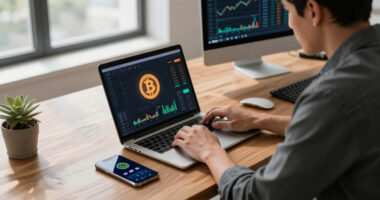
If you’re curious about Bitcoin mining economics, understand that electricity costs play a huge role in profitability. Even if you’re not a miner, knowing that cheap or renewable energy makes mining more viable can help you grasp the business side. Hardware efficiency and technological advances are essential, too—faster, energy-efficient equipment keeps miners competitive as network difficulty rises. To see how all these factors interact and influence Bitcoin’s market dynamics, keep exploring this fascinating topic.

Get hardware and tech essentials delivered free with Prime
- Fast, free delivery on millions of items
- Prime Video, Amazon Music and more included
- Member-only deals all year
Key Takeaways
- Bitcoin mining profitability depends heavily on electricity costs and hardware efficiency, impacting overall earnings for non-miners.
- Low-cost, renewable energy sources enhance mining profitability by reducing operational expenses.
- Technological advancements and hardware upgrades are essential to stay competitive amid rising network difficulty.
- High electricity prices can make mining unprofitable, discouraging participation without access to cheap power.
- Successful mining requires balancing hardware performance, energy costs, and difficulty fluctuations for sustainable profits.
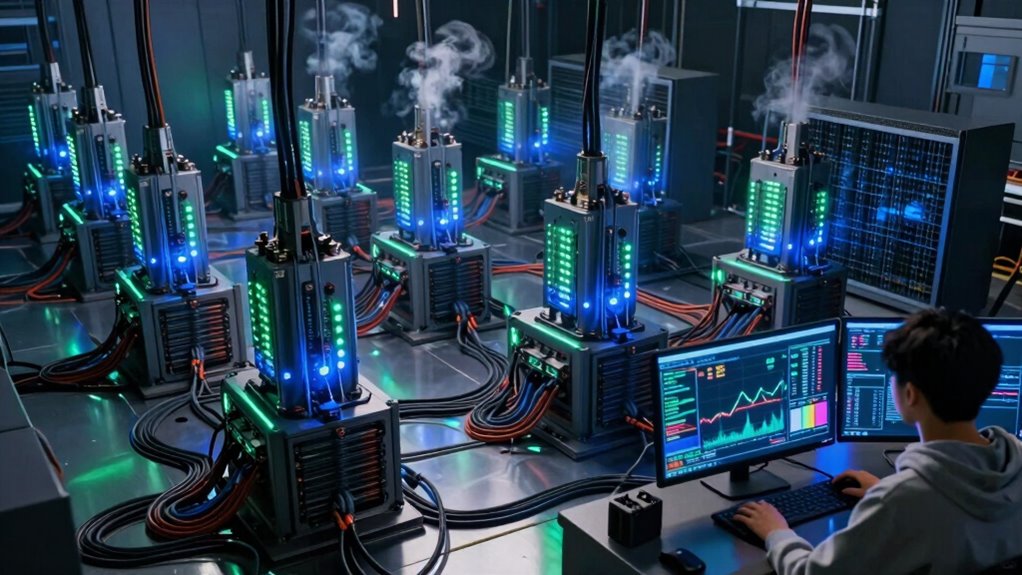
Electricity costs are arguably the most significant expense in Bitcoin mining. Since mining involves continuously running your hardware 24/7, the amount you pay for power can make or break your profitability. If electricity prices are high in your area, it might not be worth setting up a mining operation at all. Conversely, if you have access to cheap or renewable energy, your chances of turning a profit increase substantially. Many miners seek locations with low electricity rates or even set up operations near hydroelectric, wind, or solar farms to keep costs down. The ongoing costs of electricity often outweigh the initial investment in hardware, so understanding and managing these expenses is essential for success.
Beyond hardware and electricity, technological factors also influence mining economics. As more miners join the network, the difficulty adjusts to ensure blocks are mined roughly every ten minutes. This means your hardware needs to keep pace with the network’s difficulty to stay profitable. Investing in more efficient hardware helps you achieve higher hash rates—your hardware’s ability to solve puzzles—while consuming less power. Keeping up with technological advancements can provide a competitive edge, as newer hardware often offers better performance and energy efficiency.
In essence, your profitability hinges on balancing these factors: selecting effective mining hardware, minimizing electricity costs, and staying updated with technological improvements. If you can optimize these areas, you stand a better chance of earning Bitcoin from your efforts. However, it’s also essential to consider the ongoing costs and the ever-changing landscape of mining difficulty. Being aware of these elements allows you to make informed decisions about whether mining is a worthwhile venture for you and how to maximize your potential gains within the evolving Bitcoin ecosystem.
As an affiliate, we earn on qualifying purchases.
Frequently Asked Questions
How Does Bitcoin’s Halving Event Affect Mining Profitability?
Bitcoin’s halving event reduces the block reward, meaning you get half as many bitcoins for mining each block. This block reward reduction can lower your mining profitability unless market prices increase substantially. If the market price influences miner revenue positively, it might offset the reward reduction. However, if prices stay steady or drop, your profitability decreases, making it more challenging to cover mining costs and stay profitable.
What Are the Environmental Impacts of Bitcoin Mining?
You should know that Bitcoin mining has significant environmental impacts, mainly due to its energy consumption. Many miners use non-renewable energy sources, increasing the carbon footprint. However, some are shifting towards renewable energy like solar or hydropower to reduce environmental harm. While these efforts help, overall, Bitcoin mining still contributes to greenhouse gas emissions and environmental degradation, highlighting the need for more sustainable practices in the industry.
Can Anyone Start Mining Bitcoin With a Home Setup?
Yes, you can start mining Bitcoin with a home setup, but it’s challenging. For example, a hobby miner might use an ASIC miner like the Antminer S9, which requires specific hardware and substantial power. You’ll need powerful hardware and reliable internet, plus understanding the energy costs involved. Keep in mind, profitability varies based on electricity prices and hardware efficiency, so it’s essential to weigh these factors before diving in.
How Do Mining Pools Influence Individual Miners’ Earnings?
Mining pools influence your earnings through their payout structures and mining pool dynamics. When you join a pool, your rewards are combined with others, then distributed based on your contributed hashing power. This often results in more steady payouts, but the size of your earnings depends on the pool’s payout method—e.g., proportional, pay-per-share, or PPS. Understanding these structures helps you gauge potential income and manage expectations effectively.
What Future Trends Could Impact Bitcoin Mining Economics?
Future trends like blockchain scalability improvements and miner hardware advancements could substantially impact Bitcoin mining economics. As blockchain scalability increases, transaction fees might decrease, affecting miners’ revenue. Meanwhile, advancements in hardware, such as more efficient ASICs, can lower energy costs and boost profitability. Staying adaptable to these technological developments will be crucial for miners to maintain competitiveness and profitability in the evolving landscape of Bitcoin mining.
As an affiliate, we earn on qualifying purchases.
Conclusion
Now that you understand the basics of Bitcoin mining economics, you’re better equipped to balance the burdens and benefits. By carefully calculating costs, cooling concerns, and electricity expenses, you can craft a clever, cost-conscious strategy. Remember, mining isn’t merely a monetary mission—it’s a meticulous maze of mechanics and margins. With wise words and watchful eyes, you’ll ward off waste and win within the world of digital wealth. Happy mining!
renewable energy power supply for mining
As an affiliate, we earn on qualifying purchases.
As an affiliate, we earn on qualifying purchases.
As an affiliate, we earn on qualifying purchases.
Halloween Picks
halloween
As an affiliate, we earn on qualifying purchases.