
Bitcoin's a digital currency that changes how you manage money. It operates on a blockchain, which ensures secure and direct peer-to-peer transactions. You don't need banks or central authorities. To use Bitcoin, you'll create a wallet containing unique keys for sending and receiving coins. The total supply is capped at 21 million, making it scarce. Investing in Bitcoin can offer high returns, but it comes with volatility risks. Always store your coins securely, preferably in hardware wallets. Want to know how it all works and what else you might need to get started? There's much more to explore.

Get hardware and tech essentials delivered free — and shop member deals
- Fast, free delivery on millions of items
- Access to Prime Big Deal Days deals on October 6–7
- Prime Video, Amazon Music and more included
Key Takeaways
- Bitcoin is a decentralized digital currency launched in 2009, allowing peer-to-peer transactions without central authority involvement.
- Transactions are secured through public and private keys, ensuring safe transfers between users.
- Bitcoin operates on a blockchain, where miners validate transactions by solving cryptographic puzzles.
- The total supply of Bitcoin is capped at 21 million coins, influencing its scarcity and potential value.
- Investing in Bitcoin can offer high returns, but comes with significant volatility and risks; secure storage is crucial.
As an affiliate, we earn on qualifying purchases.
Understanding Bitcoin Basics
When it comes to understanding Bitcoin, you'll find it's more than just a digital currency; it's a revolutionary technology. Launched in 2009 by the mysterious Satoshi Nakamoto, Bitcoin aims to eliminate the need for central authorities like banks. It operates on blockchain technology, which supports peer-to-peer transactions across a decentralized network. Each transaction gets authenticated through a proof-of-work mechanism, rewarding miners for their validation efforts. The total supply of Bitcoin is capped at 21 million coins, influencing its scarcity and value. Additionally, utilizing a Bitcoin IRA can provide tax-efficient growth for your retirement savings.
Your Bitcoin wallet contains both a public key and a private key, allowing you to initiate and sign transactions securely. Each Bitcoin is a digital asset, with the smallest unit being a Satoshi, making it versatile for various transactions. Understanding these basics sets the foundation for diving deeper into the world of cryptocurrencies.
As an affiliate, we earn on qualifying purchases.
Essential Concepts of Bitcoin
Understanding Bitcoin's foundational principles is key to grasping how it operates in practice.
First, Bitcoin is disintermediated, allowing transactions directly between users, which eliminates unnecessary middlemen.
It's also distributed, meaning thousands of computers share the workload, enhancing reliability and scalability without a single point of failure. This distributed nature supports seamless processing and quick transaction confirmations.
Next, Bitcoin is decentralized; there's no central authority managing transactions or data, granting users greater autonomy and security.
Lastly, it's trustless—there's no need for third-party verification. Instead, trust comes from blockchain technology, where all nodes reach a consensus on transaction validity through a proof-of-work mechanism.
These concepts together create a robust framework that empowers you to engage with Bitcoin confidently.
As an affiliate, we earn on qualifying purchases.
How Bitcoin Transactions Work

Bitcoin transactions involve a series of clear steps that ensure secure and efficient transfers between users.
First, you decide to send Bitcoin, enter the recipient's public address, and specify the amount. Your wallet then creates a transaction message, which you sign using your private key to prove ownership.
Next, the signed transaction is broadcast to the Bitcoin network, where nodes collect it. Miners verify its authenticity and your balance, ensuring compliance with Bitcoin rules.
Once a miner solves a cryptographic puzzle, your transaction gets added to a block on the blockchain. After receiving several confirmations, your transaction is finalized, updating the recipient's wallet balance.
As an affiliate, we earn on qualifying purchases.
The Process of Bitcoin Mining
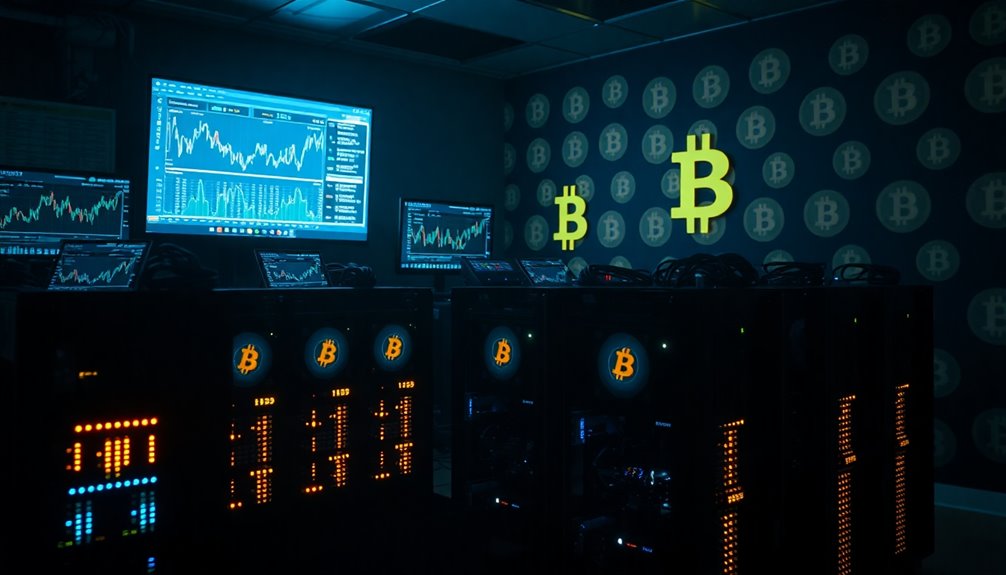
While many people might think of Bitcoin as just a digital currency, the process of mining it plays a crucial role in maintaining the network's integrity and security.
Bitcoin mining involves powerful devices and software competing to solve cryptographic problems, validating transactions through a process known as proof-of-work (PoW). Miners gather transactions from the Mempool, hash them into blocks, and race to find a valid hash that meets network targets. The decentralized verification system ensures that transactions are secure and prevents double-spending.
The first miner to solve the PoW problem broadcasts their block, which is then confirmed by the network. For effective mining, you'll need specialized hardware, mining software, and a reliable power source.
This process not only secures the network but also rewards miners with newly minted Bitcoins and transaction fees.
Investing in Bitcoin
Why invest in Bitcoin? It's a digital asset that offers potential for high returns and portfolio diversification. Additionally, historical price trends indicate that Bitcoin can experience volatility, which may present both risks and rewards for investors.
Start by choosing a reliable cryptocurrency exchange like Coinbase or Binance, which provide user-friendly interfaces and robust security.
When you're ready, connect your exchange account to a payment method, such as a bank account or debit card.
You can place different types of orders, including market or limit orders, to suit your investment strategy.
Consider setting up recurring purchases to dollar-cost average. As of October 2023, Bitcoin's price volatility remains significant, which can lead to both risks and opportunities for investors.
Lastly, ensure safe storage of your Bitcoin in a secure wallet, preferably a hardware wallet, to protect your investments from potential hacks on exchanges.
With these steps, you're on your way to investing confidently in Bitcoin.
Frequently Asked Questions
How Do I Keep My Bitcoin Wallet Secure?
To keep your Bitcoin wallet secure, regularly conduct security audits and code reviews to identify vulnerabilities.
Use anti-malware software and monitor system activity. Store only small amounts in hot wallets and enable two-factor authentication.
Invest in hardware security modules for storing private keys, and always back up your wallet in multiple secure locations.
Keep wallet software updated and practice recovery methods to ensure you're prepared for any potential issues.
Can I Use Bitcoin for Everyday Purchases?
Imagine strolling through a digital marketplace, where you can buy everything from gadgets to gourmet meals using Bitcoin.
Yes, you can use Bitcoin for everyday purchases! Many online retailers and food delivery services now accept it, making transactions as smooth as a well-oiled machine.
You can even snag gift cards for your favorite stores. As acceptance grows, using Bitcoin in your daily life becomes more practical and convenient, adding flexibility to your spending.
What Are the Tax Implications of Using Bitcoin?
When you use Bitcoin, you need to consider tax implications.
The IRS treats it as property, meaning any sale or exchange can trigger capital gains taxes. If you hold Bitcoin for over a year, you'll benefit from lower long-term rates; otherwise, short-term gains are taxed like regular income.
You must keep detailed records of your transactions and report them accurately on your tax returns to avoid issues with the IRS.
How Is Bitcoin Different From Other Cryptocurrencies?
Bitcoin stands apart from other cryptocurrencies due to its decentralized nature, fixed supply of 21 million coins, and proof-of-work consensus mechanism.
While many altcoins might focus on different features, Bitcoin's scarcity and durability make it a reliable store of value.
You'll find that its pseudonymous transactions and immutable ledger enhance privacy while ensuring transparency.
Additionally, Bitcoin's strong market dominance and brand recognition solidify its status as the leading cryptocurrency.
What Happens if I Lose My Private Key?
If you lose your private key, it feels like losing a treasure chest with no way to open it.
Your Bitcoin becomes permanently inaccessible; there's no recovery method once it's gone.
The blockchain still records your Bitcoin at its original address, but it can't be moved or spent.
This loss decreases the total supply, making remaining Bitcoin scarcer and potentially increasing its value, but you won't benefit from it without that key.
Conclusion
In conclusion, diving into Bitcoin can be exciting and rewarding if you grasp the basics. Did you know that as of October 2023, over 300 million people worldwide are using cryptocurrencies? That's a sign of just how popular this digital currency has become! By understanding how Bitcoin works, from transactions to mining, you can confidently navigate this dynamic market. So, take the plunge and explore the fascinating world of Bitcoin—you won't regret it!
Halloween Picks
halloween
As an affiliate, we earn on qualifying purchases.