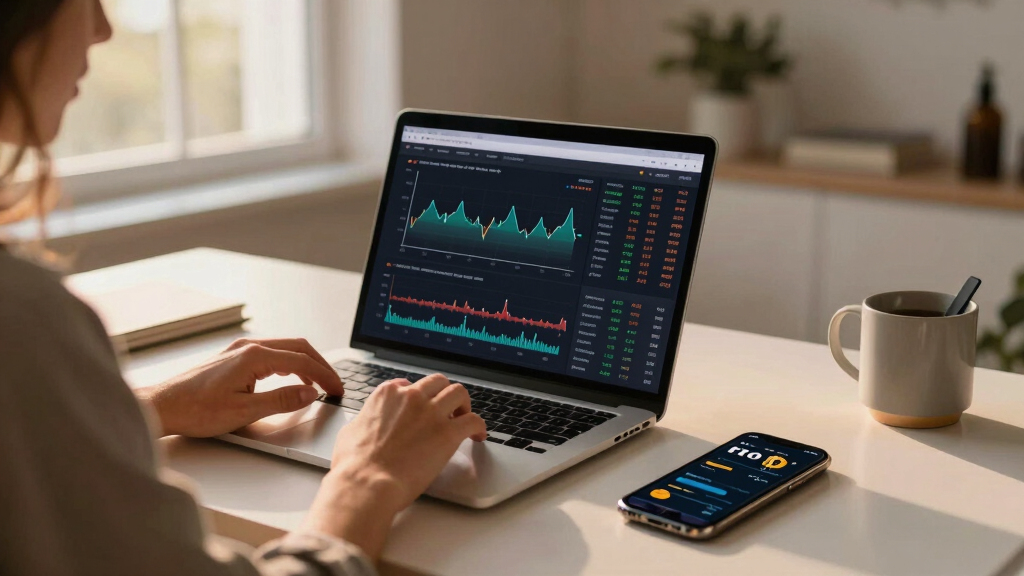

Week Three — Foundation model vs Brownian motion. Kronos on five-minute BTC.

📊 Full opportunity report: Week Three — Foundation model vs Brownian motion. Kronos on five-minute BTC. on ThorstenMeyerAI.com — validation score, market gap, and execution plan.

TL;DR

A recent experiment tested Kronos, a foundation model, against a Brownian motion baseline for 5-minute Bitcoin trading signals. The results show Kronos does not outperform Brownian motion on out-of-sample data, questioning its immediate utility in trading strategies.

Recent testing indicates that Kronos, a large open-source foundation model, does not outperform a traditional Brownian motion baseline in predicting 5-minute Bitcoin price movements on out-of-sample data.

Over the past two weeks, a researcher tested Kronos against a Brownian motion model in a simulated trading environment using historical BTC data. The test involved analyzing 497 trades, reconstructing market contexts, and evaluating predictive accuracy via metrics such as Brier score and log-loss. The results showed that Kronos’s predictive performance was statistically indistinguishable from the Brownian baseline, with no clear advantage in out-of-sample testing. Specifically, the Brier scores for Kronos and Brownian were nearly identical, and the small margin observed was within the noise level of repeated runs. Consequently, the researcher concluded that, at least for the current horizon and data, Kronos does not provide a meaningful edge over traditional models. The experiment was designed to be transparent and reproducible, with all methodology publicly available, emphasizing that Kronos is a research model, not a trading system.

Polybot Week 3 — Kronos vs Brownian — Thorsten Meyer AI
KRONOS
● RESEARCH SERIES / MAY 2026
THORSTEN MEYER AI · POLYBOT · WEEK 3
POLYBOT · WEEK 3
KRONOS vs BROWNIAN
Research Series · Foundation Model vs Classical Baseline · 2026-05-17

Foundation model
vs Brownian motion.
Kronos on five-minute BTC.

A modern learned model just lost to math from 1900. On 497 paired trades. Stage 2 is not happening.
Polybot’s fair-value strategy uses a 1900s geometric Brownian model to price 5-minute BTC outcomes. The natural follow-up after two weeks of negative parametric results: would a modern learned model trained on millions of real candles do better? The credible candidate: Kronos — open-source MIT-licensed foundation model, 25,000+ GitHub stars, AAAI 2026, four sizes from 4M to 499M parameters, trained on candles from 45 global exchanges. Test design: 497 paired (FILL→SETTLE) trades, Brownian baseline reconstructed line-for-line, Kronos-small (24.7M params) sampled with 16 forecast paths, scored on Brier + log-loss + hypothetical P&L, chronologically split for out-of-sample discipline. On 249 out-of-sample trades: Brownian 0.188 Brier vs Kronos 0.189 Brier. Gap 0.0011. Statistically indistinguishable. Stage 2 is not happening. But the paradox is more interesting than the verdict: when used as a directional signal Kronos fires 28% less often and wins 60.7% vs Brownian’s 49.1% — slightly better trader on hypothetical P&L, even while systematically over-confident in the tails (predicts 2.4% chance → actual 20.4% win; predicts 84% → actual 69.6%). The negative result is the answer. The methodology is what gets published.
This is not financial advice. Nothing in this article should be used to inform real trading decisions. The bot trades simulated money. If you build something like it and run it with real funds, the most likely outcome — by a wide margin — is that you lose those funds. That holds whether you use a Brownian model, a 100-million-parameter foundation model, or any other forecaster.
497
Paired (FILL→SETTLE) trades
all BTC · 5-min Up/Down markets
0.0011
Out-of-sample Brier-score gap
249 trades · statistically indistinguishable
Kronos log-loss vs Brownian
signature of confident wrong predictions
+$538 / +$465
Hypothetical Kronos vs Brownian P&L
the paradox · 60.7% vs 49.1% win rates
POLYBOT WEEK 3· KRONOS-SMALL · 24.7M PARAMS· BROWNIAN BASELINE· 497 PAIRED TRADES · BTC· POLYMARKET 5-MIN UP/DOWN· BRIER 0.193 / 0.211 / 0.213· LOG-LOSS 0.567 / 0.604 / 1.080· OUT-OF-SAMPLE 0.188 vs 0.189· GAP 0.0011 · INDISTINGUISHABLE· STAGE 2 NOT HAPPENING· KRONOS BETTER TRADER · WORSE FORECASTER· 60.7% vs 49.1% WIN RATE· TAILS: 2.4% → 20.4% · 84% → 69.6%· POLYBOT MIT· KRONOS MIT· AAAI 2026 PAPER · 25K+ STARS· 11 MIN MAC M-SERIES · MPS BACKEND· 1,300 LINES OF PYTHON· RESEARCH_PIPELINE.MD PUBLIC· SAME GAUNTLET · DIFFERENT MODEL· POLYBOT WEEK 3· KRONOS-SMALL · 24.7M PARAMS· BROWNIAN BASELINE· 497 PAIRED TRADES · BTC· POLYMARKET 5-MIN UP/DOWN· BRIER 0.193 / 0.211 / 0.213· LOG-LOSS 0.567 / 0.604 / 1.080· OUT-OF-SAMPLE 0.188 vs 0.189· GAP 0.0011 · INDISTINGUISHABLE· STAGE 2 NOT HAPPENING· KRONOS BETTER TRADER · WORSE FORECASTER· 60.7% vs 49.1% WIN RATE· TAILS: 2.4% → 20.4% · 84% → 69.6%· POLYBOT MIT· KRONOS MIT· AAAI 2026 PAPER · 25K+ STARS· 11 MIN MAC M-SERIES · MPS BACKEND· 1,300 LINES OF PYTHON· RESEARCH_PIPELINE.MD PUBLIC· SAME GAUNTLET · DIFFERENT MODEL·
FIG. 01 — THE TEST PIPELINE
Five steps · for every paired (FILL → SETTLE) trade in the running session
~1,300 lines of Python · 11 minutes on Mac M-series with PyTorch MPS · methodology public, specific numbers local
1
Reconstruct OHLCV context of the 60 minutes leading up to fire-time. Pull from the bot’s local Binance recording where available; fall back to Binance’s public klines API otherwise. Cache to parquet so re-runs cost nothing.
2
Recompute the Brownian baseline in Python — a line-for-line port of the bot’s own fairValuePUp(spot, openPrice, secondsLeftFrac, windowVol) formula. Matches scipy.stats.norm.cdf to three decimal places.
3
Read off the market-implied probability from the FILL price — what Polymarket’s order book thought the side was worth at the moment of fire. The market’s view as a reference point.
4
Run Kronos-small (24.7M parameters) on the OHLCV context · sample 16 forecast paths to the window’s end · count the fraction in which the underlying closes above the open price. That fraction is Kronos’s predicted p(Up).
5
Record (p_brownian, p_market, p_kronos, actual_outcome, P&L). Score on Brier + log-loss + hypothetical P&L. Sort chronologically · split into first/second half · report on both halves separately.
The discipline that matters: if a model wins on the first half but ties or loses on the second, that’s the curve-fit-in-slow-motion pattern the previous two articles named, and it doesn’t count as edge. The whole pipeline is reproducible from docs/RESEARCH_PIPELINE.md. Any future candidate model gets a sibling directory in research//, reuses the same Brownian baseline, the same trade-log loader, the same OHLCV fetcher, the same metrics, the same out-of-sample split. Same gauntlet, different model, same discipline.
FIG. 02 — FULL-SAMPLE SCORING · 497 PAIRED TRADES
Three models · two probability-scoring metrics
Brier score and log-loss · the standard scoring rules for probability forecasts · lower is better
Model
Brier ↓
Log-loss ↓
BrownianGeometric Brownian motion · the 1900s baseline
0.193
0.567
Market-impliedPolymarket order book at FILL · reference
0.211
0.604
Kronos24.7M-param foundation model · 16 sampled forecast paths
0.213
1.080
Kronos’s log-loss is roughly twice Brownian’s — the signature of a model that makes confident, wrong predictions in the tails. Polymarket’s order book sits between the two, reasonably calibrated, slightly worse than the bot’s Brownian and slightly better than the foundation model. The 100-year-old math beat the 24.7M-parameter foundation model on both probability-scoring metrics.
FIG. 03 — OUT-OF-SAMPLE VERDICT · 249-TRADE TEST HALF
Chronologically-separated · never seen by tuning
The verdict the test was designed to deliver · noise band of repeated runs with different sampling seeds
Brownian · 249-trade test half
0.188
Brier score (out-of-sample)
lower is better
Kronos · 249-trade test half
0.189
Brier score (out-of-sample)
lower is better
The gap
0.0011
Statistically indistinguishable
inside the noise band
Kronos does not beat Brownian on a held-out chronologically-separated sample. So Stage 2 is not happening.
“Stage 2” was the planned next step: wiring Kronos into Polybot as a live strategy if Stage 1 produced a clear signal. The case is not earned by this data. For 5-minute BTC at the horizons the bot trades, the open Kronos-small checkpoint does not. Stop. The next candidate model — Chronos · TimesFM · Lag-Llama · a Kronos finetune on 5-min crypto · something else — goes through the same gauntlet. Most will fail it. That is the gauntlet doing its job.
FIG. 04 — THE PARADOX · BETTER TRADER vs WORSE FORECASTER
By operational standards Kronos wins · by probabilistic standards Kronos loses
The hypothetical-P&L counterfactual replays the same data through “what if Polybot fired on each model’s probability”
Operational view · Kronos as the better trader
Kronos fires less · wins more · nets slightly more.
Hypothetical fires
201
Brownian fires (reference)
279
Win rate (Kronos)
60.7%
Win rate (Brownian)
49.1%
Hypothetical net P&L (Kronos)
+$538
Hypothetical net P&L (Brownian)
+$465
Fires ~28% less often and wins more reliably when it does. If you use Kronos as a directional signal in a broader system that does its own sizing — closer to how TradingAgents uses analyst outputs — the directional accuracy might still be useful.
Probabilistic view · Kronos as the worse forecaster
Systematically over-confident in the tails.
Kronos predicts
2.4%
Trades actually win
20.4%
Kronos predicts
84%
Trades actually win
69.6%
Log-loss vs Brownian
~2× worse
Brier (full sample)
0.213 vs 0.193
If you are building a fully-probabilistic system where the probability feeds an expected-value calculation against the market’s implied price — which is what Polybot does — calibration is everything, and Kronos’s calibration is bad enough to disqualify it. It thinks it knows more than it does at both ends.
Both interpretations are honest. Neither earns the model a place in Polybot. One of them might earn it a place, later, in TradingAgents — as a 5th analyst voice that votes on direction without being trusted for calibrated odds. That experiment is not what this week tested; it is a separate hypothesis for a separate week.
FIG. 05 — WEEK FOUR · THREE POSSIBLE THREADS
Each is a separate article · the pattern across them is the same
Honest measurement · out-of-sample discipline · no rescue narratives when something doesn’t work
1
A second-tier candidate model · Amazon’s Chronos
Same general shape as Kronos · different training corpus · also open-source. Running it through the exact same gauntlet would say whether the negative result is specific to Kronos or generalises to learned models in this regime.
Generalisation test
2
Kronos with a finetune on 5-min crypto data
The Kronos repo ships a finetuning pipeline. Taking the open Kronos-base checkpoint, finetuning on the bot’s own recorded BTC tick history, re-testing. Isolates “is the pretrained distribution wrong for crypto?” from “is the architecture wrong for this horizon?”
Architecture vs distribution
3
A live-trading update on Polybot
The fleet has been running paper trades continuously across these three weeks. A fresh aggregate-P&L view, with the same calibration-style analysis applied to live performance rather than historical replay, is overdue.
Status reset
The contract is “same gauntlet, different model, same discipline.” Specific numbers stay local. Methodology is public on the repo’s docs/RESEARCH_PIPELINE.md. Publishing reproducible parameter recipes for strategies that might be marginally profitable encourages people to copy them with real money, and the prior on real-money outcomes when copying retail strategies is “they lose.” Publishing the methodology lets the next person test their own model honestly without inheriting any of mine.
By probabilistic standards · Kronos is a worse forecaster. By operational standards · Kronos is the better trader. Both interpretations are honest. Neither earns the model a place in Polybot. One of them might earn it a place, later, in TradingAgents.
Thorsten Meyer AI · Week 3 · Foundation Model vs Brownian Motion

Implications for AI-Driven Crypto Trading Strategies

This testing suggests that even advanced foundation models like Kronos may not currently offer a significant advantage over traditional stochastic models like Brownian motion for short-term BTC prediction. For traders and developers, this underscores the challenge of translating complex models into actionable edge in highly efficient markets. It also highlights the importance of rigorous out-of-sample testing before deploying AI models in live trading environments, as apparent in-sample performance can be misleading. The findings temper expectations for AI-based trading models and reinforce the need for further research to discover robust predictive signals in crypto markets.

Scalp Smart Hacks to Win Big in Forex Day Trading: Welcome to Scalp Smart, the comprehensive guide designed to transform your forex scalping journey from guesswork to consistent profits.

Scalp Smart Hacks to Win Big in Forex Day Trading: Welcome to Scalp Smart, the comprehensive guide designed to transform your forex scalping journey from guesswork to consistent profits.

As an affiliate, we earn on qualifying purchases.

As an affiliate, we earn on qualifying purchases.

Background on Model Testing and Market Assumptions

Previous weeks’ experiments with a simple Brownian motion model used as a baseline revealed that most trading strategies lacked genuine edge, often due to overfitting or mechanical artifacts. Kronos, a large foundation model trained on millions of candlestick data from global exchanges, was hypothesized to potentially outperform these older models due to its capacity to learn complex patterns. The testing was motivated by the question: can modern machine learning models beat traditional stochastic assumptions in short-term crypto prediction? The experiment was designed to compare these models directly, using a rigorous out-of-sample approach to avoid overfitting bias. The test results indicate that, despite its complexity, Kronos does not currently outperform the simple Brownian baseline in this specific context.

“Kronos does not show a statistically significant improvement over Brownian motion for 5-minute BTC prediction in out-of-sample testing.”

— Thorsten Meyer, researcher

Zero to Hero in Cryptocurrency Trading: Learn to trade on a centralized exchange, understand trading psychology, and implement a trading algorithm

Zero to Hero in Cryptocurrency Trading: Learn to trade on a centralized exchange, understand trading psychology, and implement a trading algorithm

As an affiliate, we earn on qualifying purchases.
As an affiliate, we earn on qualifying purchases.

Limitations and Unanswered Questions About Kronos Performance

It remains unclear whether different training configurations, larger model sizes, or alternative market conditions could enable Kronos to outperform Brownian motion. The current test focused solely on a specific model version and horizon, and results might vary with different data or settings. Additionally, the long-term predictive value of Kronos or its utility in other trading contexts has not been established. Further research is needed to explore these possibilities and determine if future iterations of foundation models can deliver consistent edge in crypto markets.

Bitcoin Coin and Grey Divot Repair Tool with Removable Bitcoin Ball Marker

Bitcoin Coin and Grey Divot Repair Tool with Removable Bitcoin Ball Marker

Collectors Edition – A true crypto collector's gem. Meticulously crafted with impeccable quality, this unique masterpiece celebrates the…

As an affiliate, we earn on qualifying purchases.

As an affiliate, we earn on qualifying purchases.

Future Research Directions and Model Improvements

Researchers plan to test larger and more diverse versions of Kronos, explore different market horizons, and incorporate additional data sources to evaluate whether foundation models can eventually outperform traditional stochastic models. There is also interest in refining the training process and integrating models into live trading simulations with real capital to better assess practical utility. The ongoing development aims to identify conditions under which advanced AI models might provide a genuine edge in highly efficient markets like cryptocurrencies.

BITCOIN PREDICTION JULY 2026: THE BLOODBATH

BITCOIN PREDICTION JULY 2026: THE BLOODBATH

As an affiliate, we earn on qualifying purchases.

As an affiliate, we earn on qualifying purchases.

Key Questions

Does Kronos currently outperform traditional models in crypto trading?

No, recent out-of-sample testing shows Kronos does not outperform a Brownian motion baseline for 5-minute BTC predictions.

What does this mean for AI-based trading strategies?

This suggests that, at least for short-term horizons, sophisticated foundation models may not yet provide a reliable edge over simpler stochastic models.

Could larger or differently trained models perform better?

It is possible; further research and testing are needed to determine if future versions of Kronos or other models can outperform traditional approaches.

Is this testing conclusive for all crypto markets?

No, the results are specific to the tested model, data, and horizon. Different conditions may produce different outcomes.

What are the next steps for this research?

Future work will involve testing larger models, different data sets, and longer horizons to evaluate potential improvements in predictive performance.

Source: ThorstenMeyerAI.com

Nothing in this article is financial or investment advice. Cryptocurrency and precious-metal investments carry significant risk — do your own research and consider a licensed advisor.
You May Also Like

Fed Watch: Is the Current Pause a Breath of Fresh Air for the Economy?

Beneath the surface of the Fed’s pause in interest rate hikes lies a complex web of implications for inflation and economic growth—what could this mean for the future?

DeepSeek Sparks Market Panic—The Story Behind the U.S. Stock Drop

On the heels of DeepSeek’s launch, panic struck the market—could this be the beginning of a drastic economic shift? Discover the unsettling details.

The Compute Reckoning: Anthropic Finally Admits What Customers Suspected for Ten Months

Anthropic confirms that recent customer experience issues were due to compute shortages, with a major deal with SpaceX marking a strategic shift.

Bettors at Polymarket Throw $1.1b Behind Superbowl Results Amidst Regulatory Clouds.

Keen bettors at Polymarket have bet $1.1 billion on the Super Bowl, but what regulatory challenges lie ahead for this innovative platform?