To track on-chain data for altcoin trading, start by using reputable analytics platforms that provide real-time metrics like active addresses, transaction volumes, and large transfer alerts. Monitor whale activity and large transfers to gauge market sentiment and potential shifts. Pay attention to surging transaction activity and wallet movements, especially on exchanges. Consistently analyzing these data points helps you anticipate market trends and make smarter decisions—if you keep exploring, you’ll discover even more ways to stay ahead.
Key Takeaways
- Use reputable on-chain analytics platforms to access real-time data on whale activity and transaction volumes.
- Monitor key metrics like active addresses, transfer volumes, and large transactions to gauge market sentiment.
- Set up alerts for significant wallet movements and large transfers to identify potential market shifts early.
- Analyze trends in wallet activity and transaction patterns to anticipate bullish or bearish market movements.
- Combine on-chain data with market conditions to make proactive, data-driven trading decisions for altcoins.
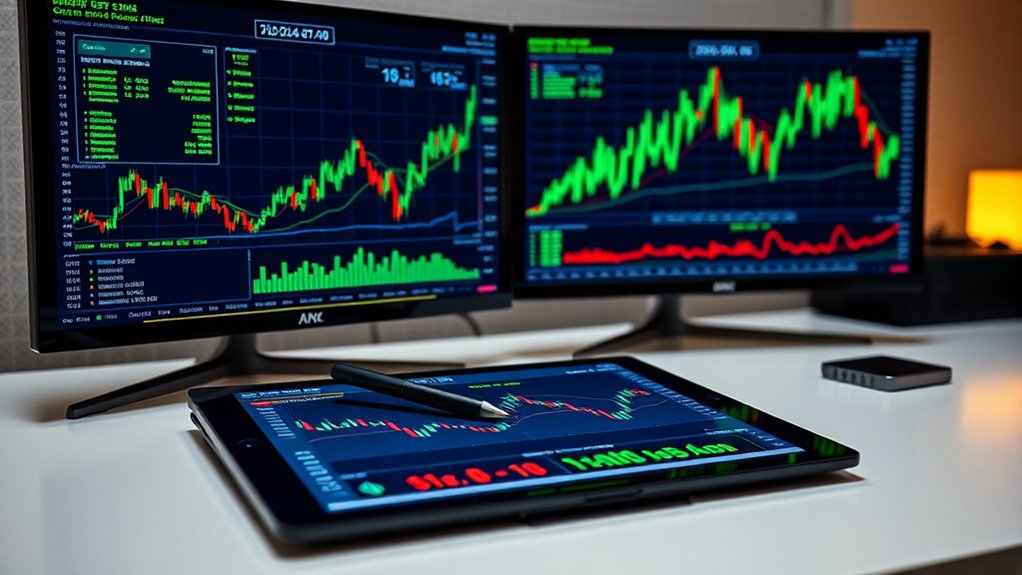
Tracking on-chain data has become a vital tool for altcoin traders looking to gain an edge in the market. By analyzing blockchain activity, you can uncover insights into market sentiment and whale activity that often precede larger price movements. Market sentiment, in particular, reflects how investors feel about a specific altcoin, and on-chain metrics provide a more transparent picture than traditional news or social media chatter. When you observe rising transaction volumes, increasing wallet activity, or a surge in coin movements to exchanges, it signals heightened interest or concern among traders. These signals can help you anticipate whether the market sentiment is turning bullish or bearish, giving you a strategic advantage.
Monitoring on-chain activity reveals market sentiment shifts before price moves, giving traders a strategic edge.
Whale activity, on the other hand, involves tracking large transactions made by significant holders—often called whales—who can influence price action with their moves. If you notice a sudden spike in large transfers or a concentration of coins moving into or out of known whale wallets, it can indicate impending market shifts. For example, if whales start accumulating, it might signal confidence in the asset, hinting at a potential price increase. Conversely, if whales are dumping coins, it could forewarn of a downturn. Monitoring whale behavior allows you to gauge the intentions of these powerful players and adjust your trading strategy accordingly.
To effectively track on-chain data, you’ll want to use reputable tools and platforms that offer real-time analytics. Many services provide dashboards that display key metrics such as active addresses, transaction counts, and large transfer alerts. By regularly checking these, you can stay ahead of the curve and recognize early signs of market shifts driven by sentiment or whale activity. It’s also important to compare data points—like sudden spikes in wallet activity against broader market conditions—to interpret what the movements might mean for your trades. Additionally, understanding blockchain transparency can help you better interpret the data and make more informed decisions.
Incorporating on-chain data analysis into your trading routine isn’t just about reacting to numbers; it’s about understanding the story they tell. When you consistently monitor market sentiment and whale activity, you gain a more all-encompassing view of the market’s direction. This knowledge can help you make more informed decisions, reduce your risks, and capitalize on opportunities before they become obvious to everyone else. Ultimately, tracking on-chain data enables you to be more proactive rather than reactive, giving you a significant edge in the fast-moving world of altcoin trading.

Day Trading: 2 Manuscripts – Absolute Beginners Guide to Trading Cryptocurrency including Bitcoin, Ethereum & Altcoins
As an affiliate, we earn on qualifying purchases.
As an affiliate, we earn on qualifying purchases.
Frequently Asked Questions
How Often Should I Check On-Chain Data for Altcoin Trading?
You should check on-chain data daily or even multiple times a day during periods of high market volatility to stay ahead. This helps you monitor shifts that could impact your trades and manage your trading psychology effectively. Regular updates enable you to act quickly, avoid panic selling, and seize opportunities, ensuring you stay informed without becoming overwhelmed by constant data. Balance your checks to maintain confidence and avoid unnecessary stress.
Which On-Chain Metrics Are Most Reliable for Predicting Altcoin Movements?
You should focus on market sentiment and transaction volume, as they’re the most reliable on-chain metrics for predicting altcoin movements. Market sentiment reveals trader confidence and potential trend reversals, while transaction volume indicates active trading and liquidity. When these metrics align—such as high transaction volume amid positive sentiment—you can better anticipate price movements. Regularly monitor these indicators to stay ahead and make informed trading decisions.
Can On-Chain Data Be Manipulated by Large Holders or Whales?
Yes, on-chain data can be manipulated by large holders or whales, especially through whale activity. They might execute large transactions to influence market sentiment or create false signals, leading to market manipulation. As a trader, you should be cautious and analyze multiple on-chain metrics to avoid being misled by potential whale tactics. Always consider the broader context and use additional tools to verify on-chain signals before making decisions.
Are There Any Free Tools to Analyze On-Chain Data Effectively?
Yes, there are free tools like Glassnode, Santiment, and CoinGecko that let you analyze on-chain data effectively. These tools help you monitor blockchain security and understand market trends, which can improve your trading psychology. By using them, you gain insights into whale activity, token movements, and network health, empowering you to make better decisions. Remember, understanding on-chain data helps you stay confident and avoid impulsive trades.
How Does On-Chain Data Differ Between Different Blockchain Networks?
You’ll notice that on-chain data varies across blockchain networks because of differences in architecture and data privacy features. Some blockchains, like Bitcoin, focus on transparency, making data publicly accessible, while others, like Monero, prioritize privacy, limiting data visibility. These differences impact your ability to analyze transaction details, so understanding each network’s architecture and privacy protocols helps you interpret on-chain data more accurately for trading decisions.

Crypto Market Sentiment Analysis: How to Read the Crowd: Decode Fear, Greed & Whale Moves — Build Smarter Crypto Trades with Proven Sentiment Strategies
As an affiliate, we earn on qualifying purchases.
As an affiliate, we earn on qualifying purchases.
Conclusion
By mastering the methods of monitoring on-chain metrics, you’ll make smarter, more strategic moves in the altcoin arena. Staying savvy with supply shifts, whale whispers, and wallet workings empowers your trading tactics. Don’t delay—dive into data, decipher signals, and dominate the digital domain. With diligent data detection, you’ll discover dynamic opportunities and dodge dangerous dips. Remember, diligent data detection delivers decisive, data-driven decisions—definitely driving your trading success!
real-time blockchain transaction monitor
As an affiliate, we earn on qualifying purchases.
As an affiliate, we earn on qualifying purchases.
cryptocurrency large transfer alerts
As an affiliate, we earn on qualifying purchases.
As an affiliate, we earn on qualifying purchases.