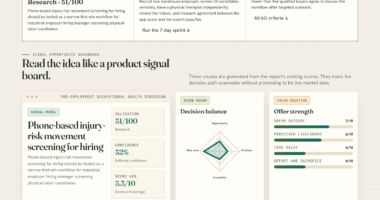
📊 Full opportunity report: VR Training In Manufacturing: A Game Changer For EHS Safety on IdeaNavigator AI — validation score, market gap, and execution plan.

Get hardware and tech essentials delivered free with Prime
- Fast, free delivery on millions of items
- Prime Video, Amazon Music and more included
- Member-only deals all year
TL;DR
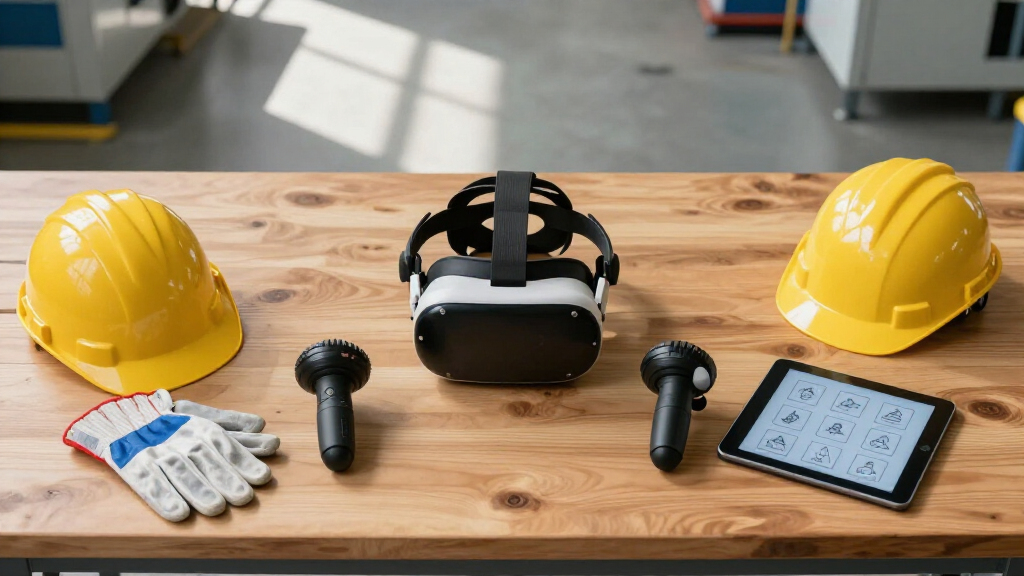
Manufacturers are piloting VR training modules for safety and onboarding, aiming to reduce incidents and accelerate worker readiness. Early results suggest improved hazard recognition and faster competency. The initiative responds to labor shortages and safety risks in manufacturing.
Manufacturers are actively piloting virtual reality (VR) training modules designed to improve safety and onboarding procedures for workers operating dangerous machinery. This development comes as companies face a pressing labor shortage and safety concerns, making effective training critical. Early tests indicate VR can accelerate competency and hazard recognition, potentially transforming traditional methods in the manufacturing sector.
Recent pilot programs involve deploying standalone Meta Quest headsets with focused VR modules on high-risk procedures such as lockout/tagout and forklift safety. These modules are delivered via a cloud-based platform that tracks completion rates, hazard recognition accuracy, and quiz scores for each worker. The initial goal is to compare VR training outcomes against existing classroom methods, measuring time-to-competency and hazard awareness.
Manufacturers participating in these pilots report that VR training reduces the time needed for new hires to reach proficiency and improves hazard recognition, which is critical for preventing workplace incidents. The pilot involves a small cohort of workers trained in VR, matched with a control group receiving traditional classroom instruction. Results are being analyzed over 60 to 90 days, focusing on safety metrics and training efficiency.
The cost structure involves a per-seat or per-headset SaaS subscription, with optional custom scenario development and hardware management services. The platform is designed to be scalable, addressing the broader industrial training market, which was valued at over USD 14.5 billion in 2025, including safety, onboarding, and machine operation training.
Potential Impact of VR on Manufacturing Safety and Training Efficiency
This initiative could significantly improve safety outcomes by providing immersive, repeatable, and standardized training experiences that enhance hazard recognition and procedural understanding. Faster onboarding reduces downtime and labor costs, while improved hazard awareness directly contributes to fewer workplace incidents. As the manufacturing industry faces a persistent labor shortage, especially with an estimated need for 3.8 million new workers by 2033, VR training offers a scalable solution to upskill workers rapidly and safely.
Early results from pilot programs suggest that VR can shorten the time to competency and increase hazard detection accuracy, which are key metrics for safety and operational efficiency. If successful at scale, this approach could reshape workforce training strategies across the sector, reducing incident rates and lowering costs associated with safety violations and employee turnover.
As an affiliate, we earn on qualifying purchases.
Manufacturing Sector’s Urgent Need for Safer, Faster Training
The U.S. manufacturing sector faced approximately 409,000 unfilled positions as of August 2025, with projections indicating a need for nearly 3.8 million new workers by 2033. Traditional training methods—classroom instruction and on-the-floor shadowing—are increasingly inadequate to meet this demand due to their time-consuming nature and inconsistent outcomes. Moreover, training on live equipment presents safety risks, especially for high-risk procedures.
Advancements in cloud-native XR streaming and the decreasing costs of standalone headsets like Meta Quest and Pico have made immersive VR training more accessible. These technological shifts enable scalable deployment of VR modules across multiple plants, promising rapid onboarding and standardized safety training. Industry experts see VR as a promising tool to bridge the skills gap while enhancing safety compliance.
Initial pilot programs are focusing on critical safety procedures, with the goal of demonstrating measurable improvements in hazard recognition, speed of training, and retention. Success in these pilots could accelerate adoption across the industry, transforming traditional safety and onboarding practices.
As an affiliate, we earn on qualifying purchases.
Uncertainties Surrounding Broader Adoption and Long-Term Impact
While initial pilots show promising results, it remains unclear how quickly VR training will be adopted industry-wide, and whether long-term safety improvements will be sustained. Data from ongoing programs will be critical to validate scalability and cost-effectiveness. Additionally, questions about worker acceptance, training customization, and integration with existing safety protocols are still being addressed.
It is not yet confirmed how VR training compares to traditional methods across diverse manufacturing environments or how it impacts incident rates over extended periods. Further research and larger-scale deployments are needed to establish definitive benefits and best practices.
As an affiliate, we earn on qualifying purchases.
Next Steps for VR Training in Manufacturing Safety
Manufacturers will continue pilot programs over the next 3 to 6 months, focusing on collecting comprehensive data on training outcomes, safety metrics, and cost savings. Success criteria include statistically significant improvements in hazard recognition and faster competency achievement. Based on pilot results, companies may expand VR training to additional procedures and plants.
Developers of VR training modules plan to enhance content libraries, incorporate user feedback, and refine analytics dashboards. Industry stakeholders will monitor pilot outcomes closely to determine broader adoption strategies and potential integration with existing safety management systems.
As an affiliate, we earn on qualifying purchases.
Key Questions
How effective is VR training compared to traditional methods?
Early pilot results suggest VR training can reduce time-to-competency and improve hazard recognition, but comprehensive data from larger samples are still being collected to confirm effectiveness across different procedures and environments.
What safety procedures are being tested with VR modules?
Initial modules focus on high-risk procedures such as lockout/tagout and forklift safety, with plans to expand to other critical tasks as the technology matures.
What are the costs involved in implementing VR training?
The platform operates on a per-seat or per-headset SaaS model, with additional charges for custom content development and hardware management. Costs are expected to decrease as adoption scales.
Will workers accept VR training as a standard method?
Acceptance is still being evaluated, but initial feedback indicates many workers find VR engaging and easier to understand than traditional classroom methods. Ongoing feedback will shape future content and deployment strategies.
When might VR training become a widespread industry standard?
It is too early to predict exact timelines, but if pilot results demonstrate clear safety and efficiency benefits, broader adoption could occur within the next 2-3 years.
Source: IdeaNavigator AI
Halloween Picks
halloween
As an affiliate, we earn on qualifying purchases.