
🔍 Read the full analysis: 12 Ways To Learn About AI Voice Cloning Software In 2027 on ThorstenMeyerAI.com

Get hardware and tech essentials delivered free with Prime
- Fast, free delivery on millions of items
- Prime Video, Amazon Music and more included
- Member-only deals all year
TL;DR
A comparison from ThorstenMeyerAI.com presents 12 books and guides for learning AI voice-cloning workflows, including hosted-platform instruction, beginner material and Python-focused implementation. The resources are not voice-cloning software, and the source does not establish their availability, current accuracy or compatibility in 2027.
ThorstenMeyerAI.com compares 12 books and guides for learning about AI voice cloning, from using a hosted service to building a local workflow with Python, as detailed in its original guide. The distinction matters: the listed titles are learning materials, not software that generates cloned speech, and the source does not verify that their instructions or examples remain current for 2027.
The comparison identifies Mastering ElevenLabs as its overall learning pick because it covers cloning alongside generation, dubbing and audio production. It describes AI Voice Cloning with Python as a closer fit for readers who want implementation skills, and Clone Your Voice: Easy, No Studio as an approachable option for a first project. These are assessments by the source, not independently verified measures of teaching quality.
Other entries include focused titles about ElevenLabs, a beginner-oriented title called ElevenLabs for Beginners 2026, and broader handbooks covering audio AI or music creation. The source says a narrow guide may suit a defined task, while a broad handbook can connect cloning with related production work but may offer a less direct learning path.
The ranking is based on each title’s apparent relevance, audience and coverage of practical workflow tasks—not on voice fidelity, latency, privacy, licensing or subscription features. Those features depend on the separate software or model a learner chooses and may change. The supplied source material does not provide the full bibliographic details or individual summaries for all 12 entries, so their precise contents cannot be independently described here.
The 12 picks
- 1
 Clone Your Voice: Easy, No Studio: The Weekend Guide to AI Voice CloningView on Amazon →
- 2
 Mastering ElevenLabs: A Practical Guide to AI Voice Generation, Voice Cloning…View on Amazon →
- 3
 Suno AI Music Bible: A Guide to Prompt Engineering, Suno Studio, Voice Clonin…View on Amazon →
- 4
 The Complete Guide to ElevenLabs: AI Voice and Audio CreationView on Amazon →
- 5
 AI for Caveman: Build Your Own Forge to Run LLMs, Stable Diffusion, and Voice…View on Amazon →
- 6
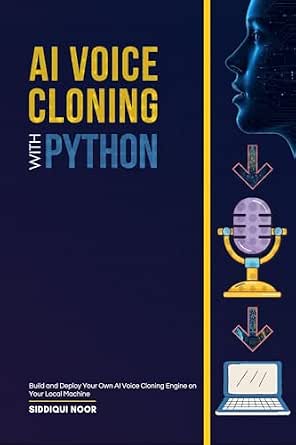 AI Voice Cloning with Python: Build and Deploy a Local Voice Cloning EngineView on Amazon →
- 7
 ElevenLabs: A Complete Guide to AI Voice Generation and CloningView on Amazon →
- 8
 The AI Voice Creator’s Handbook: A Practical Guide to Voice Generation, Cloni…View on Amazon →
- 9
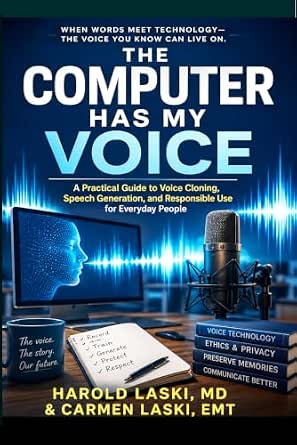 The Computer Has My Voice: An Independent Guide to Voice Cloning, Speech Gene…View on Amazon →
- 10
 AI Voice Cloning: The Complete Guide to ElevenLabs and BeyondView on Amazon →
- 11
 Audio AI for Beginners: Generative AI for Voice Recognition, Text-to-Speech,…View on Amazon →
- 12
 ElevenLabs for Beginners 2026: A Step-by-Step Guide to AI Voice GenerationView on Amazon →
Choosing a Learning Path
The comparison addresses a practical choice for people entering voice cloning: whether to follow a guided hosted-service workflow or take on the added setup of a local, code-based system. A hosted service may require less technical configuration; a local Python approach can offer more control over the environment and handling of data, while requiring work with dependencies, hardware and troubleshooting. Neither path is automatically better for every project.
Readers should treat the guide as instruction rather than a tool recommendation. Before committing to a title, they can match its examples to the software they intend to use and check whether the lessons cover the task they need, such as narration, dubbing or deployment. Voice recordings also raise consent and privacy questions: permission and the provider’s data practices should be checked before recordings are uploaded or a voice is cloned.
Products Worth Considering

Ledger Flex Crypto Wallet with 2.8-Inch E Ink Touchscreen

LG UltraGear 45GX900A-B 45-Inch Curved OLED Gaming Monitor

LG UltraGear 27G640A-B 27-Inch QHD IPS Gaming Monitor, 300Hz, 1ms, G-SYNC Compatible, FreeSync Premium, DisplayHDR 400
As an affiliate, we earn on qualifying purchases.
How the Source Ranks Guides
ThorstenMeyerAI.com says it ranked the titles by how directly they teach voice-cloning workflows, how clearly their stated scope fits a learner’s level, and whether they address practical work beyond generating a sample. It favored coverage that links cloning to adjacent tasks such as editing, narration, dubbing and production. The source also says focused resources can be a better match for particular readers even when a broader guide ranks higher overall.
The comparison explicitly excludes software-performance judgments because its entries are books and guides rather than platforms. It advises checking the contents of a title for a useful progression from setup to finished output, rather than assuming that a broad list of topics means the book offers step-by-step instruction. The material provided does not include a verified publication timeline for all listed titles.
“The main tradeoff is between a guided path through a hosted service and the extra control—and setup work—of a local workflow.”
— ThorstenMeyerAI.com
What the Comparison Cannot Confirm
The source does not establish whether each title is available or updated in 2027, whether its examples still match current software interfaces, or which editions readers should consult. It also does not provide enough detail in the supplied material to verify the contents of every entry in the 12-title lineup.
Because no specific cloning applications are evaluated, the comparison cannot confirm their current features, cost, data retention, security, licensing or suitability for commercial use. Those matters may vary by provider and over time. A book’s description alone also cannot establish the quality of its instruction or the results a reader will achieve.
Checks Before Choosing a Guide
Readers should first identify the task they want to learn—such as making a first voice clone, operating a hosted platform or building a local system—and compare that goal with a guide’s contents. They should then verify the book’s edition and publication information, check whether its instructions correspond to the chosen tool, and consult that tool’s current documentation for setup and account requirements.
Before recording or uploading a voice, users should obtain the speaker’s permission and review the service’s rules for voice data, storage, deletion and permitted use. The source does not announce a software launch or a forthcoming update to the books; availability and current compatibility remain to be checked by prospective learners.
Key Questions
Are the 12 items voice-cloning applications?
No. The source describes them as books and guides. Readers need separate software or a model to generate cloned speech.
Which learning resource does the source rank highest?
ThorstenMeyerAI.com names Mastering ElevenLabs as its overall pick, citing its coverage of cloning, generation, dubbing and audio production. That is the source’s assessment, not an independent review.
Which option is aimed at people who want to code?
The source identifies AI Voice Cloning with Python as a closer fit for readers seeking implementation skills and a local workflow. That route may involve dependency, hardware and troubleshooting work.
Does the comparison verify software privacy or licensing?
No. It says the titles were not ranked on privacy, licensing, security or subscription features. Those details depend on the software or model selected and should be checked with its provider.
What should someone check before cloning a voice?
Get clear permission from the speaker and review the chosen service’s rules for voice data, storage, deletion and permitted use. A local workflow does not remove the need for consent and lawful use.
Source: ThorstenMeyerAI.com