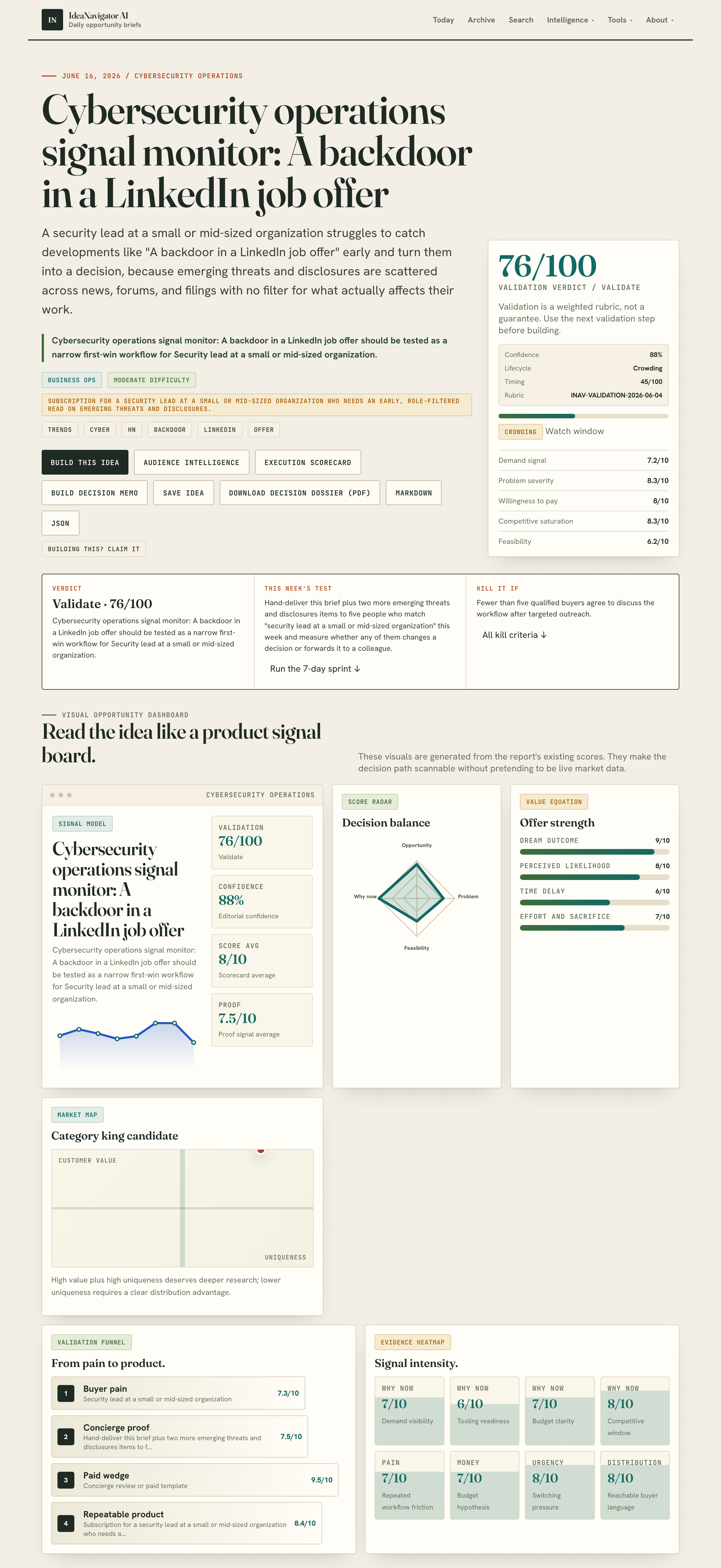
📊 Full opportunity report: Cybersecurity operations signal monitor: A backdoor in a LinkedIn job offer on IdeaNavigator AI — validation score, market gap, and execution plan.

Get hardware and tech essentials delivered free with Prime
- Fast, free delivery on millions of items
- Prime Video, Amazon Music and more included
- Member-only deals all year
TL;DR
Cybersecurity operations have identified a backdoor in a LinkedIn job offer, indicating a potential security breach. This discovery underscores the need for vigilance in hiring channels. Details are still emerging, and the full scope is unclear.
Cybersecurity monitoring tools have confirmed the presence of a backdoor in a LinkedIn job offer, raising alarm among security professionals. The discovery indicates a possible exploitation vector that could compromise organizational networks, making it a critical concern for security teams at small and mid-sized organizations.
Recent signals from cybersecurity operations indicate that a malicious backdoor has been embedded within a LinkedIn job listing. This backdoor could allow unauthorized access to targeted systems once the job posting is viewed or interacted with. The detection was made through automated monitoring of emerging threats on platforms like Hacker News, which flagged this as a high-signal alert.
Attribution from cybersecurity sources confirms that the backdoor was embedded via malicious code or scripts within the job offer’s webpage or associated files. The incident was identified by a dedicated threat monitoring system that filters emerging threats relevant to security leads at small and mid-sized organizations. The specific technical details of the backdoor are still under investigation, and no evidence yet suggests widespread exploitation.
Implications for Organizational Security Posture
This discovery highlights how threat actors are increasingly using legitimate platforms like LinkedIn to deliver malicious payloads, complicating detection efforts. For security leads, it underscores the importance of scrutinizing even seemingly benign job offers for signs of compromise. If exploited, such backdoors could enable data breaches, unauthorized access, or further malware deployment, posing serious risks to organizational security and reputation.Products Worth Considering

LG UltraGear 32GX850A-B 32-inch 4K UHD Glossy OLED Gaming Monitor

LG UltraGear 32GX870A-B 32-inch 4K OLED Gaming Monitor

LG UltraGear 45GX900A-B 45-Inch Curved OLED Gaming Monitor
As an affiliate, we earn on qualifying purchases.
Rising Threats in Recruitment Channels
Over recent years, cybercriminals have increasingly targeted recruitment platforms and job postings as vectors for malware and backdoors. Previously, attacks focused on email phishing or direct network exploits, but recent incidents reveal a shift towards embedding malicious code within job offers on professional networks like LinkedIn. This trend is part of a broader pattern where threat actors exploit trusted platforms to bypass traditional security defenses.
The specific incident involving the detected backdoor emerged amid heightened awareness of supply chain and social engineering attacks. Cybersecurity teams have been on alert for new tactics, with this case representing a notable example of how emerging threats can bypass conventional defenses and require role-specific monitoring tools.
“The presence of a backdoor in a LinkedIn job offer signifies a new front in targeted cyber threats, demanding vigilance from security teams.”
— an anonymous cybersecurity researcher
Scope and Exploitation Risks Still Unclear
It is not yet confirmed whether the backdoor has been actively exploited or if it remains dormant. The full technical details of the malicious code are still under analysis, and whether other similar listings are affected remains unknown. Additionally, the extent of potential data or system access gained through this backdoor has not been disclosed by investigators.
Monitoring and Investigation Underway
Cybersecurity teams are conducting detailed forensic analysis to understand the backdoor’s mechanics and scope. Organizations are advised to review their recruitment-related digital assets and implement enhanced monitoring on similar platforms. Further updates are expected as investigations progress, and security vendors may release detection signatures or mitigation strategies.
Key Questions
How can organizations detect if they are targeted by this backdoor?
Organizations should monitor their network traffic for unusual activity related to links or scripts embedded in job postings, especially on platforms like LinkedIn. Implementing endpoint detection and response (EDR) tools and reviewing suspicious interactions can help identify potential compromises.
Is this threat limited to LinkedIn, or could other platforms be affected?
While this incident was identified in a LinkedIn job offer, similar tactics could be used on other professional or recruitment platforms. Vigilance across all digital recruitment channels is recommended.
What steps should organizations take immediately after discovering such a backdoor?
Organizations should isolate affected systems, conduct thorough forensic analysis, update security patches, and notify their security teams. They should also review recent interactions with recruitment platforms and monitor for signs of compromise.
Will there be a patch or fix for this type of backdoor?
Since the backdoor is embedded within a job offer webpage or associated scripts, vendors and platform providers may issue security advisories or patches. Organizations should stay updated with official security alerts and guidance.
Source: IdeaNavigator AI