
📊 Full opportunity report: HBM Ate The Fab on ThorstenMeyerAI.com — validation score, market gap, and execution plan.

Get hardware and tech essentials delivered free with Prime
- Fast, free delivery on millions of items
- Prime Video, Amazon Music and more included
- Member-only deals all year
TL;DR
High Bandwidth Memory (HBM) has become the dominant memory component, consuming a large portion of wafer capacity and causing shortages in RAM and graphics cards. This shift is driven by its high profitability and manufacturing complexity, with supply chain impacts expected through 2026.
High Bandwidth Memory (HBM) has become the dominant component in the global memory market, with production capacities fully booked through 2026. This shift is causing widespread shortages of traditional RAM and impacting GPU availability, especially for AI and high-performance computing applications.
HBM, a vertically stacked DRAM technology, is now the single most profitable memory product and consumes a disproportionate share of wafer capacity due to its complex manufacturing process. SK Hynix, Samsung, and Micron lead the market, with SK Hynix holding the largest share and Nvidia heavily reliant on HBM supply for its AI GPUs.
The high cost and manufacturing difficulty of HBM, with stacks costing up to $500 each, have driven demand beyond supply, pushing prices up and creating a bottleneck that affects the entire memory ecosystem. The market value of HBM is projected to reach approximately $100 billion by 2028, representing a significant share of DRAM revenue.
HBM ate the fab
The thing the factories make instead of your RAM is a tower of stacked memory bolted to every AI chip. In three years it went from niche part to the component that sets the price of nearly all the world’s memory — and now a chunk of its GPUs.
A tower, not a sheet
HBM stacks DRAM dies vertically, links them with thousands of through-silicon vias, and sits beside the GPU to deliver 5–10× the bandwidth of normal graphics memory. AI is bandwidth-bound — without it, the world’s most expensive silicon sits starved for data. But stacking is inefficient: one HBM bit eats 3–4× the wafer area of DDR5, and one defect can ruin a whole tower.
≈ 8 HBM stacks wrap every AI GPUThis isn’t artificial scarcity — AI really is bandwidth-bound, HBM really is the fix, and it really does eat 3–4× its weight in fab capacity. The discomfort is structural: one component, coupled to one customer’s demand, now sets the price of nearly all memory and a slice of GPUs. The market is now $35B → ~$100B by 2028, ~41% of all DRAM revenue (was 8% in 2023), and sold out through 2026. The one hope: with all three suppliers finally racing on HBM4, competition can add supply. The matching risk: if AI demand corrects, HBM is where it breaks first. Next: DDR5 now, DDR6 soon.
Why HBM Shortages Impact the Entire Tech Industry
The dominance of HBM in the memory market means that shortages directly influence the availability and pricing of RAM and GPUs. As HBM accounts for nearly half of DRAM revenue and is critical for AI, data centers, and high-end graphics, supply constraints could slow innovation, increase costs, and limit access to cutting-edge technology for consumers and enterprises alike.
As an affiliate, we earn on qualifying purchases.
The Rise of HBM and Its Market Impact
Historically, memory shortages were driven by traditional DDR5 RAM and consumer electronics. However, since 2023, HBM has rapidly expanded from a niche product to a market cornerstone, with its manufacturing complexity leading to a massive supply squeeze. Leading suppliers have prioritized HBM, with the market value growing from $35 billion in 2025 to an expected $100 billion by 2028, and capacity fully booked through 2026.
Major players like SK Hynix, Samsung, and Micron have all ramped production, but yield challenges and high costs mean supply remains tight. Nvidia’s dependence on HBM for its AI GPUs has further amplified demand, making HBM a strategic bottleneck.
“Our HBM production is fully committed through 2026, reflecting the surging demand and manufacturing complexity.”
— Samsung spokesperson
As an affiliate, we earn on qualifying purchases.
Remaining Uncertainties About Future Supply and Demand
It is not yet clear how quickly manufacturers will resolve yield issues or increase capacity to meet demand. The full impact on consumer RAM and GPU prices remains uncertain, as supply chain adjustments and new manufacturing techniques are still in development.
As an affiliate, we earn on qualifying purchases.
Upcoming Developments in HBM Production and Market Balance
Manufacturers are expected to introduce next-generation HBM4 and HBM4E stacks in 2027–2028, which may alleviate some supply constraints. Additionally, market competition and technological advances could influence pricing and availability, but the current trend suggests continued tightness through 2026.
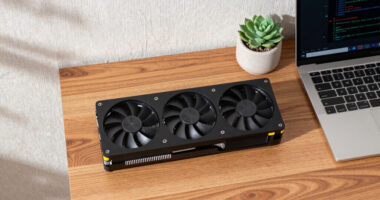
high-performance HBM memory modules
As an affiliate, we earn on qualifying purchases.
As an affiliate, we earn on qualifying purchases.
Key Questions
Why is HBM causing shortages in regular RAM and GPUs?
Because HBM consumes a large share of wafer capacity due to its complex manufacturing process, reducing the supply of traditional RAM and impacting GPU availability.
Will the supply shortage last beyond 2026?
It is uncertain; while new HBM generations are planned for 2027–2028, yield improvements and capacity expansions are needed to fully address current shortages.
How does HBM affect AI and data center hardware?
HBM’s high bandwidth makes it essential for AI and data center GPUs, so shortages directly impact the deployment and scaling of AI infrastructure.
Are other memory technologies affected by the HBM shortage?
Yes; the high demand for wafer capacity for HBM has reduced availability for DDR5 and other memory types, contributing to broader supply constraints.
Source: ThorstenMeyerAI.com
Halloween Picks
halloween
As an affiliate, we earn on qualifying purchases.