TL;DR

Get hardware and tech essentials delivered free with Prime
- Fast, free delivery on millions of items
- Prime Video, Amazon Music and more included
- Member-only deals all year
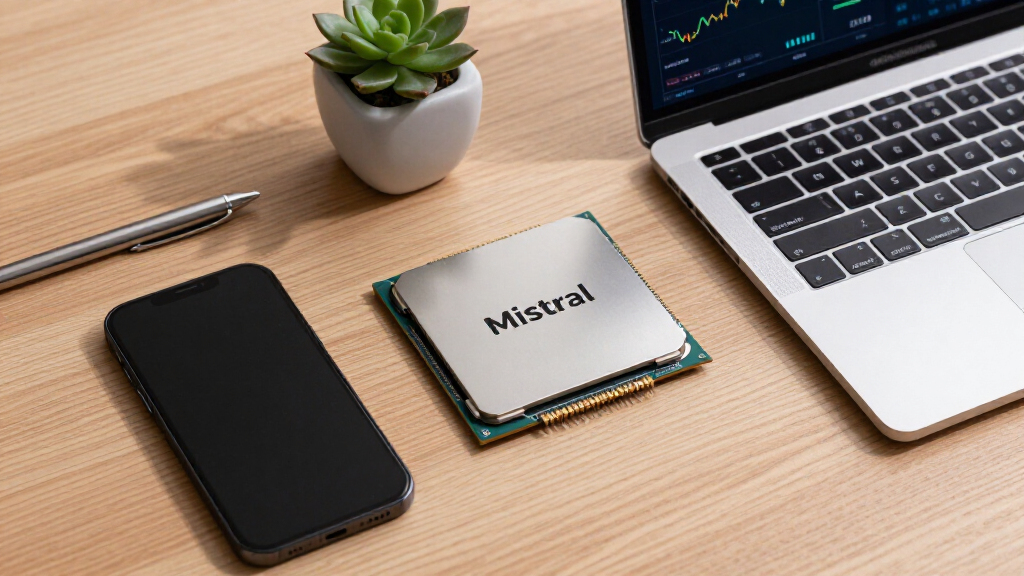
Mistral has announced a plan to invest around $14 billion to develop a European AI model, emphasizing sovereignty and infrastructure independence. This move aims to position Europe as a challenger to US AI giants, though questions remain about its capabilities and independence.
Mistral, a European AI startup, has secured approximately $14 billion in funding to develop a sovereign, open-weight AI model. This investment aims to position Europe as a strategic competitor to US and Chinese AI giants, emphasizing data residency, infrastructure independence, and political backing. The move signifies a deliberate effort to establish a continental AI champion that prioritizes sovereignty over mere capability.
In September 2025, Mistral’s valuation was confirmed at €11.7 billion (~$13.5 billion), following a €1.7 billion Series C led by ASML, a Dutch lithography company and major shareholder. Reports indicate that the company is in discussions or has closed a further funding round of about $3.5 billion at a valuation exceeding $20 billion. Its revenue has surged from roughly $20 million early in 2025 to an estimated $400 million by early 2026, with targets of reaching $1 billion by the end of 2026, according to industry estimates.
Mistral’s strategy hinges on building a European AI infrastructure with data residency and sovereignty at its core. The company is developing Mistral Compute, a GPU cloud infrastructure backed by a €4 billion data-center plan across France and Sweden, some powered by nuclear energy. It has also acquired Koyeb to strengthen its cloud stack. A key differentiator is its open-weight models, intended to foster developer adoption and funnel serious usage into paid APIs and enterprise contracts. CEO Arthur Mensch emphasizes sovereignty as a strategic wedge, not just a slogan, aligning with France’s political backing and Macron’s public support for AI independence.
Strategic Implications of Europe’s AI Sovereignty Effort
This development underscores Europe’s intent to establish a self-reliant AI ecosystem, reducing dependence on US cloud providers and US-based models. While Mistral’s funding and infrastructure plans mark a significant step, questions remain about its model capabilities compared to US and Chinese counterparts. The move signals a broader push for industrial policy in AI, with political backing from French leadership and major industrial players like ASML. Success could lead to a more diversified global AI landscape, but the challenge lies in overcoming the scale and innovation gap.
As an affiliate, we earn on qualifying purchases.
Europe’s Growing Push for AI Autonomy
Europe has historically lagged behind the US and China in AI development, but recent political and industrial initiatives aim to change that. France’s €100 billion+ AI investment plan and Macron’s public endorsements reflect a strategic desire for technological sovereignty. Mistral’s emergence as a dedicated European AI lab is part of this broader movement, which includes investments in infrastructure, data residency, and open models. The company’s backing by ASML and its focus on European data centers position it as a key player in this evolving landscape.
Prior to this, European efforts have largely been fragmented, but Mistral’s funding signals a move toward a more coordinated, continent-wide approach to AI independence, emphasizing sovereignty at the policy, infrastructure, and data levels.
“Our mission is to democratize access to the best AI outside centralized control, emphasizing sovereignty and open innovation.”
— Arthur Mensch, CEO of Mistral
As an affiliate, we earn on qualifying purchases.
Capabilities and Independence of Mistral’s AI Models
While Mistral’s financial and infrastructural plans are confirmed, its model performance lags behind US and Chinese front-runners, according to third-party evaluations. Its flagship models are reportedly slower and less capable, and open-weight models are increasingly matched or surpassed by competitors. Additionally, the company’s reliance on NVIDIA chips and its partnership with Azure cloud services complicate claims of full sovereignty, raising questions about the true level of independence.
As an affiliate, we earn on qualifying purchases.
Next Steps in Europe’s AI Sovereignty Journey
Key developments will include the launch of Mistral’s models and infrastructure projects, as well as continued funding rounds. Monitoring the model performance against global benchmarks will be critical to assess competitiveness. Politically, support from European governments and industrial partners will influence Mistral’s ability to establish a durable, sovereign AI ecosystem. An IPO remains a strategic goal, which would mark a significant milestone in Europe’s AI independence efforts.
As an affiliate, we earn on qualifying purchases.
Key Questions
What is Mistral’s main goal in AI development?
Mistral aims to create a European, sovereign AI model that emphasizes data residency, infrastructure independence, and political backing, challenging US dominance.
How much funding has Mistral secured?
Confirmed funding includes a €1.7 billion Series C in September 2025 and reports of a further ~$3.5 billion in ongoing or recent funding rounds, totaling around $14 billion.
Does Mistral’s infrastructure truly ensure independence?
While Mistral is building European data centers and aims for sovereignty, it currently relies on NVIDIA hardware and Azure cloud, which introduces dependencies on US technology.
What are the main challenges Mistral faces?
Major challenges include closing the capability gap with US and Chinese models, maintaining infrastructure independence, and scaling within Europe’s regulated market.
What happens if Mistral succeeds or fails?
If successful, Mistral could establish Europe as a key player in AI sovereignty, influencing global AI governance. Failure could limit Europe’s strategic autonomy in AI development.
Source: ThorstenMeyerAI.com
Halloween Picks
halloween
As an affiliate, we earn on qualifying purchases.