
🔍 Read the full analysis: Why Is The Astra Vs Fable Benchmark Only Focusing On Two Points? on ThorstenMeyerAI.com

Get hardware and tech essentials delivered free with Prime
- Fast, free delivery on millions of items
- Prime Video, Amazon Music and more included
- Member-only deals all year
TL;DR
The widely circulated Astra vs Fable benchmark is based on outdated and inconsistent data. The comparison focuses on two points that do not fully reflect the models’ capabilities or architecture. This raises questions about the validity of the conclusions drawn from it.
Recent scrutiny reveals that the widely cited Astra versus Fable benchmark relies on outdated and inconsistent data, leading to potentially misleading conclusions about model performance and economics. The core issue is that the benchmark’s numbers have shifted due to index revisions, and the comparison focuses narrowly on two data points, ignoring architectural differences and measurement nuances. This matters because it affects how the AI community and industry interpret model efficiency, capabilities, and cost-effectiveness.
The core of the controversy lies in the benchmark comparison, which originally claimed that GPT-6 Astra outperformed Fable 5.1 on the Artificial Analysis Intelligence Index by five points, with Astra scoring 61 and Fable 66. However, recent analysis shows that these figures are based on different versions of the index, which were updated shortly after Astra’s launch. The revised scores are significantly closer: Fable 57 and Astra 55, with a margin within the margin of error for such evaluations. This indicates that the initial comparison was based on outdated data, and the five-point difference is no longer valid.
Furthermore, the narrative that Astra “attacks the economics” of intelligence is contradicted by the original benchmarking notes from Artificial Analysis. The company states that Astra is 75% more expensive than its predecessor, GPT-5.6 Sol, and performs worse on the overall Intelligence Index when considering cost per task. The only area where Astra shows a genuine efficiency gain is in coding tasks, where it is more cost-effective due to token reductions. This narrow advantage does not translate into general intelligence improvements, undermining claims that Astra is superior in overall performance or value.
Adding to the confusion, Astra’s architecture—being a looped or recurrent transformer—means it reasons differently from traditional models. It performs many computations internally without emitting tokens during reasoning, making token counts an unreliable measure of compute and efficiency. The benchmark’s reliance on token-based metrics thus misrepresents Astra’s true computational effort, comparing externalized reasoning (Fable) against internal latent reasoning (Astra). This architectural difference explains why token counts are misleading and why the comparison focusing solely on two points is insufficient to evaluate overall performance.
Five points that became two: what’s wrong with the Astra vs Fable benchmark
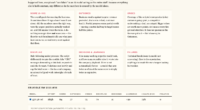
The comparison everyone is quoting — Fable 66, Astra 61, “not a rounding error” — is built on numbers that were stale when written, measuring a quantity that no longer means what it used to, aggregated in a way that hides the reversals that matter. The benchmark isn’t broken. The way it’s being read is.
Three things happened at once: the Index was revised (five became two), the architecture changed (tokens stopped being compute), and the aggregate did what aggregates do (6–1 became +2). A leaderboard position now tells you less than it ever has — and the more advanced the architecture, the less it tells you. Latent reasoning is only the first architecture to break the token proxy. So with your Astra access: ignore the Index number. Take your ten real tasks. Run both models at the effort setting you’ll actually pay for. Measure the bill including the cache line. Measure the failure rate — the 41-point hallucination drop is the one number here I’d bet money on. The benchmark can’t decide for you anymore.
Implications for AI Benchmarking and Industry Perception
This situation underscores the importance of understanding the underlying architecture and the metrics used in AI benchmarking. Relying on outdated or inconsistent data can lead to false narratives about model performance, influencing industry decisions, investor perceptions, and research directions. The Astra vs Fable comparison illustrates how superficial metrics like token counts and snapshot scores can obscure the true capabilities and costs of models, especially as architectures evolve to reason in latent space rather than tokenized output. Accurate, up-to-date benchmarks are critical for fair assessment and progress tracking in AI development.
As an affiliate, we earn on qualifying purchases.
Recent Developments in AI Benchmarking and Model Architecture
The Artificial Analysis Intelligence Index has undergone multiple revisions to stay current with evolving AI architectures. The initial comparison between Astra and Fable was based on version 4.1.1 of the index, which later shifted to version 4.2, incorporating new evaluation criteria like GPQA Diamond and AA-Briefcase. These updates caused the scores to fluctuate, illustrating that benchmark results are sensitive to the metrics and evaluation methods used. Additionally, Astra’s architecture—featuring latent reasoning—has been a game-changer, enabling it to perform many tasks with fewer tokens and less explicit reasoning, challenging traditional token-based efficiency metrics.
Prior to this, the industry widely accepted that larger token counts indicated higher compute and thus higher cost. However, Astra’s architecture demonstrates that reasoning in latent space can significantly alter the relationship between tokens, compute, and cost. The initial comparisons, which used raw token counts, failed to account for this shift, leading to misleading conclusions about model efficiency and intelligence.
As an affiliate, we earn on qualifying purchases.
Remaining Uncertainties About Benchmark Validity
It remains unclear how Astra’s latent reasoning architecture will be reflected in future benchmark evaluations, as current metrics are based on token counts that do not capture internal computation. The extent to which Astra’s efficiency and intelligence are accurately measured by existing indexes is still debated. Additionally, the impact of index revisions on other models and benchmarks is not fully understood, raising questions about the stability and comparability of these evaluations over time.
As an affiliate, we earn on qualifying purchases.
Future Benchmark Revisions and Model Evaluations
Expect ongoing updates to AI benchmarks that better account for architectural differences like Astra’s latent reasoning. Researchers and evaluators are likely to develop new metrics that measure internal computation more accurately, moving beyond token counts. Industry stakeholders will also scrutinize current benchmarks and adjust their models and strategies accordingly, emphasizing the importance of transparent, version-controlled evaluation standards. The next steps include more nuanced benchmarking that can fairly compare models with fundamentally different architectures.
As an affiliate, we earn on qualifying purchases.
Key Questions
Why do token counts no longer reliably measure AI efficiency?
Because models like Astra perform reasoning in latent space without emitting tokens during internal computations, token counts no longer reflect the true amount of compute or effort involved.
How do index revisions affect benchmark comparisons?
Revisions can change scoring criteria and evaluation methods, causing scores to shift and making previous comparisons outdated or misleading if not properly contextualized.
What are the implications of architectural differences for benchmarking?
Architectural differences, such as Astra’s latent reasoning, require new metrics beyond token counts to accurately assess performance and efficiency.
Will future benchmarks clarify Astra’s true capabilities?
Yes, upcoming evaluations are expected to incorporate more sophisticated metrics that better reflect internal computation, helping to clarify Astra’s real performance profile.
Source: ThorstenMeyerAI.com
Fall Picks
fall essentials
As an affiliate, we earn on qualifying purchases.