
Choosing the right Bitcoin mining hardware in 2026 involves balancing performance, energy efficiency, and budget. The Bitaxe Gamma 602 stands out as the best overall for its durability and power efficiency, while the Bitforge Nano offers impressive dual-chip capabilities for those seeking more flexibility. Budget-conscious miners may prefer the Gamma 601 Home Crypto Miner, which delivers solid performance at a lower cost. However, tradeoffs between hash rate, power consumption, and ease of setup remain key considerations. Continue reading to explore the full breakdown of each option and find the best fit for your mining needs.

Get hardware and tech essentials delivered free with Prime
- Fast, free delivery on millions of items
- Prime Video, Amazon Music and more included
- Member-only deals all year
Key Takeaways
- Higher hash rates generally demand more power, making energy efficiency a critical factor.
- Open-source miners offer customization but may require technical knowledge to optimize.
- Compact and low-power models are ideal for home setups with space or noise restrictions.
- Premium miners provide higher throughput but come with increased costs and complexity.
- Budget options can still deliver respectable performance but often lack advanced features or durability.


More Details on Our Top Picks
Bitaxes Gamma 601 Bitcoin Miner – 1.2 TH/s, Open-Source BTC Solo Miner with BM1370 ASIC Chip, WiFi, Silent Home & Educational Use
The Bitaxes Gamma 601 stands out for its simplicity and open-source flexibility, making it ideal for newcomers learning the ropes of Bitcoin mining. Unlike larger industrial miners, its 1.2 TH/s hash rate is modest but sufficient for educational purposes and small-scale experiments. Its low 18W power consumption and quiet operation create a seamless home environment, especially for those interested in understanding mining mechanics without high costs. However, compared to higher hash rate options like the NerdQaxe++ Rev 6.1, it offers less profitability and scalability. Its reliance on WiFi can also introduce stability issues in less optimal network conditions. Still, this pick makes the most sense for users wanting a hands-on, customizable experience at a low entry point.
Pros:- Highly energy-efficient with only 18W power use
- Open-source firmware allows extensive customization
- Compact, silent, and easy to set up via WiFi
Cons:- Limited hash rate of 1.2 TH/s reduces earning potential
- Requires stable WiFi connection for optimal operation
- Primarily designed for learning, not high-volume mining
Best for: Beginners, students, and hobbyists exploring Bitcoin mining at home or in educational settings
Not ideal for: Serious miners seeking high profitability and fast ROI, as the low hash rate limits earning potential
- Hash Rate:1.2 TH/s
- Power Consumption:18W
- ASIC Chip:BM1370
- Connectivity:2.4G WiFi
- Dimensions:3.2 x 2.4 x 4.8 inches
- Weight:0.4 pounds
- Cooling:Air cooling
- Warranty:Details available upon request
Bottom line: This device is best suited for beginners and educational users who prioritize learning over high returns.
Bitaxes Gamma 601 Bitcoin Miner 1.2TH/S, Open-Source System with BM1370 ASIC Chip, 15W/TH Energy Efficient Solo Mining Machine
Compared with the simpler Gamma 601 model, this Bitaxes Gamma 601 variant offers a notable boost in versatility with multiple mining modes like SOLO, PPLNS, PPS, and P2P, along with remote management features. It maintains a solid 1.2 TH/s hash rate, but its real strength is the energy efficiency—operating at just 15W/TH—making it attractive for those wanting to minimize electricity costs. The dual ball-bearing fans ensure stable operation, though the setup process is more technical than plug-and-play, requiring some network configuration. Its exclusive focus on Bitcoin mining means it lacks multi-coin flexibility. This miner suits users with technical skills who want a reliable, low-cost, remotely manageable device for small-scale or hobbyist mining.
Pros:- High hash rate with efficient 15W/TH operation
- Supports multiple mining modes for flexibility
- Remote management capabilities
Cons:- Requires technical knowledge for setup and network configuration
- Cooling fans may generate noise during operation
- Limited to Bitcoin mining only
Best for: Experienced hobbyists and small miners comfortable with network setup and configuration
Not ideal for: Beginners or those seeking a plug-and-play, low-maintenance solution, due to its technical setup
- Hash Rate:1.2TH/S
- Power Consumption:15W/TH
- ASIC Chip:BM1370
- Cooling:Dual ball-bearing fans
- Mining Modes:SOLO, PPLNS, PPS, P2P
- Connection:Wireless
Bottom line: This miner offers good performance for technically inclined users prioritizing efficiency and remote control.
Bitaxe Gamma 602 Solo Bitcoin ASIC Miner – 1.2 TH/s @ 18W, Low Power, Open-Source, Compact, Durable
The Bitaxe Gamma 602 distinguishes itself through its industrial-grade durability and open-source design, making it suitable for users who want a robust, long-lasting mining device. Its 1.2 TH/s performance at just 18W aligns closely with the Gamma 601, but with added focus on build quality and global power compatibility (110V-240V). While it does not include built-in network features, its high-quality materials and efficient cooling system support continuous operation in a variety of environments. Compared to the Gamma 601, it offers slightly better durability and more versatile power options, but it demands some technical skill for setup and customization. Ideal for those seeking a reliable, low-power miner with high durability.
Pros:- Open-source design for customization and optimization
- Low power consumption of 18W makes it energy-efficient
- Industrial-grade durability and versatile power input range
Cons:- Limited to 1.2 TH/s, lower than larger commercial miners
- Requires technical knowledge for setup and customization
- No built-in network connectivity features
Best for: Tech-savvy users needing durable, high-quality hardware for small-scale or home mining
Not ideal for: Complete beginners or users preferring integrated connectivity features, due to its lack of networking options
- Hash Rate:1.2 TH/s
- Power Consumption:18W
- Power Supply Voltage:110V-240V
- Cooling Method:Air
- Form Factor:Standalone
- Connector Type:Barrel Jack
Bottom line: This miner suits experienced users seeking a durable, efficient device optimized for long-term, small-scale mining.
NerdQaxe++ Rev 6.1 6T Bitcoin Miner with WiFi, Quiet Open-Source Design
Compared to smaller models like the Gamma 601, the NerdQaxe++ Rev 6.1 delivers a significant jump in hashrate—6 TH/s—while maintaining low power use at 100W. Its open-source design and dual fan cooling system support continuous, stable operation, making it suitable for dedicated home miners. The built-in 2.4GHz WiFi simplifies setup, although it doesn’t support 5GHz networks, which could be a limitation in some environments. Its quiet operation and compact size make it a practical choice for users who want substantial mining power without disturbing their home environment. However, its price point and the need for a stable WiFi connection could be considerations for cost-conscious or less tech-savvy buyers. This miner offers a compelling balance of performance and convenience for serious hobbyists.
Pros:- High hashrate of 6 TH/s with low power consumption
- Quiet operation suitable for home environments
- Easy setup with built-in WiFi and web interface
Cons:- Limited to 2.4GHz WiFi, excluding 5GHz support
- Price may be higher than smaller miners for the power gained
- No detailed dimensions or weight info available
Best for: Home miners and blockchain enthusiasts seeking high performance with minimal noise
Not ideal for: Entry-level users or those without a stable WiFi network, given its reliance on wireless connectivity
- Hashrate:6 TH/s
- Power Consumption:100W
- Efficiency:16.5 J/TH
- Cooling:Dual fan
- Connectivity:WiFi 2.4GHz
- Adapter Certification:EU standards
Bottom line: This miner is ideal for home users who need strong performance with minimal noise and easy wireless setup.
Bitaxes Gamma 601 Bitcoin Miner 1.2TH/s, Open-Source System, BM1370 ASIC Chip, WiFi 2.4G, Compact and Low Power
The Bitaxes Gamma 601 with a range of 1-1.2 TH/s offers excellent efficiency at just 18-20W, making it suitable for energy-conscious users. Its compact size and open-source firmware support customization, enabling users to adapt the miner for various pools and protocols. The inclusion of WiFi 2.4G connectivity offers cable-free operation, while the OLED display allows easy remote monitoring. While its hash rate is modest compared to larger industrial miners, its low power draw and small footprint make it perfect for home setups. However, the reliance on WiFi and the potential need for pre-shipment testing could delay deployment. This model is best for users who value flexibility, low power, and open-source software.
Pros:- High efficiency with very low power consumption
- Remote monitoring with OLED display
- Open-source firmware supports customization
Cons:- Relatively low hash rate limits earning potential
- Requires stable WiFi connection for best performance
- Pre-shipment testing can cause delays
Best for: Home users and open-source miners seeking a flexible, low-power device
Not ideal for: Miners needing high throughput or quick deployment, due to lower hash rate and potential delays
- Hash Rate:1-1.2 TH/s
- Power Consumption:18-20W
- ASIC Chip:BM1370
- Connectivity:WiFi 2.4G
- Dimensions:5.12 x 3.23 x 2.36 inches
- Cooling:Air cooling
- Warranty:Included
Bottom line: This miner suits users prioritizing energy savings, customization, and flexibility over maximum hash rate.
Bitforge Nano Open-Source Bitcoin Miner | Dual BM1370 ASIC, Up to 2.5TH, 12V
The Bitforge Nano stands out for its open-source design, making it ideal for hobbyists who want to experiment with hardware and software tweaks. Its dual BM1370 chips deliver a modest up to 2.5 TH/s, which is significantly lower than large-scale miners like the Avalon Nano 3S, but its compact size and low power use make it perfect for home environments. Unlike more powerful rigs, this miner offers full customization and educational value, though it might not generate enough Bitcoin for serious profit. Its air cooling and standalone operation mean no need for external computers, but it does require an IEC cable and can be noisy. This pick suits those eager to learn about mining mechanics or experiment without risking big investments.Pros:- Open-source hardware/software for learning and customization
- Compact size fits well in home setups
- Low power consumption with efficient ASIC chips
- Standalone operation without external computers
Cons:- Requires IEC power cable (not included)
- Limited to basic home/hobby mining, not industrial scale
- Potentially noisy due to air cooling
Best for: Hobbyists, students, or DIY enthusiasts interested in open-source mining tech.
Not ideal for: Large-scale miners seeking high hash rates or quick ROI, as this device is more educational than profitable.
- Hash Rate:Up to 2.5 TH/s
- ASIC Chips:Dual BM1370
- Power Supply:Multi-region compatible, 12V
- Dimensions:7.28 x 4.72 x 4.57 inches
- Input Voltage:12V – 240V AC
- Cooling Method:Air
- Form Factor:SFX
- Warranty:10 years
Bottom line: This device makes the most sense for those wanting to explore mining fundamentals and customize their setup without high stakes.
Miner Forge PRO 2.0 Solo Bitcoin Lottery Miner USB-C with 2.8-Inch LCD Display
The Miner Forge PRO 2.0 is designed for users who prefer ease of use over raw power, making it well-suited for beginners or those wanting a straightforward solo mining experience. Its ability to generate 144 attempts daily is modest compared to larger rigs like the Avalon Nano 3S, but its plug-and-play setup and quiet operation appeal to home miners. The device’s small size and no-fan, low-power design mean it can run continuously without much noise or heat, though its hash power is limited, reducing the likelihood of earning Bitcoin quickly. The built-in color LCD provides real-time updates, but its small screen can limit detailed monitoring. This miner is best for those seeking a simple, educational, or hobbyist approach to solo mining.Pros:- Easy to set up with no technical skills needed
- Low power consumption and quiet operation
- Independent solo mining increases earning chances
- Compact and portable design
Cons:- Limited hash rate of 144 attempts per day
- Requires Wi-Fi connection for operation
- Small display may restrict detailed info viewing
Best for: Beginner miners or hobbyists who want a low-cost, easy-to-understand solo mining device.
Not ideal for: Large-scale or profit-focused miners requiring higher hash rates and faster payout potential.
- Processor:ESP32-WROOM-32 dual-core 32-bit, 240 MHz
- Display:2.8-inch color TFT LCD
- Power Consumption:1W
- Connectivity:Wi-Fi, USB-C
- Mining Attempts per Day:144
- Dimensions:5.91 x 5.51 x 1.97 inches
- Weight:Not specified
- Memory:4 MB SRAM
Bottom line: This device suits beginners seeking a simple, educational mining experience without complex rigs or high electricity costs.
Bitcoin Miner NM v2 with ESP32, 1020 kh/s Crypto Solo & Pool Mining, 2.8″ Smart Display, DIY Learning
The Bitcoin Miner NM v2 offers a balanced approach for those interested in learning about mining technology, with a respectable 1020 kh/s hashing power. Its microcontroller-based design makes it energy-efficient and accessible for hobbyists wanting to experiment with solo and pool mining. Compared to the Bitaxe Gamma 602, which has a higher hash rate but less emphasis on education, the NM v2 prioritizes ease of setup and real-time data display. Its small size and low power draw make it ideal for home use, though it’s not suited for large-scale mining operations. The device’s educational features provide a good introduction, but advanced miners may find the performance limiting. This miner is perfect for those eager to understand mining mechanics and customize their setup.Pros:- Energy-efficient operation with low power use
- Easy start with plug & play design
- Real-time data via built-in HD screen
- Supports solo and pool modes
Cons:- Limited to 1020 kh/s, not suited for large-scale mining
- Wi-Fi required for operation
- Basic educational features may lack depth for experts
Best for: DIY learners, students, or hobbyists wanting to explore crypto mining fundamentals.
Not ideal for: High-volume miners seeking fast returns with high hash rates or industrial-scale rigs.
- Hashrate:1020 kh/s
- Power Consumption:30% lower than traditional miners
- Display:2.8-inch HD
- Connectivity:Wi-Fi, USB 2.0/3.0
- Voltage Range:110V-240V
- Dimensions:3.35 x 0.6 x 2.26 inches
- Weight:200g
- Microcontroller:ESP32-S3
Bottom line: This device is a solid choice for those wanting to learn mining basics and experiment in a low-cost, straightforward way.
Canaan Avalon Nano 3S BTC Miner – 6 TH/s, 140W, Quiet, Supports Solo & Pool Mining
The Canaan Avalon Nano 3S offers a practical balance of high hash rate and low power consumption, making it suitable for users who prioritize a quiet environment. With 6 TH/s, it surpasses the smaller, low-power devices like Bitaxe Gamma 602, yet consumes only 140W, reducing electricity bills. Its compact design fits comfortably in homes or small offices, but its dimensions mean users should ensure sufficient space. While it supports solo and pool mining, it’s limited to Bitcoin only, and a stable power setup is necessary for consistent performance. Compared to the Bitforge Nano, which is more customizable and open-source, the Avalon Nano 3S emphasizes ease of use and quiet operation. This miner works well for those needing a balance of power, efficiency, and quietness.Pros:- High hash rate of 6 TH/s for efficient mining
- Low power consumption at 140W
- Quiet operation suitable for home environments
- Supports solo and pool mining
Cons:- Limited to Bitcoin mining only
- Dimensions may require dedicated space
- Requires stable power supply
Best for: Home users or small offices seeking quiet, efficient Bitcoin mining with straightforward operation.
Not ideal for: Large-scale or industrial miners demanding higher hash rates or multi-cryptocurrency support.
- Hash Rate:6 TH/s
- Power Consumption:140W
- Dimensions:9.53 x 5.51 x 7.05 inches
- Cooling Method:Air
- Supported Modes:Solo & Pool
- Input Voltage:108-120V
Bottom line: This device is ideal for users who want a quiet, efficient miner that fits seamlessly into home setups.
Bitaxe Gamma 602 ASIC Bitcoin Miner | 1.1 TH/s @ 18W | BM1370 Chip (Antminer S21 Pro) | Wi-Fi | USB-C | AxeOS | Open Source | Made in Europe | Incl. Power Supply & Stand
The Bitaxe Gamma 602 excels in efficiency, delivering a 1.1 TH/s hash rate at just 18W power consumption, making it an excellent choice for eco-conscious miners. Its open-source firmware and European manufacturing appeal to those who value transparency and control, especially compared to the closed systems like the NerdQaxe++ Rev 6.1. While the lower hash rate means it’s less suitable for large-scale operations, it shines in educational settings or small home rigs where energy savings outweigh raw output. The device’s compact form factor and inclusion of a power supply make setup straightforward, but network setup via Wi-Fi or USB-C can be a hurdle for some users. This miner is perfect for users prioritizing efficiency, open-source flexibility, and European quality.Pros:- Exceptional energy efficiency with 18W at 1.1 TH/s
- Open-source firmware for customization and learning
- European-made quality and transparency
- Includes power supply and stand
Cons:- Limited to 1.1 TH/s, not suited for large farms
- Network setup can be complex for beginners
- Requires Wi-Fi or USB-C configuration
Best for: Eco-conscious hobbyists, educational users, or small-scale miners seeking efficiency and customization.
Not ideal for: Profit-driven large miners or those needing high throughput for quick ROI, due to its lower hash rate.
- Hashrate:1.1 TH/s
- Power Consumption:18W
- Chip:BM1370 (Antminer S21 Pro)
- Connectivity:Wi-Fi, USB-C
- Form Factor:Compact
- Cooling:Air
Bottom line: This device suits those who want a highly efficient, customizable miner with a focus on sustainable and educational mining practices.
Bitaxe Supra Hex 703 ASIC Bitcoin Miner 4.2 Th/s with US Plug
The Bitaxe Supra Hex 703 stands out for delivering a substantial 4.2 TH/s hashrate, making it one of the most powerful home-ready miners available. Compared to smaller devices like the Gamma 601, it offers significantly higher mining output, but that comes with increased power demands and setup complexity. Its open-source design provides flexibility for advanced users wanting to customize, yet it limits software updates, which could be a drawback for those seeking long-term ease of use. The inclusion of a US plug makes it straightforward for U.S. consumers, but the 1200W power consumption and air cooling setup require a robust electrical setup and proper ventilation. This model is better suited for experienced miners who need high performance at home and are comfortable with technical setup, rather than beginners or those with limited electrical capacity.
Pros:- High mining performance with 4.2 Th/s for faster returns
- Open-source design enables customization and community support
- US plug simplifies setup for U.S. users
Cons:- High power consumption at 1200W affects electricity costs
- Limited to air cooling, which may require additional ventilation
- No software updates allowed, restricting future improvements
Best for: Experienced hobbyists or small-scale miners wanting high throughput at home with DIY customization skills
Not ideal for: Beginners or users with limited electrical infrastructure due to high power needs and technical setup requirements
- Hashrate:4.2 Th/s
- ASIC Chip:BM1366
- Power Supply:1200W ATX PSU
- Cooling Method:Air cooling with 1 fan
- Input Voltage:100-264V AC
- Connector Type:ATX
- Form Factor:ATX
Bottom line: This miner is best for experienced users seeking maximum performance at home, willing to manage its power and setup demands.
Gamma 601 Home Crypto Miner, Bitcoin Miner with BM1370 ASIC Chip, 1TH/s – 1.2TH/s, WiFi, Open Source, Compact Design
The Gamma 601 makes a compelling choice for newcomers and casual miners, offering a reliable 1 to 1.2 TH/s hashrate with minimal energy use. Unlike the larger Bitaxe Supra Hex 703, it emphasizes energy efficiency, consuming just about 18-20W, which translates into lower electricity bills and less heat generation. Its compact size and quiet operation make it suitable for living spaces, addressing concerns that larger miners like the Bitaxe might be disruptive. The built-in WiFi and OLED display simplify setup and real-time monitoring, but the tradeoff is its limited hashrate, falling short against high-performance industrial miners or the Supra Hex. It only mines Bitcoin (SHA-256), which restricts versatility compared to multi-algorithm devices. This pick is ideal for beginners or enthusiasts wanting a low-maintenance, energy-efficient miner for daily or educational use.
Pros:- Excellent energy efficiency with 15-16J/TH for low operating costs
- Easy setup via WiFi and real-time OLED display for user-friendly operation
- Open-source firmware allows customization and community enhancements
- Compact and quiet design suitable for home environments
Cons:- Limited to Bitcoin mining only, no multi-algorithm flexibility
- Lower hashrate compared to industrial miners like the Bitaxe Supra Hex 703
- Requires stable WiFi connection for consistent performance
Best for: Bitcoin newcomers, hobbyists, or those with limited space seeking an easy-to-use, energy-efficient mining device
Not ideal for: Professional miners or those seeking maximum profitability with industrial-grade hashrates, as it’s relatively low-powered
- Mining Algorithm:SHA-256
- Chip:BM1370 ASIC
- Hashrate:1TH/s – 1.2TH/s
- Energy Efficiency:15-16J/TH
- Power Consumption:18-20W
- Connectivity:2.4G WiFi
- Display:0.96” OLED
- Software Compatibility:AxeOS, Stratum V1
Bottom line: This miner is perfect for beginners and casual users focusing on energy efficiency and ease of use over maximum hashing power.
How We Picked
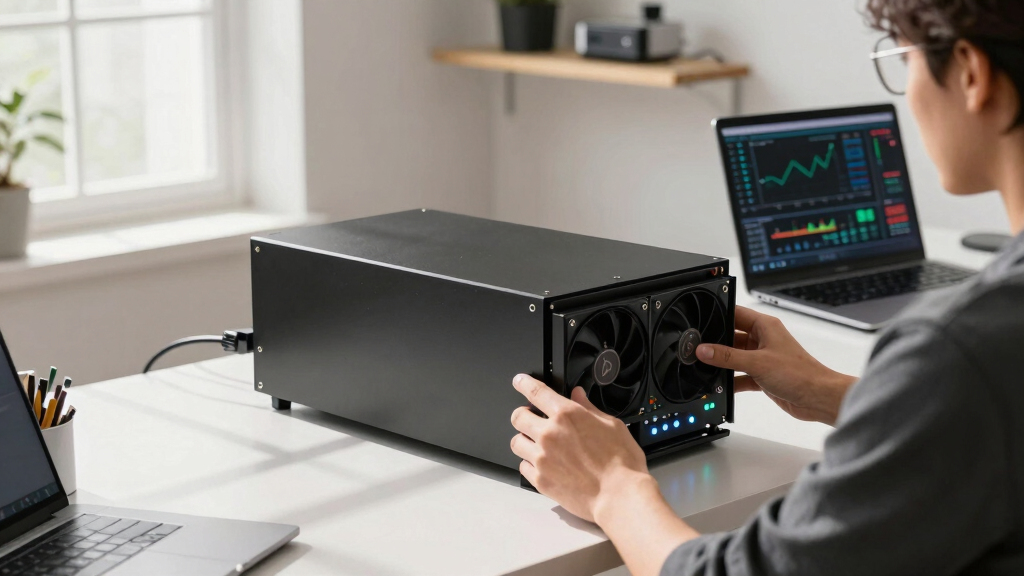
I evaluated these Bitcoin mining hardware options based on key factors that influence real-world performance and usability. Performance metrics like hash rate and power consumption were primary considerations, as they directly impact profitability. Usability factors such as ease of setup, noise levels, and compactness help determine suitability for different environments. Build quality and durability were also weighed, especially for miners intended for long-term use. Finally, value was assessed by comparing features against price, ensuring that each pick offered a meaningful benefit relative to its cost. This approach allowed me to rank products that cater to a range of user needs, from beginners to experienced miners.Factors to Consider When Choosing Bitcoin Mining Hardware
When selecting Bitcoin mining hardware, it’s essential to consider several factors that directly influence your mining experience and profitability. Not all miners are created equal—some prioritize power efficiency, while others focus on raw hash rate. Understanding these tradeoffs can help you avoid common pitfalls like overspending on high-end models that don’t suit your setup. Additionally, compatibility, noise levels, and power requirements can significantly impact your overall satisfaction and operational costs. This guide explores the most important considerations to help you make an informed choice.Hash Rate and Performance
The hash rate indicates how many calculations your hardware can perform per second, directly affecting your potential earnings. Higher hash rates typically mean better performance, but they also often come with increased power consumption. For small-scale or hobby miners, a modest hash rate might be sufficient, whereas professional setups demand the highest possible throughput. Balancing hash rate against energy efficiency is key to maximizing profitability without inflating operational costs.
Energy Consumption and Efficiency
Energy efficiency determines how much electricity your miner consumes per unit of hash rate. Miners with lower power use can significantly reduce ongoing expenses, especially in regions with high electricity rates. It’s tempting to chase the highest hash rate, but if power costs outweigh gains, your mining venture can become unprofitable. Look for models that deliver a good balance of performance and low power draw—this often translates into better long-term value.
Ease of Setup and Usability
Some miners are plug-and-play, ideal for beginners, while others require technical skills to configure and optimize. Open-source options, for example, offer customization but may demand a higher skill level. Consider your experience and comfort with hardware tinkering—choosing a user-friendly model can save time and reduce frustration. Also, check whether the miner includes features like remote management or integrated displays to streamline operation.
Physical Size, Noise, and Power Requirements
The physical footprint and noise levels are often overlooked but are critical for home miners. Compact units save space, but may sacrifice some performance. Noise can be disruptive if your setup is in a living area; look for models marketed as quiet or with noise reduction features. Additionally, ensure your power supply and electrical infrastructure can support the miner’s requirements to avoid costly upgrades or safety issues.
Cost and Overall Value
Price is a major factor, but it should be weighed against performance, durability, and energy efficiency. A more expensive miner might pay for itself faster through higher hash rates and lower operating costs. Conversely, budget models can be attractive for hobbyists or small-scale miners, but they may lack longevity or advanced features. Carefully compare what each model offers relative to its cost to avoid overspending or under-investing in your mining setup.
Frequently Asked Questions
Can I mine Bitcoin at home with any of these miners?
Most of these miners are suitable for home use, especially those with lower power consumption and noise levels. Models like the Gamma 601 Home Crypto Miner are designed specifically for this purpose, offering a compact size and quieter operation. However, even with quieter units, you should ensure your electrical infrastructure can handle the load and that your setup complies with local noise regulations. For larger miners with higher hash rates, dedicated mining farms are often a better choice due to power and cooling needs.
Is it worth investing in an open-source Bitcoin miner?
Open-source miners provide the advantage of customization and transparency, which can be appealing for experienced users seeking to tweak performance or reduce costs. They often allow for firmware modifications that optimize efficiency or add features. However, they usually require a higher level of technical skill to set up and maintain. For beginners or those less comfortable with hardware, pre-configured or plug-and-play options might be safer and more reliable investments.
How important is energy efficiency when choosing a miner?
Energy efficiency is one of the most critical factors for profitability, especially as electricity costs can eat into mining gains. A miner with a high hash rate but poor efficiency may cost more in power bills than it makes in Bitcoin. Conversely, a lower hash rate device with excellent energy use can be more profitable over time, particularly in regions with high electricity prices. Always consider the power consumption relative to the expected output to make the most financially sound decision.
Should I buy a more powerful miner or multiple lower-tier units?
Choosing between a single high-performance miner and multiple lower-tier units depends on your operational capacity and space. A single, powerful miner may simplify management and reduce setup complexity, but it often comes with a higher upfront cost. Running multiple units can offer flexibility and redundancy; if one fails, others continue mining, but it also increases maintenance and power supply requirements. Consider your budget, space, and technical comfort when making this decision.
Are newer miners always better than older models?
While newer miners tend to incorporate advancements in efficiency and performance, they also come at a higher cost. Sometimes, older models may still be viable, especially if they are well-maintained or available at a discount. The key is to evaluate the specific specifications, energy use, and compatibility with your setup rather than just the release date. In some cases, proven older models can provide solid returns with less initial investment.
Conclusion
For most users, the Bitaxe Gamma 602 offers a compelling balance of performance, efficiency, and durability, making it the best overall pick. Beginners or those with limited space might prefer the Gamma 601 Home Crypto Miner for its simplicity and lower noise levels. Budget-conscious miners should consider the Gamma 601 variants, which deliver decent performance at a lower cost. Enthusiasts seeking maximum throughput and customization may find the Bitforge Nano or Bitaxe Supra Hex more aligned with their needs. Ultimately, your choice depends on your specific goals, budget, and technical comfort level.
Halloween Picks
halloween
As an affiliate, we earn on qualifying purchases.