
TL;DR

Get hardware and tech essentials delivered free with Prime
- Fast, free delivery on millions of items
- Prime Video, Amazon Music and more included
- Member-only deals all year
A civic-dialogue nonprofit is testing a new workflow tool to manage citizens’ assembly logistics. The initiative aims to replace manual processes with a guided, scalable platform to improve efficiency. Its success could influence broader civic engagement practices.
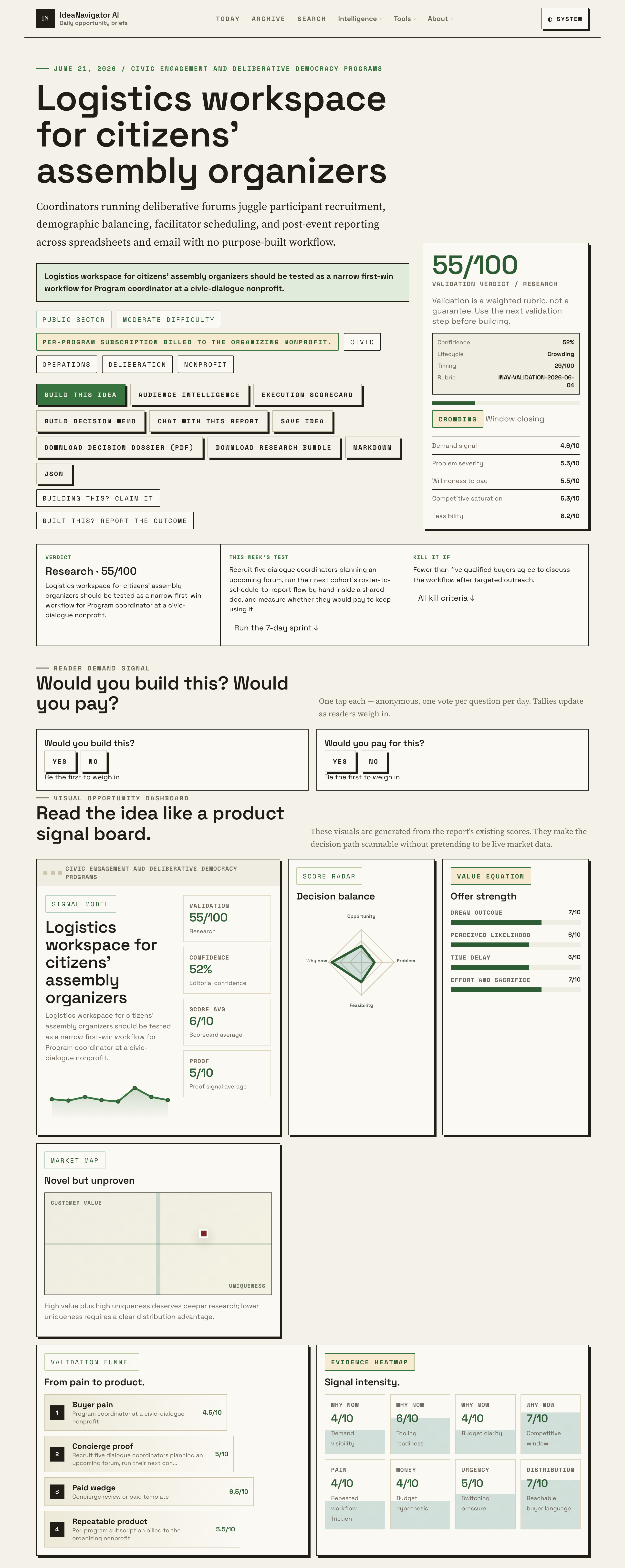
A civic-dialogue nonprofit is testing a new logistics workspace designed specifically for citizens’ assembly organizers, aiming to automate and streamline participant recruitment, scheduling, demographic balancing, and reporting. This development responds to the growing demand for scalable, efficient tools as governments and funders increasingly commission deliberative forums.
The initiative involves creating a guided event-operations platform that takes a dialogue cohort from initial participant rosters through to scheduling, demographic balancing, attendance tracking, and final reporting. Currently, coordinators manage these tasks manually using spreadsheets and email, which hampers scalability and efficiency.
According to sources familiar with the project, the MVP (minimum viable product) aims to demonstrate whether a purpose-built workflow can replace manual processes. The pilot will recruit five coordinators planning upcoming forums, and their manual roster-to-report workflows will be used as a baseline to evaluate the platform’s effectiveness and willingness to pay.
This effort is motivated by the increasing number of civic engagement initiatives, but the nonprofit sector faces challenges in scaling logistics without dedicated tools, risking inefficiencies and inconsistent participant demographics.
Potential Impact on Civic Engagement Logistics
If successful, this logistics workspace could significantly improve the scalability and consistency of citizens’ assemblies and deliberative panels. Automating key processes may reduce administrative burdens, improve demographic representation, and enhance the quality of post-event reporting. This could influence how civic organizations and governments plan and execute deliberative forums, making them more accessible and manageable at larger scales.
By addressing a critical bottleneck in civic engagement workflows, the project could set a new standard for operational tools in deliberative democracy, potentially attracting broader adoption and encouraging further innovation in the field.
participant management software for civic events
As an affiliate, we earn on qualifying purchases.
As an affiliate, we earn on qualifying purchases.
Current Challenges in Civic Assembly Management
Organizers of citizens’ assemblies and deliberative forums currently rely heavily on manual processes, including spreadsheets, email communication, and ad hoc tracking methods. These approaches are manageable for small or infrequent events but become problematic as the scale increases.
Recent trends show a rise in government and funder interest in deliberative democracy, but the nonprofit sector delivering these forums often lacks purpose-built tools, leading to inefficiencies and inconsistencies. In response, some organizations are exploring digital solutions to streamline logistics and improve participant diversity and engagement.
This pilot aims to validate whether a dedicated, guided workflow can address these issues effectively, providing a scalable model for civic engagement organizers.
event scheduling and reporting tools
As an affiliate, we earn on qualifying purchases.
As an affiliate, we earn on qualifying purchases.
Uncertain Outcomes and Validation Metrics
It is not yet clear whether the platform will be adopted at scale or whether coordinators will find it sufficiently intuitive and valuable to replace manual workflows. The pilot’s success depends on user engagement and willingness to pay, which are still being measured.
Additionally, the long-term impact on participant diversity and reporting quality remains to be validated through ongoing testing and feedback.
demographic balancing tools for meetings
As an affiliate, we earn on qualifying purchases.
As an affiliate, we earn on qualifying purchases.
Next Steps for Platform Validation and Adoption
The pilot will run through upcoming dialogue cohorts, with organizers providing feedback on usability and effectiveness. If the platform proves valuable, the nonprofit plans to refine features and prepare for broader rollout, including marketing to other civic organizations.
Further studies may assess the platform’s impact on participant demographics, event scalability, and reporting accuracy, shaping future developments in civic logistics tools.
As an affiliate, we earn on qualifying purchases.
Key Questions
What specific problems does this logistics workspace aim to solve?
The platform aims to automate participant recruitment, demographic balancing, scheduling, attendance tracking, and reporting, replacing manual spreadsheet and email workflows.
How will the success of the pilot be measured?
Success will be evaluated based on whether coordinators find the platform useful enough to replace manual processes, their willingness to pay, and improvements in efficiency, participant diversity, and reporting quality.
Could this platform be adopted by larger civic organizations or governments?
If the pilot demonstrates clear benefits, there is potential for broader adoption, especially among organizations seeking scalable solutions for citizens’ assemblies and deliberative forums.
What are the main challenges in developing this logistics tool?
Key challenges include ensuring user-friendliness, flexibility to accommodate different event formats, and convincing organizers to transition from familiar manual workflows.
When will the platform be available for wider use?
The timeline depends on pilot feedback and refinement, but if successful, a broader rollout could occur within the next year.
Source: IdeaNavigator AI
Evergreen bestsellers Picks
bestsellers
As an affiliate, we earn on qualifying purchases.