
🔍 Read the full analysis: Gaming And Work In 2027: Compare These 10 Graphics Cards on ThorstenMeyerAI.com

Get hardware and tech essentials delivered free with Prime
- Fast, free delivery on millions of items
- Prime Video, Amazon Music and more included
- Member-only deals all year
TL;DR
The source compares 10 graphics cards across performance, memory, cooling, power needs and intended workloads. It favors newer high-end cards for gaming and creative tasks, while describing older, low-cost models as options for basic display use rather than modern gaming.
ThorstenMeyerAI.com has compared 10 graphics cards for gaming and work in 2027, ranking options from the premium ASUS ROG Astral GeForce RTX 5080 to older cards such as the RX 550 and GT 730. The comparison emphasizes that the right choice depends on workload, memory, power and case compatibility, and says the least expensive legacy models are intended mainly for display output and light tasks rather than modern games, as detailed in the original analysis.
The article names the ASUS ROG Astral GeForce RTX 5080 as its best overall pick for high-end gaming and creative work, citing ray-tracing capability, cooling and overclocking headroom. It also lists the PNY RTX 5080 among the high-power cards with a triple-fan design. These are recommendations from the source, not results from a published benchmark table: the material provides no frame-rate measurements, test configuration or price comparisons.
For a mid-range option, the source highlights the ASUS Dual GeForce RTX 5060 Ti series and says the model offers 16GB of GDDR7 memory. It presents the AMD RX 9070 XT as an alternative for rasterization-heavy work and gaming. Other cards covered include the RTX 3060, RX 9070, VisionTek RX 580, RX 550 and GT 730. The source also mentions RX 580 and RX 550 variants when discussing memory and workstation use, alongside other graphics cards for gaming and creative work.
Its selection criteria are architecture, memory bandwidth, thermal performance, build and cooling, connectivity and physical fit. The article favors at least 8GB of VRAM for gaming models, while arguing that 16GB can help with demanding high-resolution workloads. It warns that larger cards may occupy three or more expansion slots and that high-end GPUs can require a more powerful power supply. For more guidance on evaluating options, see how to choose among graphics cards. No independent testing data is supplied to verify the comparative performance claims.
The 10 picks
- 1
 ASUS ROG Astral GeForce RTX 5080 OC Edition 16GB GDDR7 Graphics CardView on Amazon →
- 2
 PNY NVIDIA GeForce RTX 5080 OC Triple-Fan Graphics CardView on Amazon →
- 3
 ASUS Prime Radeon RX 9070 XT 16GB GDDR6 OC Edition Gaming Graphics CardView on Amazon →
- 4
 ASUS Prime Radeon RX 9070 EVO 16GB GDDR6 OC Gaming Graphics CardView on Amazon →
- 5
 ASUS Dual GeForce RTX 5060 Ti 16GB GDDR7 White OC Edition Graphics CardView on Amazon →
- 6
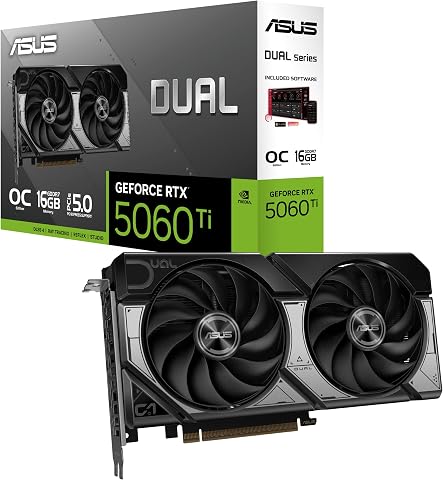 ASUS Dual GeForce RTX 5060 Ti 16GB GDDR7 OC Edition Gaming Graphics CardView on Amazon →
- 7
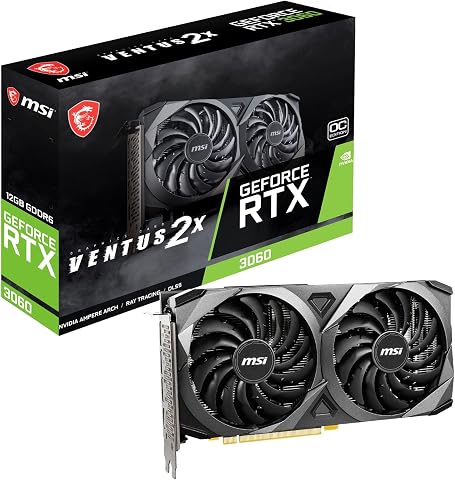 MSI GeForce RTX 3060 Ventus 2X 12G OC V1 Graphics CardView on Amazon →
- 8
 VisionTek AMD Radeon RX 580 8GB Graphics Card with 6 Mini DisplayPort OutputsView on Amazon →
- 9
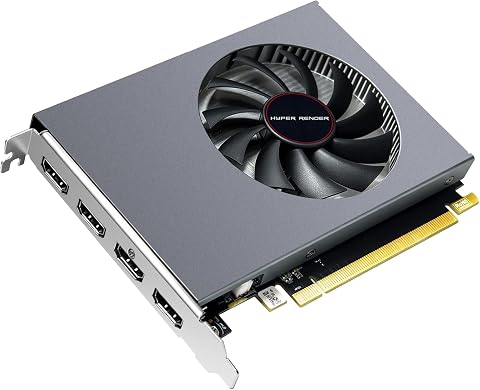 RX 550 4GB GDDR5 Graphics Card 4 HDMI GPU Tarjeta Gráfica 4 Port Video cardView on Amazon →
- 10
 Vandossy GeForce GT 730 4GB GDDR5 Graphics Card with 4 HDMI PortsView on Amazon →
Matching GPUs to Gaming and Work
The comparison is relevant to buyers choosing hardware for two different demands: games can benefit from newer graphics features and more memory, while creative applications may depend on vendor-specific acceleration. A card that performs well in one workload may not be the best fit for another. The source points to NVIDIA CUDA and NVENC as factors for some production workflows, while identifying AMD cards as alternatives for rasterization-focused use.
It also underscores the practical costs beyond a card’s listed performance. Buyers need to account for power supply capacity, cooling and case clearance, as well as memory requirements and software support. Those constraints can affect whether a GPU is usable in an existing system, even when its headline specifications appear suitable.
Products Worth Considering

Trezor Safe 7 Crypto Hardware Wallet with Bluetooth and Color Touchscreen

Trezor Safe 5 Crypto Hardware Wallet with Color Touchscreen

Apple MacBook Air 13.6-inch with M5 Chip, 24GB Memory, 2TB SSD, Midnight
As an affiliate, we earn on qualifying purchases.
Ten Cards Across Three Tiers
The list spans current-generation products and older hardware rather than comparing cards in a single price or performance bracket. At the premium end are the RTX 5080 models; the RTX 5060 Ti and AMD RX 9070 XT occupy the more recent mid-to-high range described in the source. The RTX 3060, RX 580, RX 550 and GT 730 provide older or lower-cost alternatives, but their intended uses differ substantially.
The source says newer architectures can support features that older cards cannot add through a driver update, including newer forms of AI-assisted frame generation and ray reconstruction. It also notes the VisionTek RX 580’s multiple mini-DisplayPort outputs as a reason it may suit certain multi-display workstation setups despite weaker gaming prospects. These details are presented as selection guidance, not a controlled head-to-head test.
“The main tradeoff lies between paying for cutting-edge architecture and accepting older technology for cost savings.”
— ThorstenMeyerAI.com comparison
Performance Data Still Missing
The source does not provide benchmarks, prices, test dates or system specifications, so readers cannot use it to quantify differences in frame rates, rendering times, noise or value. It also does not identify exact model configurations for every product, and some broad claims about memory needs and driver support are not tied to named games or applications.
The article is framed around 2027, but the supplied material does not establish when it was written or whether product availability and software support were checked at that time. Claims about future-proofing and upcoming game performance should be treated as the source’s assessment, not a guarantee. Exact power requirements can also vary by card manufacturer and system configuration.
Verify Specs Before Buying
Readers considering a purchase should compare current manufacturer specifications and independent tests for the exact card model, then check its dimensions, connector requirements and recommended power supply against their system. They should also confirm that the GPU is supported by the games and creative software they use. The source provides a shortlist and broad tradeoffs, but does not set out a next testing milestone or announce further updates.
Key Questions
Which card does the source recommend for high-end gaming and creative work?
ThorstenMeyerAI.com selects the ASUS ROG Astral GeForce RTX 5080, citing ray tracing, cooling and overclocking headroom. The material does not include benchmarks to independently compare its performance with the other cards.
Does the comparison say the RX 550 and GT 730 are suitable for modern gaming?
No. The source describes both as options for display output and light tasks, not modern gaming. Buyers should check the exact model and software requirements before relying on either card.
Why does the article emphasize VRAM?
Video memory holds graphics data such as textures. The source favors at least 8GB for gaming models and highlights 16GB configurations, but it provides no game-by-game tests establishing a universal minimum.
What should buyers check besides GPU performance?
Check card dimensions, cooling, power connectors, PSU capacity and application support. The source also advises considering whether software relies on NVIDIA or AMD-specific acceleration.
Source: ThorstenMeyerAI.com