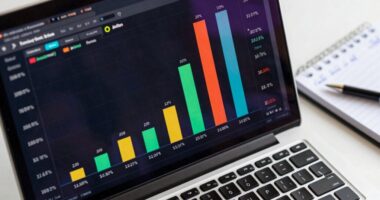
To build a personal crypto dashboard, start by selecting a user-friendly platform like Streamlit or Dash, and set it up to fetch data automatically through APIs from providers like CoinGecko or CoinMarketCap. Use interactive visual tools like charts and heatmaps to display prices, trends, and market caps clearly. Keep the design clean and organized for quick insights. If you keep going, you’ll discover how to customize and enhance your dashboard further.

Get hardware and tech essentials delivered free with Prime
- Fast, free delivery on millions of items
- Prime Video, Amazon Music and more included
- Member-only deals all year
Key Takeaways
- Select a user-friendly platform like Streamlit or Dash for real-time, customizable crypto data visualization.
- Integrate APIs from CoinGecko, CoinMarketCap, or CryptoCompare to automate live data fetching.
- Create interactive charts and graphs using libraries like Chart.js or D3.js for clear trend analysis.
- Design a clean, intuitive layout emphasizing relevant metrics for quick decision-making.
- Automate data updates to ensure the dashboard reflects the latest market trends and news.
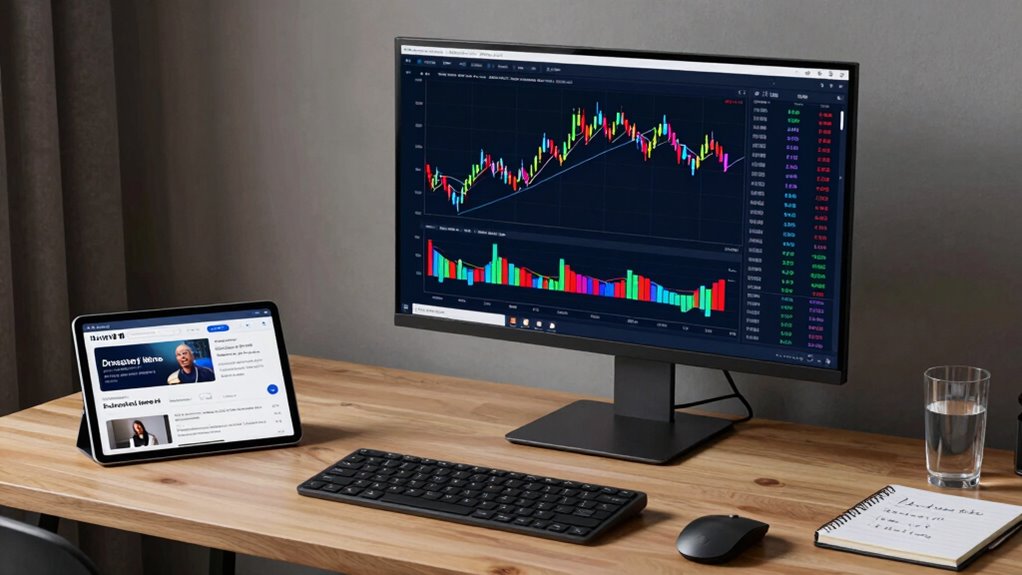
Ever wondered how to keep track of all the latest developments in the fast-paced world of cryptocurrency? Building a personal crypto reading dashboard can be your solution. It’s a tailored space where you can monitor market trends, news, and data points all in one place. The key is to leverage data visualization and API integration, which make your dashboard both dynamic and insightful.
Start by choosing a platform or framework that suits your technical comfort level. You might prefer a simple web-based dashboard built with JavaScript and HTML, or a more advanced setup using Python with libraries like Dash or Streamlit. The goal is to create a user-friendly interface that updates in real time. Once you’ve got your platform, the next step is sourcing data through APIs. Many crypto data providers—like CoinGecko, CoinMarketCap, or CryptoCompare—offer APIs that give you access to live price data, historical charts, and market cap information. Integrating these APIs into your dashboard allows you to fetch fresh data automatically, eliminating the need for manual updates.
Choose a platform matching your skills—JavaScript, Python, or advanced tools like Dash or Streamlit—for a real-time, user-friendly crypto dashboard.
Data visualization plays an essential role here. Instead of sifting through raw numbers, you can transform data into clear, interactive charts, graphs, and heatmaps. Visual tools make it easier to spot trends, compare assets, and understand market movements at a glance. For example, you could set up a line chart showing Bitcoin’s price changes over the past month or a pie chart illustrating your portfolio’s composition. Using libraries like Chart.js or D3.js can help you craft these visual elements seamlessly. The more intuitive your visualizations are, the faster you can make informed decisions. Additionally, understanding the content formats used in crypto data can help you better interpret the information presented.
As you develop your dashboard, remember to prioritize clarity and usability. Keep the layout clean, and focus on the most relevant data points. Incorporating concepts like data accuracy from your data sources can help ensure reliability in your analysis. By doing so, you’ll create a powerful tool that keeps you informed, helps manage risk, and enhances your understanding of this dynamic market. Building this dashboard isn’t just about tech skills—it’s about creating a personalized, actionable resource that makes your crypto journey smarter and more organized.
As an affiliate, we earn on qualifying purchases.
Frequently Asked Questions
What Hardware Is Best for Running a Crypto Dashboard?
You should opt for a hardware setup that balances performance and security. A powerful processor and ample RAM guarantee smooth data processing, while hardware optimization minimizes lag. Choose a device with robust data encryption capabilities to protect sensitive crypto information. A dedicated server or a high-spec PC with secure storage options offers reliability. Prioritizing hardware that supports encryption and optimization helps you maintain an efficient, safe crypto dashboard experience.
How Do I Ensure Data Privacy in My Dashboard?
Ironically, protecting your data privacy is straightforward—just don’t overlook it. You set up user authentication to control who accesses your dashboard, and employ data encryption to safeguard sensitive information. Regularly update your security protocols, use strong passwords, and keep backups. By implementing these measures, you guarantee your crypto data stays private, even if everyone else forgets about security in the rush to analyze the latest market trends.
Can I Integrate Multiple Exchanges Into One Dashboard?
Yes, you can integrate multiple exchanges into one dashboard through API integration. By connecting APIs from various exchanges, you gather real-time data, which you can then use for thorough data visualization. This approach allows you to monitor multiple platforms seamlessly, giving you a unified view of your crypto holdings and market trends. Just ensure your API keys are secure to protect your data and privacy.
What Are the Costs Involved in Building This Dashboard?
The costs of building your crypto reading dashboard vary based on features, data sources, and security needs. You’ll spend on API subscriptions, hosting, and possibly development tools. Keep in mind cryptocurrency regulations that may impact data access and compliance costs. Prioritize blockchain security to protect your sensitive information, which might require investing in security protocols or encryption. Overall, budgeting carefully guarantees a secure, compliant, and efficient dashboard tailored to your needs.
How Often Should I Update My Crypto Data Sources?
Did you know that 60% of investors value real-time updates for making quick decisions? You should update your crypto data sources as often as possible to guarantee real-time updates and maintain data accuracy. For most traders, refreshing every few minutes works well, but if you’re tracking volatile assets, consider more frequent updates. Regular updates help you stay ahead, making your dashboard a dependable tool for timely insights.
interactive data visualization tools
As an affiliate, we earn on qualifying purchases.
As an affiliate, we earn on qualifying purchases.
Conclusion
By building your crypto reading dashboard, you transform raw data into insightful knowledge, turning complexity into clarity. It’s like steering a bustling marketplace—chaotic yet filled with hidden treasures—if you know where to look. This dashboard becomes your personal compass, guiding you through volatile markets with confidence. In a world flooded with information, your curated interface balances chaos with control, empowering you to make smarter decisions amid the unpredictable tides of cryptocurrency.
As an affiliate, we earn on qualifying purchases.
cryptocurrency portfolio tracker
As an affiliate, we earn on qualifying purchases.
As an affiliate, we earn on qualifying purchases.
Fall Picks
fall essentials
As an affiliate, we earn on qualifying purchases.