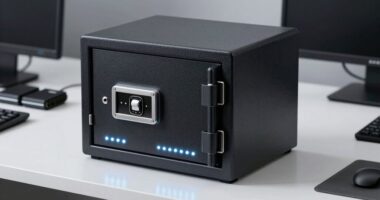
To keep your crypto notes and records organized, use spreadsheets or specialized software to log all transactions with details like date, amount, price, and wallet addresses. Regularly update and review your records to catch discrepancies. Secure your wallets with strong authentication and back up your data offline in encrypted formats. Automate data entry where possible, and stay aware of evolving security practices. Continuing along this path will help you stay compliant, secure, and confident in your investment tracking.

Get hardware and tech essentials delivered free with Prime
- Fast, free delivery on millions of items
- Prime Video, Amazon Music and more included
- Member-only deals all year
Key Takeaways
- Use consistent spreadsheets or specialized software to document all transactions with detailed info.
- Regularly update and review records to identify discrepancies and ensure accuracy.
- Backup wallet data and private keys securely in multiple offline locations.
- Automate data import and report generation with portfolio trackers and tax tools.
- Stay informed on regulations and security best practices to maintain organized, compliant records.

Keeping your crypto notes and records organized is crucial to managing your investments effectively and guaranteeing you’re prepared for tax season. When you stay on top of your records, you can easily track your gains, losses, and overall portfolio performance. This is especially important given the complexity of cryptocurrency security and digital wallet management. Proper documentation not only helps you stay compliant with tax authorities but also provides peace of mind knowing you have accurate data at your fingertips.
Organizing your crypto records is essential for effective management, tax readiness, and peace of mind.
Start by establishing a dedicated system for recording all your cryptocurrency transactions. Whether you prefer spreadsheets, specialized software, or a combination of both, consistency is key. Make sure every buy, sell, transfer, and fee is documented with details such as date, amount, price, and wallet addresses involved. This thorough recordkeeping ensures you won’t miss any critical information when calculating your tax obligations or analyzing your investment strategies. Regularly updating and reviewing your records can help you identify discrepancies early and stay organized.
When it comes to cryptocurrency security, safeguarding your digital wallet management is essential. Use secure, reputable wallets and enable two-factor authentication to protect your private keys. Regularly back up your wallet data in encrypted formats and store these backups in multiple secure locations. Doing so prevents loss from hardware failure, hacking, or other unforeseen issues. Also, keep a record of your wallet seed phrases and private keys in a safe, offline environment. Having these details well-organized and protected ensures you can always regain access to your funds if needed. Incorporating proper security practices can significantly reduce the risk of unauthorized access to your assets. Additionally, understanding contrast ratio in your security setup can help you evaluate how well your environment is protected against potential threats.
To further streamline your recordkeeping, consider using tools that automate parts of the process. Many cryptocurrency portfolio trackers and tax software can import transaction histories directly from your wallets or exchanges, reducing manual entry errors. These tools often generate reports that simplify tax filing and help you visualize your holdings and performance over time. However, always verify imported data for accuracy and completeness, especially if you’ve used multiple exchanges or wallets. Utilizing automated tools can save you time and effort, but manual checks remain essential to ensure accuracy.
Finally, stay updated on the latest regulations and best practices for cryptocurrency security and digital wallet management. Regulations can evolve, and new security risks may emerge, so regularly reviewing your recordkeeping system and security protocols keeps you prepared. By maintaining meticulous records and managing your wallets securely, you’ll have a clearer picture of your crypto investments, and you’ll be well-equipped to handle tax season without stress. Staying organized isn’t just about compliance; it’s about empowering yourself to make smarter investment decisions and protect your assets effectively.
cryptocurrency portfolio tracker software
As an affiliate, we earn on qualifying purchases.
As an affiliate, we earn on qualifying purchases.
Frequently Asked Questions
What Tools Are Best for Secure Crypto Record-Keeping?
You should use hardware wallets for secure crypto record-keeping, as they store your private keys offline, reducing hacking risks. Incorporate strong cryptography techniques like encryption when taking notes to safeguard sensitive information. Consider dedicated encrypted note-taking apps or offline storage methods to keep records organized and protected. Combining hardware wallets with encryption guarantees your crypto notes stay secure, accessible only to you, while reducing vulnerabilities from online threats.
How Often Should I Update My Crypto Records?
Think of your crypto records as a garden—you need to tend to them regularly. Updating your records weekly or after every substantial transaction keeps your cryptocurrency tax and digital wallet management smooth. For example, I update mine after every significant trade to stay ahead. Frequent updates prevent errors, make certain compliance, and make tax season less stressful. Consistent record-keeping helps you spot issues early and keeps your crypto journey organized and secure.
Can I Automate My Crypto Note Organization?
Yes, you can automate your crypto note organization. Using specialized software and integrations, you can sync your digital wallet security details and transaction records seamlessly. This helps you avoid common cryptocurrency myths about manual tracking errors. Automating reduces the risk of missing updates and keeps your notes organized, so you can focus on your investments without worrying about security or losing track of important information.
How Do I Recover Lost Crypto Records?
Losing crypto records can feel like misplacing treasure, but don’t worry—you can recover them. Start by checking your wallet security backups and any linked email accounts for transaction history. Consider using specialized tools to trace past cryptocurrency taxation records. Remember, maintaining strong wallet security helps prevent future losses. Regularly backing up your notes guarantees you’re prepared for any unforeseen mishaps, keeping your crypto journey smooth and secure.
What Privacy Measures Protect My Crypto Notes?
You protect your crypto notes by implementing strong privacy measures like encryption protocols, which keep your data secure from unauthorized access. Use access controls to restrict who can view or edit your notes, ensuring only trusted individuals have permissions. Regularly update your security settings and choose reputable tools that prioritize privacy. These steps help prevent theft, hacking, or accidental disclosures, keeping your crypto information safe and confidential.
As an affiliate, we earn on qualifying purchases.
Conclusion
So, after all that fuss about keeping your crypto notes tidy, you might find it amusing that the one thing you’re most likely to forget is to actually update them. Ironically, in a world obsessed with digital security, your best bet is a simple, organized system—yet many still lose track amid the chaos. Remember, your crypto’s safety depends on your notes, so stay disciplined; otherwise, you might as well toss your keys into the blockchain abyss.
two-factor authentication hardware key
As an affiliate, we earn on qualifying purchases.
As an affiliate, we earn on qualifying purchases.
secure offline crypto wallet storage
As an affiliate, we earn on qualifying purchases.
As an affiliate, we earn on qualifying purchases.
Halloween Picks
halloween
As an affiliate, we earn on qualifying purchases.