📊 Full opportunity report: How Google Trends Can Help Track U.S.–Belgium Trade Signals on IdeaNavigator AI — validation score, market gap, and execution plan.

Get hardware and tech essentials delivered free with Prime
- Fast, free delivery on millions of items
- Prime Video, Amazon Music and more included
- Member-only deals all year
TL;DR
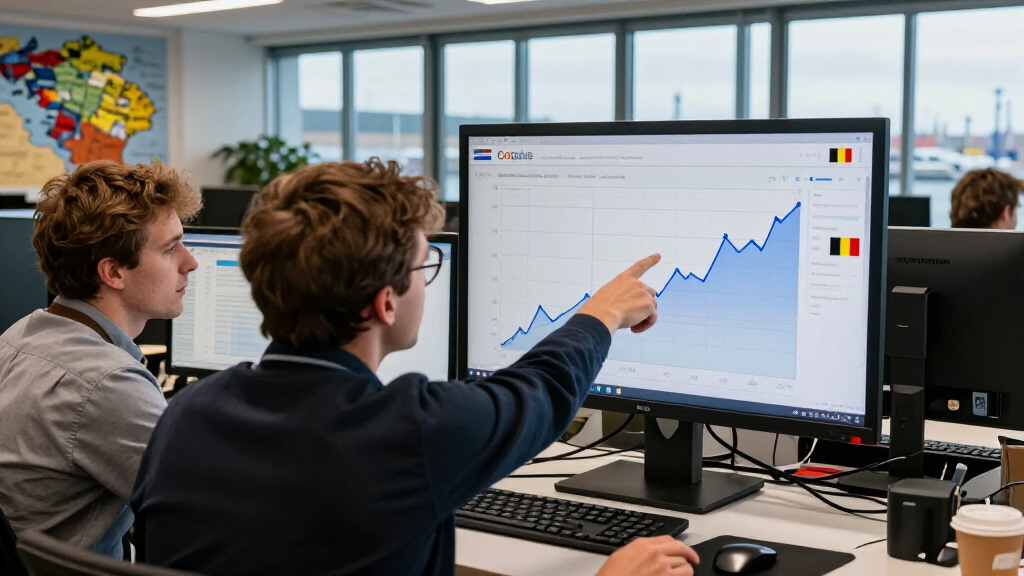
IdeaNavigator AI has outlined a proposed monitoring service that would use Google Trends and other feeds to turn geopolitical and trade developments into short, role-specific briefs. Its cited 88/100 signal for “estados unidos – belgica” does not, by itself, confirm a trade change, explain what people searched for, or show a measurable effect on supply chains.
IdeaNavigator AI has proposed a focused monitor that would use Google Trends and similar feeds to flag geopolitical and trade developments for supply-chain operations teams, with the search phrase “estados unidos – belgica” as an example. The proposal cites an 88/100 signal, but provides no date, methodology, or underlying Trends data, so that score does not establish that a U.S.–Belgium trade event occurred or that supply chains have been affected.
The proposed service is aimed at an operations lead managing supply-chain and trade exposure. It would scan Google Trends and other feeds, filter developments for that role, and turn relevant items into briefings organized around what changed, why it matters, and what to do. The stated problem is that potentially relevant developments are scattered across news, forums, and filings, making it difficult for an operations team to separate actionable information from general coverage.
IdeaNavigator AI presents the 88/100 signal for “estados unidos – belgica” as a reason to test the idea. It does not explain what the score measures, when the signal appeared, whether it represents search interest or a separate ranking, or how it compares with a baseline. The phrase is Spanish for “United States – Belgium,” but the proposal does not identify a specific policy change, company, shipment, tariff, or other trade event associated with it.
The suggested minimum viable product would combine Google Trends with similar feeds, apply filters based on an operations lead’s responsibilities, and produce short decision-oriented summaries. The proposed business model is a subscription. No existing product launch, paying customers, operating results, or confirmed trade disruption are reported in the material describing the idea.
Testing Signals Before Decisions
For companies exposed to cross-border trade, a relevant policy or logistics change can require quick review of suppliers, routes, inventory, or compliance obligations. A service that helps staff identify and interpret developments could reduce the time spent monitoring unrelated coverage. The value would depend on whether it surfaces verified changes early enough to inform a decision, rather than simply registering a rise in public attention.
Google Trends can indicate patterns in search interest, but a search spike is not proof of a policy decision, a supply interruption, or a change in commercial activity. Search behavior may reflect news coverage, general curiosity, or other causes. A useful operations alert would need to connect the signal to corroborating evidence, provide dates and links, and make clear what is known versus inferred. Without those safeguards, a numerical score could be mistaken for a measure of trade risk.
The proposal’s practical importance is therefore still a question of validation, not demonstrated performance. Operations teams would need to decide whether the briefs arrive in time, are accurate, and lead to actions they would not otherwise have taken. For readers following U.S.–Belgium trade, the example phrase alone should not be treated as notice of a new restriction or disruption.
Products Worth Considering

LG 24G414B-B 24-Inch UltraGear Full HD IPS Gaming Monitor

LG UltraGear 27G640A-B 27-Inch QHD IPS Gaming Monitor, 300Hz, 1ms, G-SYNC Compatible, FreeSync Premium, DisplayHDR 400

LG UltraGear 45GX900A-B 45-Inch Curved OLED Gaming Monitor
As an affiliate, we earn on qualifying purchases.
From Search Interest to Trade Briefs
The concept addresses a monitoring challenge: trade-relevant information can appear in government announcements, business reporting, industry discussions, and official filings. A general weekly roundup may not match the timing or responsibilities of a particular operations role. The proposed monitor would try to narrow that flow into same-day, role-filtered briefs, an intended product feature rather than a proven outcome.
Google Trends is the named discovery tool in the proposal, alongside unspecified similar feeds. The material does not provide a chart, query settings, geographic or time filters, or a link between the phrase and a documented U.S.–Belgium development. It also does not state whether the phrase was entered by users in either country or how the 88/100 rating was calculated. Those omissions limit what can be concluded from the example.
To test demand, IdeaNavigator AI suggests hand-delivering the example brief and two additional geopolitical or trade-development items to five people matching the intended operations role during the week of the test. It proposes tracking whether recipients change a decision or forward a brief to a colleague. That is a small initial test of usefulness; the proposal gives no results and does not claim the test has already taken place.
What the 88/100 Score Shows
The meaning and provenance of the 88/100 score are not specified. There is no date or Trends chart, and no explanation of whether the value reflects search interest, an internal opportunity score, or another metric. Without a defined method and time window, it cannot be read as an 88% probability, an increase in searches, or a measure of trade exposure.
It is also unclear what real-world development, if any, prompted the “estados unidos – belgica” signal. The proposal names no government action, company announcement, tariff, customs change, transport disruption, or filing tied to the phrase. It does not report that an operations team acted on the signal or that any shipment or sourcing decision changed.
The proposed monitor itself remains an idea in the material provided. Its data sources beyond Google Trends, alert standards, verification process, pricing, and customer response are not detailed. The suggested five-person test is a plan, not a completed validation; no test findings are reported.
The Proposed Five-Person Test
The next stated step is to deliver the “estados unidos – belgica” brief and two other trade or geopolitical items to five people who fit the intended operations profile. The proposal calls for tracking whether a brief changes a decision or is forwarded to a colleague. No start date, participant recruitment status, or results are given, so it is not clear whether that test is underway.
For the idea to support operational decisions, a follow-up would need to explain how signals are scored and verified, show the supporting evidence and timestamps, and distinguish observed search activity from confirmed trade developments. Any reported test results would also need to clarify what counted as a decision change or a useful referral. Until then, the proposal describes a possible monitoring workflow, not a confirmed U.S.–Belgium trade alert.
Source: IdeaNavigator AI
Key Questions
Has a U.S.–Belgium trade change been confirmed?
No. The proposal gives “estados unidos – belgica” as an example search phrase but does not identify a confirmed policy, tariff, logistics, or commercial change.
What does the 88/100 signal mean?
The supplied description does not define the score or provide its calculation, time window, comparison baseline, or underlying data. It should not be interpreted as a probability or a measured increase in search interest.
What would the proposed monitor do?
It would combine Google Trends and other feeds, filter developments for supply-chain and trade operations staff, and produce short briefs explaining what changed, why it may matter, and what action could be considered. The service is proposed, not reported as launched.
How would IdeaNavigator AI test the idea?
The suggested initial test is to share three briefs with five people matching the intended operations role and record whether recipients change a decision or forward a brief. No results from that test are provided.
Source: IdeaNavigator AI