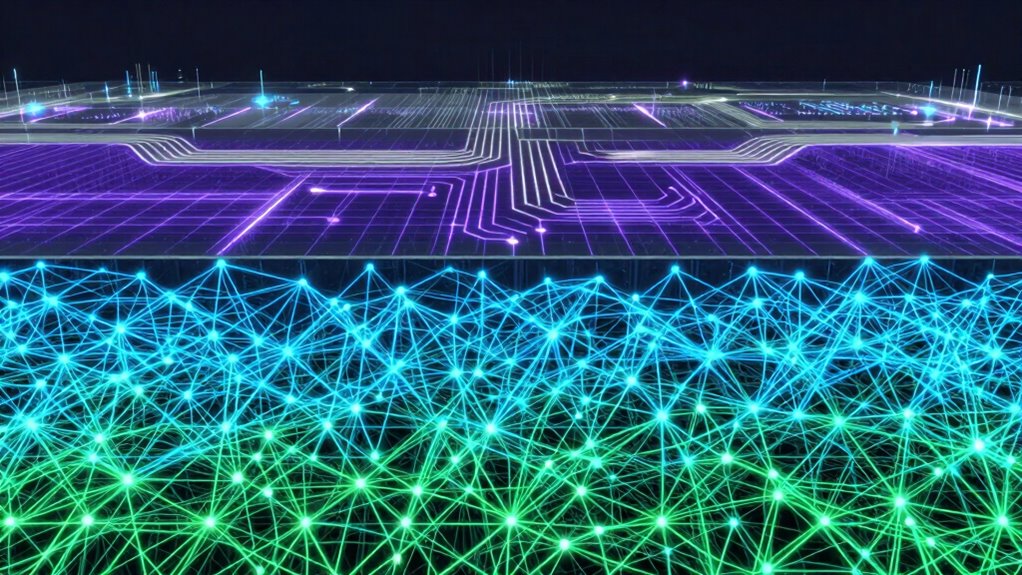

Layer 1 is the base blockchain like Bitcoin or Ethereum, handling core tasks like security and transaction validation but often faces scalability issues. Layer 2 builds on top of Layer 1 to process transactions off-chain, making them faster and cheaper, important for frequent activities like gaming or micropayments. Layer 3 focuses on user interfaces, APIs, and applications, making blockchain easier to use and more accessible. If you keep exploring, you’ll gain a deeper understanding of how these layers work together.

Get hardware and tech essentials delivered free — and shop member deals
- Fast, free delivery on millions of items
- Access to Prime Big Deal Days deals on October 6–7
- Prime Video, Amazon Music and more included
Key Takeaways
- Layer 1 is the base blockchain handling core functions like consensus, security, and transaction validation.
- Layer 2 builds on Layer 1, processing transactions off-chain to improve scalability and speed.
- Layer 3 focuses on application-specific features, interfaces, and user experience, without handling core transaction validation.
- Security for Layer 2 depends on Layer 1, while Layer 3 emphasizes protecting user interfaces and protocols.
- Scalability solutions involve upgrades at Layer 1 or additional layers to enhance network efficiency and user experience.

Understanding the differences between Layer 1, Layer 2, and Layer 3 chains is essential if you’re navigating the world of blockchain technology. Each layer plays a unique role in shaping how transactions are processed, how scalable the network is, and how security is maintained. When evaluating these layers, you need to contemplate scalability solutions and security considerations, as these factors directly impact performance and trustworthiness. Layer 1, often called the base layer, is the fundamental blockchain itself—like Bitcoin or Ethereum. It handles the core functions, including consensus, transaction validation, and security. This layer is designed to be decentralized and secure, but it often faces scalability challenges because every transaction must go through the entire network. As demand increases, transaction speeds slow down, and fees rise, making it less practical for high-volume use cases. That’s where scalability solutions come into play, and they often involve complex trade-offs between speed and security. Exploring these scalability solutions is crucial for developing more efficient blockchain networks. Layer 2 solutions sit on top of Layer 1 and aim to improve scalability without compromising security. Think of these as secondary frameworks or protocols that process transactions off the main chain, then settle the results back on Layer 1. Examples include state channels, sidechains, and rollups. These solutions batch multiple transactions together, reducing the load on the main network and considerably boosting throughput. This makes them well-suited for applications requiring fast, frequent transactions, like micropayments or gaming. However, security considerations are still critical—since these solutions rely on the security of the underlying Layer 1, ensuring that the off-chain processes are trustworthy is crucial. If security isn’t maintained, users could face risks like fraud or double spending, undermining confidence in the system. Additionally, network congestion can impact transaction processing times on Layer 1, which further emphasizes the importance of Layer 2 solutions. Layer 3 takes the concept even further by focusing on application-specific solutions, often involving user interfaces, APIs, or decentralized applications (dApps). This layer abstracts complexity, making blockchain more accessible for everyday users. It doesn’t directly handle transaction validation but provides tools and protocols that interact seamlessly with Layer 2 or Layer 1. While Layer 3 doesn’t usually introduce new scalability solutions, it enhances usability and developer experience. Security considerations here revolve around ensuring that the interfaces and protocols connecting users to the blockchain are safe from vulnerabilities.
As an affiliate, we earn on qualifying purchases.
Frequently Asked Questions
How Do Transaction Fees Vary Across Different Blockchain Layers?
Transaction fees vary across blockchain layers mainly because of scalability challenges and transaction speed. Layer 1 chains often have higher fees during congestion, as they handle every transaction directly. Layer 2 solutions reduce fees by processing transactions off-chain or through side channels, easing scalability issues. Layer 3 focuses on even faster, cheaper transactions, but its fees depend on the underlying layer’s efficiency. So, fees generally decrease as you move from Layer 1 to Layer 3.
Can Layer 3 Chains Support Smart Contracts Like Layer 1 and Layer 2?
Oh, absolutely, Layer 3 chains are the new smart contract playgrounds, flexing impressive capabilities just like their big brothers, Layer 1 and Layer 2. They’re designed to support smart contracts, offering even better scalability solutions. So, if you’re dreaming of faster, cheaper, and more efficient smart contract execution, Layer 3 is your next stop. Just don’t forget, they’re still catching up to the giants in the smart contract game.
What Are the Security Risks Associated With Each Layer?
You face security risks with each layer: Layer 1 relies on its consensus mechanisms, which can be vulnerable to 51% attacks. Layer 2 solutions often depend on cross chain bridges, increasing risks like bridge hacks. Layer 3 chains, still evolving, might have weaker security measures. Always evaluate how cross chain bridges are secured and the robustness of consensus mechanisms to protect your assets across layers.
How Do Interoperability Solutions Differ Between Layers?
Did you know over 60% of blockchain projects aim to improve interoperability? You’ll find that interoperability solutions differ across layers. For example, Layer 1 often uses cross-chain bridges to connect different blockchains directly, while Layer 2 relies on standardization protocols to communicate with Layer 1. Layer 3 focuses on application-level interoperability, making cross-chain communication seamless and efficient across all layers.
Are Layer 3 Chains Necessary for Mainstream Adoption?
Layer 3 chains can be necessary for mainstream adoption, especially to address scalability challenges and improve user experience. They help by offloading transactions from Layer 1 and Layer 2 solutions, making processes faster and cheaper. This reduces congestion and latency, making blockchain more practical for everyday use. If you want seamless, efficient interactions, integrating Layer 3 chains can be a crucial step toward achieving broader adoption.
As an affiliate, we earn on qualifying purchases.
Conclusion
Understanding the differences between Layer 1, Layer 2, and Layer 3 chains helps you navigate the blockchain world more effectively. Did you know that, as of 2023, over 70% of Ethereum transactions now occur on Layer 2 solutions? This shift highlights how Layer 2 chains are improving speed and reducing costs, making blockchain technology more accessible. Staying informed about these layers equips you to make smarter decisions and better utilize blockchain innovations.
As an affiliate, we earn on qualifying purchases.
decentralized application development tools
As an affiliate, we earn on qualifying purchases.
As an affiliate, we earn on qualifying purchases.
Fall Picks
fall essentials
As an affiliate, we earn on qualifying purchases.